Plant Overview
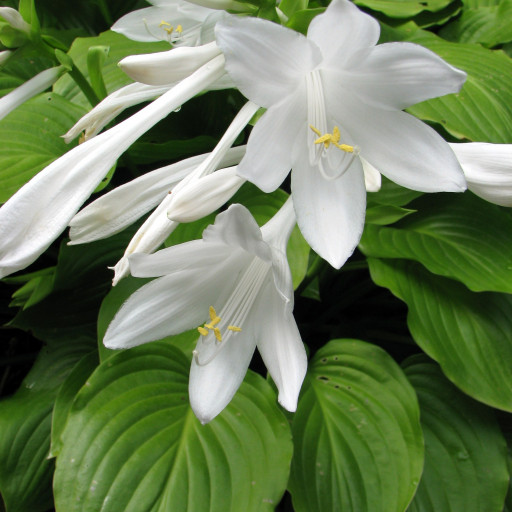
Often called the "August Lily," Hosta plantaginea is the crown jewel of the hosta world. While most of its cousins are grown for foliage alone, this Chinese native steals the show with its intoxicating, jasmine-scented white blooms that arrive just as the rest of the garden begins to fade in the late summer heat. It is widely considered the most fragrant species in the entire genus.
🔍 How to Identify
- 🍃 Lush Foliage: Large, heart-shaped leaves that are a vibrant, glossy apple-green. Unlike many other hostas, these leaves lack a waxy "blue" coating and have a smooth, thin texture.
- 🎺 Showy Blooms: It produces exceptionally large, waxy white trumpet-shaped flowers that can grow up to six inches long, standing tall on sturdy stems (scapes).
- 📏 Mounding Habit: It forms a tidy, symmetrical mound that spreads outward, making it an excellent groundcover for shady spots.
🏡 In Your Garden
- ☀️ The Light Paradox: While most hostas thrive in deep shade, the "August Lily" actually requires a bit of dappled morning sunlight to produce its famous flowers. Too much shade results in beautiful leaves but zero scent.
- 💧 Consistent Moisture: Because of its large, thin leaves, this plant loses water quickly. It will "pout" and wilt if the soil dries out, so it prefers a spot with rich, organic soil that stays consistently damp but not soggy.
- 🐌 Slug Magnet: Like many of its relatives, its tender leaves are a favorite snack for slugs and snails. Providing a bit of airflow around the base can help deter these unwanted visitors.
⚠️ Safety & Toxicity
- 🐾 Toxic to Pets: Hosta plantaginea contains saponins, which are toxic to dogs, cats, and horses.
- 🤢 Symptoms: Ingestion can cause vomiting, diarrhea, and depression/lethargy. While rarely fatal, it is best kept in areas where curious pets won't be tempted to graze.
✨ Fun Fact
Hosta plantaginea is the only hosta species with flowers that open in the evening and stay open through the night. This makes it a staple for "Moon Gardens"—landscapes designed specifically to be enjoyed under the moonlight!

Detailed Care Instructions
| Humidity | Normal |
| Lighting | Full Sun |
| Toxicity | Poisonous |
| Difficulty | Medium |
| Hibernation | Cold Period |
| Temperature | 15°C - 35°C |
| Hardiness Zones | Min 4A |
To grow Hosta Plantaginea plants, also known as August Lily or Fragrant Plantain Lily, follow these steps:
- Choose a suitable location: Select a spot in your garden that receives morning sun and afternoon shade, as these plants prefer indirect or filtered sunlight.
- Prepare the soil: Hosta plants thrive in well-drained, moist soil that is rich in organic matter. Add compost or peat moss to improve the soil's fertility and drainage.
- Planting: Dig a hole twice as wide and as deep as the plant's root ball. Gently place the plant in the hole, making sure the crown (where the leaves meet the roots) is at or slightly above ground level. Backfill the hole with soil and lightly tamp it down.
- Watering: Water the plant thoroughly after planting to settle the soil. Hostas like consistent moisture levels, so water regularly, especially during dry spells or hot summer months. Ensure the soil remains slightly moist but not waterlogged.
- Mulching: Apply a layer of organic mulch around the base of the plant to help conserve moisture, suppress weed growth, and regulate soil temperature. Keep the mulch a few inches away from the plant's crown to avoid rotting.
- Fertilizing: Feed your Hosta Plantaginea plants with a balanced, slow-release fertilizer in early spring when new growth emerges. Follow the instructions on the fertilizer label for application rates.
- Pruning: Remove any faded or damaged leaves throughout the growing season to maintain the plant's appearance. In late autumn or early winter, after the foliage has died back, you can cut the leaves back to ground level.
- Division: Hostas can be divided every few years to control their size and promote healthier growth. Dig up the clump in early spring or fall, separate the plant into smaller sections, making sure each has a good root system, and replant them at the same depth as before.
- Pests and diseases: Hostas are typically low-maintenance plants, but they may suffer from slug or snail damage. Implement appropriate pest control measures if required. Watch for common diseases like crown rot or foliar nematodes, and promptly remove and destroy any infected plant material.
By following these steps, you can successfully grow Hosta Plantaginea plants and enjoy their lovely foliage and fragrant flowers in your garden.

Place in a window with dappled sun or a spot in the middle of a room. Or directly in a window facing west or east.

To water this plant, you should first ensure that the soil is dry to the touch before watering. This plant prefers consistently moist soil, but overwatering can lead to root rot. When watering, make sure to water around the base of the plant and avoid watering the leaves, as this can cause fungal disease. Consider using a watering can or hose with a gentle spray nozzle to avoid disturbing the soil or damaging the plant. It is also important to water deeply and infrequently rather than shallowly and frequently, as this will encourage deeper root growth and stronger plants. In periods of intense heat or drought, the plant may require more frequent watering to survive.
Mix a slow-release fertilizer into the soil before planting. Once established, feed the plant with a balanced fertilizer in early spring. Apply the fertilizer according to package instructions, being sure not to over-fertilize as this can damage the plant. Water the plant thoroughly after fertilizing to help the nutrients reach the roots.
The ideal soil for the Hosta Plantaginea plant should be moist, well-drained, and rich in organic matter. The soil should have a pH between 6.0 and 7.5, which is slightly acidic to neutral. The plant requires a soil that is high in nutrients, particularly nitrogen, potassium, and phosphorus, to promote strong root growth and healthy foliage. A mix of equal parts garden soil, compost, and sand or perlite can provide an ideal growing medium for the Hosta Plantaginea. The plant also prefers a deep, loamy soil that can retain moisture but not become waterlogged, so adding coarse sand or pebbles to the soil can increase its drainage capacity. The Hosta Plantaginea performs best in shaded areas where the soil remains cool and moist, making it an ideal ground cover plant for damp, partially shaded landscapes.
Hosta Plantaginea plant can be propagated by dividing its root system. To do this, carefully dig up the plant and gently separate the roots into smaller sections. Each section should have a few healthy leaves and an intact root system. These smaller sections can then be replanted in well-draining soil. It is best to do this in early spring or late fall when the plant is dormant. Additionally, leaf cuttings can also be taken from the plant to propagate new plants. To do this, remove a healthy leaf from the plant and divide it into smaller sections. These sections should then be planted in well-draining soil and kept moist until new growth appears.
Common pests of the august-lily include Snails. Make a habit of checking your august-lily frequently for pests so that any infestations can be caught and managed early.








