Plant Overview
Often called the "Blue Giant" or the "Elephant Ear of the North," Hosta sieboldiana is the undisputed royalty of the shade garden. Hailing from the cool, misty mountains of Japan, this perennial doesn't just grow; it commands attention with its massive, architectural foliage. It is the perfect solution for those dark, damp corners of the yard where other plants struggle to survive.
🔍 How to Identify
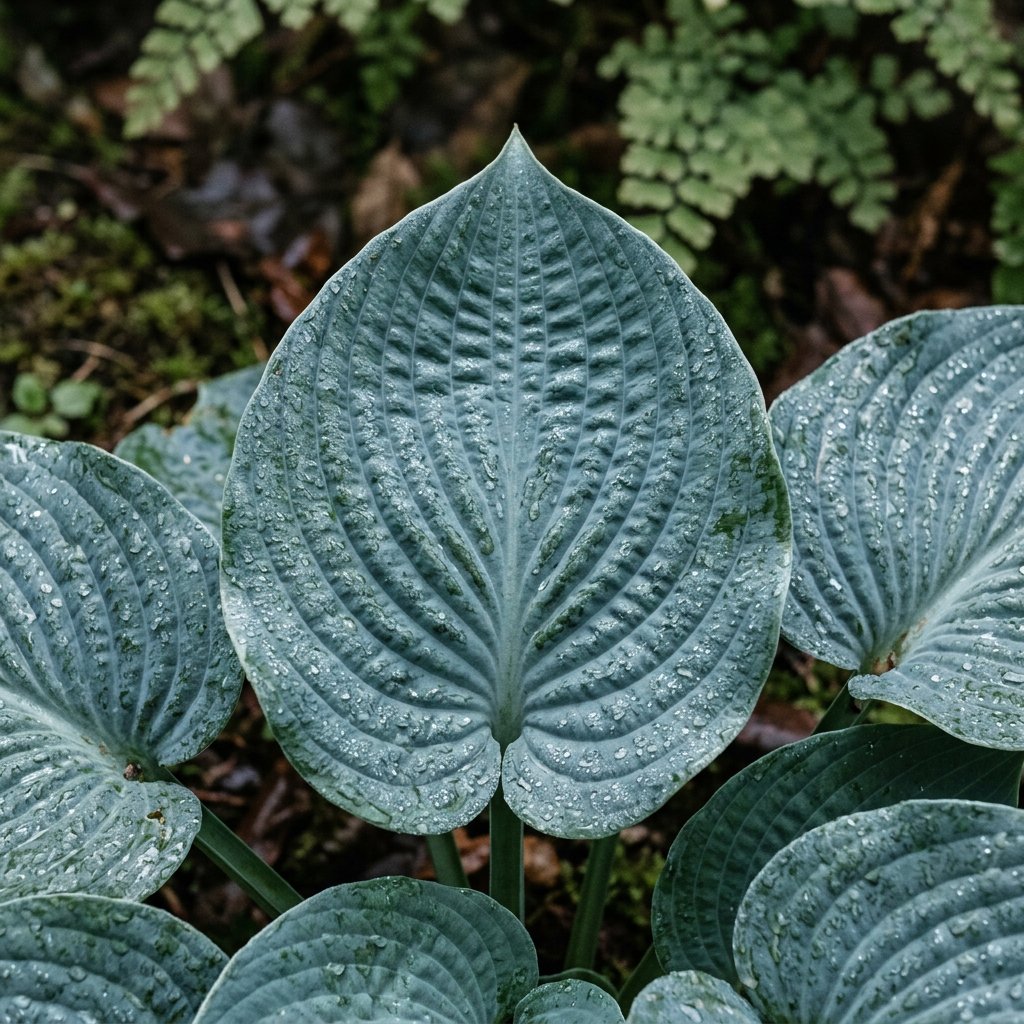
- 🐘 The Foliage: Massive, heart-shaped leaves that can reach up to 15 inches long. They have a distinctively "quilted" or puckered texture that adds depth to the garden.
- ❄️ The "Bloom": The leaves are famous for their powdery, blue-gray hue. This is actually a natural waxy coating (called "bloom") that protects the plant from the elements.
- 🔔 The Flowers: In mid-summer, sturdy stalks rise just above the foliage, carrying clusters of funnel-shaped flowers that range from stark white to a very pale lavender.
🏡 In Your Garden
- 🛡️ The Sun Shield: The signature blue color is actually a protective wax. If planted in too much direct sun, this wax "melts" away, turning the plant a standard dark green and eventually scorching the leaf edges.
- 🐌 Slug Resistance: While most Hostas are "snail candy," the thick, leathery texture of Sieboldiana makes it much tougher for slugs to chew through compared to thin-leaved varieties.
- ⏳ Slow Maturity: This Hosta follows the classic perennial rule: "The first year they sleep, the second year they creep, and the third year they leap." It may take 3 to 5 years to reach its full, majestic size.
⚠️ Safety & Toxicity
- 🐾 Pet Warning: Hostas contain saponins, which are toxic to dogs, cats, and horses.
- 🤢 Symptoms: If ingested, it can cause bouts of vomiting, diarrhea, and general lethargy. While rarely fatal, it’s best to plant these in areas where curious pets don't frequent.
- 🍽️ Human Note: Interestingly, while toxic to pets, young Hosta shoots (known as "urui" in Japan) are a traditional forage food for humans when cooked properly, though gardeners usually prefer to keep the leaves for decoration!
✨ Fun Fact
This species is named after Philipp Franz von Siebold, a 19th-century physician who lived in a Dutch trading post in Japan. He was famously caught with "forbidden" maps of the country and banished, but not before he managed to smuggle thousands of plant specimens—including this Hosta—back to Europe!

Detailed Care Instructions
| Humidity | High |
| Lighting | Part Sun |
| Difficulty | Medium |
| Hibernation | Cold Period |
| Hardiness Zones | 3 - 8 |
To grow Hosta Sieboldiana plants successfully, follow these steps:
- Select a suitable location: Choose a spot in your garden that has partial to full shade. Hostas generally prefer shade or filtered sunlight, as direct sunlight can scorch their leaves. The soil should be well-draining and rich in organic matter.
- Prepare the soil: Before planting, prepare the soil by removing any weeds, rocks, or debris. Work in compost or well-rotted manure to improve the soil's fertility and drainage.
- Dig a hole: Dig a hole that is wide and deep enough to accommodate the plant's roots, making sure to space multiple plants around 1-3 feet apart.
- Planting: Place the hosta plant in the hole and backfill with soil, gently firming it around the roots. Ensure that the crown (where the leaves emerge from the ground) remains at or slightly above the soil surface.
- Watering: Give the plant a thorough watering immediately after planting to settle the soil and encourage root establishment. Water regularly thereafter to keep the soil consistently moist, but not waterlogged. Well-established hostas are fairly drought-tolerant, but they perform best with consistent moisture.
- Mulching: Apply a layer of organic mulch, such as shredded bark or compost, around the base of the plant. This helps retain moisture, suppress weeds, and moderate soil temperature.
- Fertilizing: Hostas benefit from regular fertilization to promote healthy growth. Apply a balanced, slow-release fertilizer in early spring as new growth emerges. You can also feed them with a balanced liquid fertilizer every 4-6 weeks during the growing season.
- Weed control: Regularly check for weeds around the hosta plants and remove them to prevent competition for nutrients and water.
- Pruning: Hosta Sieboldiana plants may occasionally produce flower spikes. Once the flowers fade, you can remove the spent flower stalks to maintain a neat appearance. In early spring, remove any damaged or dead foliage.
- Division: After a few years, hostas tend to form clumps. To prevent overcrowding and maintain healthy growth, divide the plants every 3-5 years in early spring or late summer. Dig up the clump, separate the divisions, and replant them.
By following these guidelines, you can successfully grow Hosta Sieboldiana plants and enjoy their striking foliage in your garden.

Place in a window with dappled sun or a spot in the middle of a room. Or directly in a window facing west or east.

To water this type of plant, check the soil moisture level by inserting your finger about 1-2 inches into the soil. If it feels dry, it's time to water. Use a watering can or hose to gently water the soil around the plant, being careful not to get water on the leaves. Water deeply enough to saturate the soil, but avoid overwatering as this can lead to root rot. Regularly monitor the soil moisture level and adjust watering frequency as needed based on the plant's environment and weather conditions.
To fertilize this plant, start by choosing a balanced fertilizer with equal parts nitrogen, phosphorus, and potassium. Apply the fertilizer in early spring before new growth appears, and again in mid-summer after the plant has finished flowering. Use a slow-release granular fertilizer and sprinkle it around the base of the plant. Water the plant thoroughly after fertilizing to help the nutrients soak into the soil. Avoid over-fertilizing, as this can burn the plant and cause damage.
When planting the Hosta Sieboldiana plant, it is important to select a suitable type of soil that will provide the necessary nutrients and moisture to support healthy growth. This plant requires a soil that is rich and well-draining, with a slightly acidic pH between 6.0 and 7.0. A good soil mix for this plant would consist of high-quality garden soil, compost or organic matter, and coarse sand or perlite to improve drainage. It is also important to ensure that the soil is loose and aerated to allow for proper root growth. The soil should be kept moist but not waterlogged, and it is recommended to apply a slow-release fertilizer once the plant has become established.
There are several ways to propagate the Hosta Sieboldiana plant. One way is to take leaf cuttings from a healthy plant. To do this, select a mature leaf and cut it off from the plant using a sharp, sterile knife. Make sure the leaf has a petiole or stem attached. Cut the leaf into sections, making sure each section has a portion of the petiole. Dip the cut end of each section into rooting hormone and plant them in a well-draining soil mix. Keep the soil moist and place the cuttings in a warm and humid location, but out of direct sunlight. New plants should emerge within a few weeks.
Another way to propagate Hosta Sieboldiana is through division. Dig up an established plant in early spring or fall. Gently separate the clump into smaller sections, making sure each section has at least one healthy shoot and a good portion of roots. Replant the new sections in a well-draining soil mix and water thoroughly. Keep the soil consistently moist until new growth emerges.
Finally, Hosta Sieboldiana can also be propagated through seed. Collect the seeds when the pods turn brown and begin to split open. Store the seeds in a cool, dry location until ready to plant in the spring. Sow the seeds in a well-draining soil mix and cover with a thin layer of soil. Keep the soil moist and place the container in a warm and well-lit location. New plants should emerge within a few weeks, but it may take up to a year or more for them to reach maturity.
Common pests of the blue angel hosta include Snails. Make a habit of checking your blue angel hosta frequently for pests so that any infestations can be caught and managed early.








