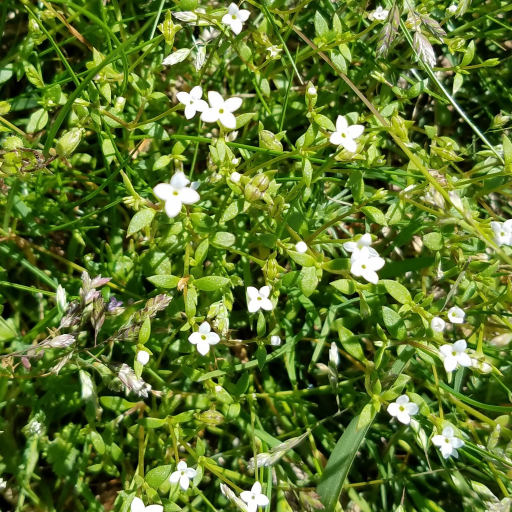
Plant Overview
Known affectionately as the Southern Bluet or Tiny Bluet, this delicate wildflower is one of nature’s earliest spring messengers. Often found carpeting lawns and meadows across the Southeastern United States, these plants are so small they are frequently mistaken for a light dusting of frost or snow. They are short-lived winter annuals that bring a touch of "fairyland" charm to the transition between winter and spring.
🔍 How to Identify
- 🌸 The Flower: Tiny, four-petaled blossoms that range from pale lavender-blue to pure white, often featuring a small yellow "eye" in the center.
- 🍃 The Foliage: Small, oval to spatula-shaped leaves that grow in opposite pairs along a slender, multi-branched stem.
- 📏 Growth Habit: A true "belly plant" (meaning you have to get on your belly to see it well), it rarely exceeds 4 inches in height and forms low-growing, airy clumps.
🏡 In Your Garden
- 🌱 Lawn Companion: Unlike many aggressive weeds, the Southern Bluet is a non-invasive guest. It thrives in the open, moist soil of lawns before the turf grass begins its heavy summer growth.
- 💧 Seasonal Lifespan: Because these are winter annuals, they thrive in the cool, damp conditions of late winter. They will naturally go to seed and disappear as soon as the thermometer climbs, so there is no need to "treat" them—simply enjoy the fleeting bloom.
- ☀️ Sun Seeker: You will most often find them in sunny patches where the soil remains undisturbed during the winter months, acting as a natural groundcover.
⚠️ Safety & Toxicity
- ✅ Status: Non-toxic and safe.
- 🐾 Pet Friendly: There are no known toxic effects for dogs, cats, or horses. They are gentle additions to a wilder landscape and pose no threat to curious children or pets who might wander through them.
✨ Fun Fact
Despite its microscopic stature, the Southern Bluet is a member of the Rubiaceae family. This makes this tiny, humble lawn flower a distant botanical relative to both the Coffee plant and the fragrant Gardenia!

Detailed Care Instructions
To grow Houstonia Micrantha plants, follow these steps:
- Choose the right location: Houstonia Micrantha prefers partial shade, so select a spot in your garden that receives a few hours of sunlight each day but also has some shade during the hottest parts of the day.
- Prepare the soil: Houstonia Micrantha prefers moist, well-draining soil. Amend the soil with organic matter, such as compost, to improve the drainage and fertility of the soil.
- Plant the seeds or seedlings: If you have seeds, sow them directly into the prepared soil in early spring or fall. Alternatively, you can purchase young Houstonia Micrantha plants from a nursery and transplant them into your garden.
- Water regularly: Houstonia Micrantha plants enjoy consistently moist soil. Water them regularly, keeping the soil evenly moist but not waterlogged. Avoid letting the soil dry out completely, as this can hinder plant growth.
- Mulch around the plants: Apply a layer of organic mulch around the base of the plants to help retain moisture in the soil and suppress weed growth. This will also keep the roots cool during hot weather.
- Fertilize as needed: Houstonia Micrantha generally doesn't require heavy fertilization. However, if your plants show signs of nutrient deficiency, you can apply a balanced, slow-release fertilizer once or twice a year according to the manufacturer's instructions.
- Prune if necessary: Houstonia Micrantha is a low-growing plant that typically doesn't require much pruning. However, if the plants become leggy or overcrowded, you can trim them back after flowering to maintain their shape and encourage compact growth.
- Monitor for pests and diseases: Keep a close eye on your Houstonia Micrantha plants for any signs of pest infestation or disease. Common pests include aphids and spider mites, which can be controlled with insecticidal soap or neem oil. Remove any diseased or damaged leaves promptly.
- Enjoy the blooms: Houstonia Micrantha plants will produce small, delicate flowers in shades of blue or purple. These blooms will attract bees and butterflies to your garden. Take time to appreciate the beauty of your plants and the wildlife they attract.
Remember to check the specific care requirements of Houstonia Micrantha, as it can vary slightly depending on your specific location and conditions.

Houstonia Micrantha is a type of flowering plant that requires careful attention when it comes to watering. Before watering the plant, it is important to check the soil around it. Make sure that the soil is dry to the touch and there is no moisture in it. If the soil is dry, use a watering can or hose to water the plant.
To prevent over-watering, it is important to water the plant slowly and evenly. Avoid pouring too much water on the plant or flooding the soil. Instead, water the plant slowly and wait for the water to seep into the soil before adding more.
It is also important to avoid watering the plant during the hottest part of the day or during strong winds. This can cause the water to evaporate before it reaches the roots, which can lead to drought stress in the plant. Instead, water the plant in the morning or evening when it is cooler and calmer.
Lastly, make sure to water the plant regularly. Houstonia Micrantha needs consistent moisture to thrive, but over-watering can damage its roots. Aim to water the plant once a week or whenever the soil around it is dry to the touch.
Apply a slow-release fertilizer in the spring to promote healthy growth. Use a balanced fertilizer with equal amounts of nitrogen, phosphorus, and potassium. Apply the fertilizer according to the manufacturer's instructions and water the plant thoroughly after application. Avoid fertilizing during the fall and winter as this can encourage new growth that may be damaged by cold temperatures.
Houstonia Micrantha plant prefers a well-draining soil that is rich in organic matter. The soil should be slightly acidic with a pH range of 4.5 to 6.5. A mixture of peat moss, perlite, and pine bark is an ideal soil mix for this plant. It is important to ensure that the soil is not too compacted, as this can impede drainage and lead to root rot. Adding sand or grit to the soil can improve drainage. Additionally, this plant prefers moist soils, but overwatering should be avoided as it can also lead to root rot. Regularly amending the soil with compost or other organic matter can help to maintain soil quality and promote healthy growth.
To propagate this plant, you will first need to collect seeds from mature plants. Once collected, clean the seeds by removing any debris or unwanted materials.
Next, prepare a suitable growing medium, such as a mixture of peat moss and perlite, in a container with drainage holes.
Sow the seeds thinly and cover with a light layer of growing medium. Water the container and cover it with plastic wrap to create a moist and humid environment.
Place the container in a warm and bright location, but not in direct sunlight. You may need to mist the soil occasionally to keep it evenly moist.
In a few weeks, the seeds should germinate and begin to grow. Once the seedlings have developed a few sets of leaves, you can transplant them into individual pots filled with a well-draining growing medium.
As the plants grow larger, you can transplant them into larger containers or directly into the garden. With proper care, the propagated plants should mature and produce their own flowers and seeds.








