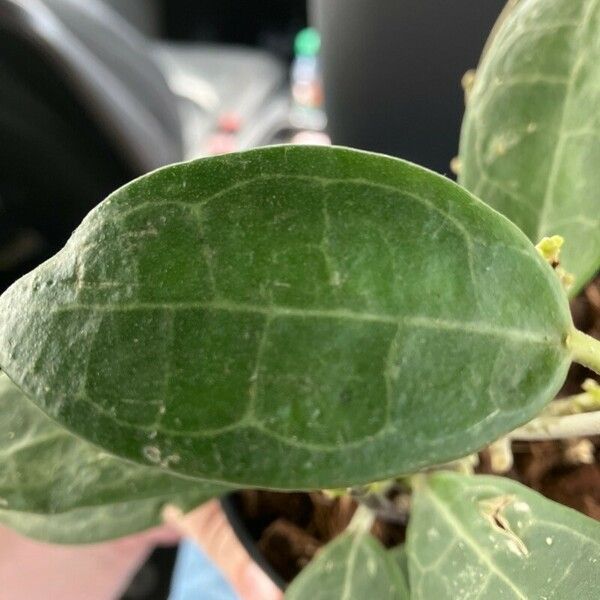
Plant Overview
Often called the "Turtle Shell Hoya," Hoya elliptica is a collector's dream hailing from the humid forests of Thailand, Malaysia, and the Philippines. Its striking geometric patterns look almost hand-painted, making it a standout centerpiece in any indoor jungle. While it has a reputation for being a bit of a "drama queen" compared to its hardier cousins, its exquisite floral fragrance and unique foliage make the extra attention well worth the effort.
🔍 How to Identify
- 🍃 Leaf Pattern: The most distinct feature is the network of creamy-white veins that contrast sharply against the deep emerald-green surface, creating a "turtle shell" or mosaic effect.
- 🌸 The Bloom: It produces spherical clusters (umbels) of star-shaped, porcelain-white flowers, each featuring a rich reddish-pink "corona" or star in the center.
- 📏 Growth Habit: This is a climbing or trailing vine with relatively thin, flexible stems that use aerial roots to latch onto moss poles or trellises.
🏡 In Your Garden
- 🧗 Climbing Support: As an epiphyte, this plant is much happier climbing up than hanging down. Providing a cedar pole or trellis mimics its natural habit of scaling trees in the wild, leading to larger, healthier leaves.
- 💧 Humidity is Key: Unlike the waxier Hoya carnosa, the Elliptica is sensitive to dry indoor air. It thrives in high humidity (60%+) and may drop new growth if the environment is too arid or if the soil dries out completely.
- 🪴 Chunky Substrate: To avoid root rot, use a "soilless" mix heavy on orchid bark, perlite, and coco coir. It hates "wet feet" and requires a pot that breathes well.
⚠️ Safety & Toxicity
- 🐾 Pet Friendly: Good news for pet owners—Hoya elliptica is generally considered non-toxic to cats, dogs, and horses.
- 🧪 Sap Sensitivity: Like many plants in the Apocynaceae family, it contains a milky latex sap. This can cause mild skin irritation for people with latex allergies, so it’s wise to wear gloves or wash your hands after pruning.
✨ Fun Fact
The flowers of Hoya elliptica are known for their "nocturnal perfume." They release a spicy, sweet scent that is most potent at night, specifically designed to attract moth pollinators in the pitch-black rainforest.

Detailed Care Instructions
To grow Hoya Elliptica plant, here are some tips to follow:
- Light: Hoya Elliptica plant prefers bright, indirect light. Place it near a window where it can receive plenty of sunlight but avoid direct sunlight as it can scorch the leaves.
- Temperature: Keep the plant in a warm environment with temperatures ranging between 65-80 degrees Fahrenheit. Avoid placing it in drafts or near heating or cooling vents.
- Watering: Water the plant regularly, allowing the top inch of the soil to dry out between waterings. Overwatering can lead to root rot, so be sure not to let the plant sit in water.
- Humidity: Hoya Elliptica plant prefers high humidity, so misting the plant regularly or placing it near a humidifier can help it thrive.
- Soil: Use a well-draining soil mix for the plant, such as a mix of perlite, peat moss, and potting soil.
- Fertilizing: Feed the plant with a balanced, water-soluble fertilizer during the growing season (spring and summer) to encourage healthy growth.
- Repotting: Repot the plant every 1-2 years to refresh the soil and provide more room for growth.
By following these tips, you can help your Hoya Elliptica plant grow and thrive in your home.

Place in a window with dappled sun or a spot in the middle of a room. Or directly in a window facing west or east.

To water this plant, you should wait until the soil is almost completely dry before giving it a thorough watering. When watering, be sure to water the soil directly and avoid getting water on the leaves or stem. Be sure to pour enough water to moisten the soil completely. After watering, let the excess water drain out of the pot before putting it back in its original spot. Overwatering this plant can lead to root rot, so it's important to only water when necessary and not let it sit in standing water.
To fertilize Hoya Elliptica plant, use a balanced liquid fertilizer diluted to half strength. Apply the fertilizer every 2-4 weeks during the growing season, which is typically spring and summer. Avoid fertilizing during the plant's dormant period in fall and winter. Water the plant thoroughly before and after applying fertilizer to prevent root burn.
The ideal soil for Hoya Elliptica plant should be well-draining, slightly acidic, and rich in organic matter. It should have a loose texture that promotes aeration and prevents waterlogging. A good mix for this plant would consist of a blend of peat moss, perlite, and vermiculite or sand to promote drainage. Additionally, it is important to ensure that the soil is not compacted as Hoyas have shallow roots. A good rule of thumb is to moisten the soil before filling the pot and allowing some space at the top for water retention. Another option is to use coco coir or sphagnum moss mixed with perlite to allow for greater absorption and aeration. Overall, the soil mix should promote healthy growth and support the plant's moisture and nutrient requirements.
To propagate Hoya Elliptica, you can take stem cuttings from a healthy and mature plant. Choose a stem that is at least 5-6 inches long and has at least a few nodes. Make a clean cut just below a node using a sharp and clean pair of scissors or pruning shears.
Remove any leaves from the lower half of the cutting to expose the nodes. This will help the cutting develop roots more easily. Allow the cutting to dry and callus over for a few hours before planting.
Prepare a small pot with well-draining soil mix, such as a combination of perlite, peat moss, and coarse sand. Make a hole in the soil using a pencil or your finger and place the cutting in the hole, burying the node and a few inches of the stem.
Water the cutting thoroughly and place the pot in a warm, bright location with indirect sunlight. Keep the soil consistently moist but not waterlogged. You can cover the pot with a plastic bag or dome to create a mini greenhouse effect and retain humidity.
Within a few weeks to a few months, you should start to see roots developing on the cutting. Once the roots are well-established, you can transplant the cutting into a larger pot with regular Hoya Elliptica care.
Propagation can also be done by layering or by leaf-cutting methods, depending on the preference of the grower and the characteristics of the particular plant. Each method has its own pros and cons, so choose the one that works best for you and your Hoya Elliptica plant.
Common pests of the hoya elliptica include Scale insect, mealybugs, spider mites. Make a habit of checking your hoya elliptica frequently for pests so that any infestations can be caught and managed early.








