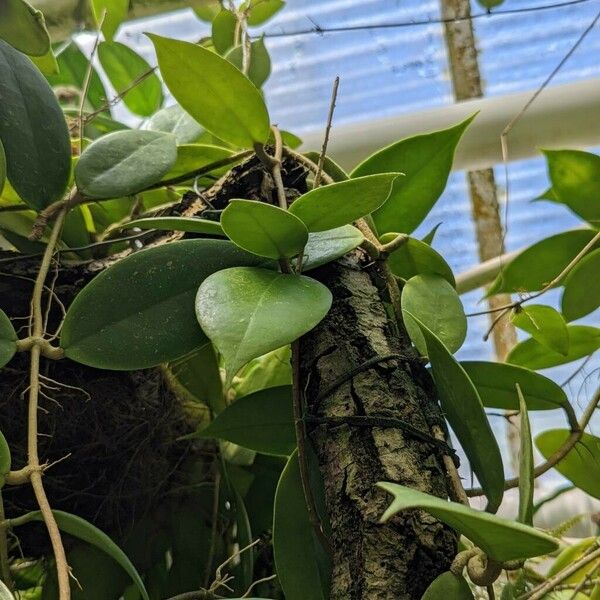
Plant Overview
Often called the "Etched Leaf Hoya," Hoya finlaysonii is a crown jewel for foliage collectors. Native to the humid rainforests of Southeast Asia, it looks more like a piece of prehistoric art than a typical houseplant. Its striking, dark-veined leaves have earned it a reputation as one of the most visually dramatic members of the Hoya family.
🔍 How to Identify
- 🍃 Dramatic Venation: The most striking feature is the "etched" look; deep emerald-green veins stand out in a bold, web-like pattern against a lighter, silvery-green leaf surface.
- 🧱 Rigid Texture: The leaves are incredibly thick, hard, and "cardboard-like" to the touch, often featuring slightly serrated or wavy edges that feel sturdy.
- 🌸 Spiced Blooms: It produces tight clusters (umbels) of star-shaped flowers that are typically creamy-white with dark maroon or brownish tips, emitting a faint, spicy fragrance.
🏡 In Your Garden
- 🧗 The Climbing Crave: Because it is an epiphyte in the wild (growing on trees), this plant loves to climb. Providing a moss pole or trellis isn't just for aesthetics; it mimics its natural habitat and encourages the plant to produce larger, more mature leaves.
- 🪴 Breathable Roots: This Hoya "breathes" through its roots and is highly susceptible to root rot in traditional potting soil. It requires a very chunky, airy mix—think orchid bark, perlite, and charcoal—to keep its root system happy.
- ☀️ Light & Contrast: While it survives in medium light, the iconic dark veins become much more pronounced and "etched" when the plant receives bright, indirect sunlight.
⚠️ Safety & Toxicity
- 🐾 Pet Friendly: Good news for animal lovers! Hoya finlaysonii is generally considered non-toxic to cats and dogs.
- 💧 Sap Sensitivity: Like many members of the Apocynaceae family, it leaks a milky white latex sap when cut. This sap can cause mild skin irritation or an itchy rash for people with latex allergies, so it is best to wear gloves when pruning.
✨ Fun Fact
- ✨ The Great Shape-Shifter: Hoya finlaysonii is famous among botanists for its "polymorphism." This means that depending on which specific jungle it originated from, the leaves can look wildly different—some are long and narrow like a spear, while others are round and rippled—yet they all belong to the same species!

Detailed Care Instructions
To grow Hoya finlaysonii, also known as the wax plant, follow these steps:
- Choose the right location: Hoya finlaysonii prefers bright, indirect light. It can tolerate morning sun but should be protected from intense afternoon sunlight. Find a spot near a window or provide artificial grow lights if needed.
- Provide the right temperature: This plant prefers temperatures between 60-75°F (15-24°C). Avoid exposing it to temperatures below 50°F (10°C) as it can damage the plant.
- Select well-draining soil: Hoya finlaysonii prefers a well-draining soil mix. You can use a mixture of regular potting soil, peat moss, and perlite to ensure good drainage.
- Choose the right container: Use a pot with drainage holes to avoid waterlogging. Select a pot that is slightly bigger than the current root system to provide space for growth but avoid excessively large containers.
- Water properly: Water the plant when the top inch of soil feels dry to the touch. Avoid overwatering, as Hoya finlaysonii dislikes sitting in soggy soil. Allow excess water to drain out of the pot to prevent root rot.
- Humidity requirements: Hoya finlaysonii prefers a moderately humid environment. You can increase humidity by placing a tray of water near the plant or using a humidifier. Misting the leaves occasionally can also be beneficial.
- Fertilize regularly: During the growing season (spring and summer), fertilize the plant every 2-4 weeks with a balanced, water-soluble fertilizer. Dilute the fertilizer according to the package instructions and avoid overfertilizing, as it can burn the plant's roots.
- Support growth: Hoya finlaysonii is a climbing plant, so provide a trellis or stakes for support as it grows. This will help the plant develop a more bushy and compact shape.
- Prune when needed: Trim back any leggy or unruly growth to promote a fuller shape. Pruning can also help rejuvenate the plant and encourage new growth.
- Repotting: Repot Hoya finlaysonii every 1-2 years, or when you notice the current pot becoming too crowded with roots. Use a slightly larger pot and fresh potting soil during the repotting process.
Remember, growing a Hoya finlaysonii may require patience as it can be a slow grower. With proper care, you can enjoy its beautiful blooms and cascading foliage.

Place in a window with dappled sun or a spot in the middle of a room. Or directly in a window facing west or east.

To water this plant, you should wait until the soil is mostly dry before giving it a thorough watering. When watering, pour water slowly and carefully around the base of the plant, making sure not to get water on the leaves or stem. Allow excess water to drain away, and do not let the plant sit in standing water. Watering frequency will depend on the plant's environment and size, but generally, it should not be watered too frequently as this can lead to root rot.
To fertilize a Hoya Finlaysonii plant, follow these instructions:
- Choose a balanced liquid fertilizer specifically formulated for houseplants.
- Dilute the fertilizer according to the instructions on the packaging. Generally, a concentration of half the recommended dose is sufficient.
- Apply the diluted fertilizer to the soil around the base of the plant, avoiding direct contact with the leaves.
- Fertilize the Hoya Finlaysonii plant once every four to six weeks during the growing season (spring and summer).
- Water the plant thoroughly after fertilizing to ensure the nutrients are absorbed properly.
- Monitor the plant's response to the fertilizer. If the leaves start turning yellow or if you notice excessive growth, consider reducing the frequency or strength of the fertilizer.
- During the winter months, when the plant is in a dormant phase, reduce or stop fertilizing altogether, as the plant requires less nutrients during this time.
- Regularly inspect the plant for signs of nutrient deficiencies, such as pale leaves or stunted growth. Adjust the fertilizer regimen accordingly to address any deficiencies.
The Hoya Finlaysonii plant prefers a specific type of soil that is well-draining and has good aeration. The soil should be a mix of organic matter and inorganic materials such as perlite, pumice or coarse sand to ensure adequate drainage. Additionally, the soil should be slightly acidic, with a pH ranging from 5.5 to 6.5. It is recommended to avoid using heavy garden soil as it can retain too much moisture and lead to root rot. A good option for soil is a commercially available potting mix designed for epiphytic plants or a homemade mix consisting of equal parts peat moss, perlite and orchid bark.
Hoya finlaysonii, a member of the Asclepiadaceae family, is a beautiful trailing plant native to Southeast Asia. It is commonly propagated through various methods, allowing plant enthusiasts to create new specimens and share this stunning plant.
- Stem Cutting: Choose a healthy stem that is around 4 to 6 inches long, and preferably without any flowers or buds. Using a clean and sharp pair of scissors or pruning shears, make a clean cut just below a node (the point where new leaves or stem growth occurs). Remove any lower leaves near the bottom of the cutting, leaving a couple of leaves near the top. This cutting is then placed in a well-draining potting mix or propagation medium.
- Preparing the Cutting: To enhance rooting, it is recommended to dip the cut end of the stem in a rooting hormone. This helps stimulate root growth and increases the chances of successful propagation. After applying the rooting hormone, gently tap off any excess powder to prevent plant stress.
- Planting: Fill a small pot with a well-draining soil mixture or a blend of perlite and peat moss in equal parts. Create a hole in the soil using a pencil or your finger and carefully insert the treated end of the cutting into the hole. Firmly press the soil around the cutting to provide stability.
- Humidity and Moisture: Hoya finlaysonii cuttings appreciate a humid environment during rooting. To increase humidity, cover the pot with a plastic bag or place it in a propagator. This helps to maintain moisture levels and creates a conducive environment for root development. Mist the cutting regularly to keep the leaves hydrated and prevent excessive drying.
- Light and Temperature: Hoya finlaysonii cuttings prefer bright, indirect light to promote healthy growth. Avoid exposing them to direct sunlight, as this can cause leaf burn or stress. Place the pot in a warm area with temperatures between 65-80°F (18-27°C) for optimal rooting.
- Root Development: Over a period of several weeks, the cutting will develop roots. Check for root growth by gently tugging on the stem after around four weeks. If you feel resistance, it indicates that roots have formed. Avoid excessive disturbances during this period to promote successful root establishment.
- Transplanting: Once roots have developed, the cutting can be transplanted into a larger pot with well-draining soil. Carefully remove the plastic bag or propagator cover and transfer the cutting along with its root system into the new pot. Gently fill the remaining space with soil and lightly press it down to ensure good contact with the roots.
- Caring for the New Plant: After transplanting, provide your newly propagated Hoya finlaysonii with the same care as a mature plant. This includes regular watering when the top inch of soil feels dry, moderate humidity, and bright indirect light. Fertilize occasionally with a balanced houseplant fertilizer to promote healthy growth.
Remember, Hoya finlaysonii propagation may take time and require patience. Not all cuttings will successfully root, but with practice, you can increase the chances of success and propagate this stunning plant.
Common pests of the hoya finlaysonii include Scale insect, mealybugs, spider mites. Make a habit of checking your hoya finlaysonii frequently for pests so that any infestations can be caught and managed early.








