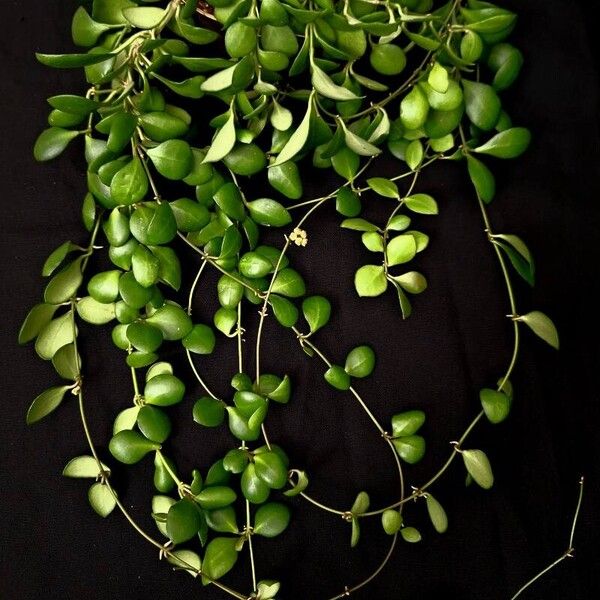
Plant Overview
Known as the "Butterscotch Hoya," this Philippine gem is a favorite for those with limited space. It is a petite, trailing beauty that fills a room with a scent reminiscent of warm caramel, milk chocolate, or burnt sugar. Unlike the giant star-shaped blooms of its more famous cousins, this species offers a delicate, subtle elegance that appeals to "miniature" plant collectors.
🔍 How to Identify
- 🍃 Small Succulent Leaves: The foliage consists of tiny, oval, and slightly cupped leaves. They are thick, waxy, and deep green, usually staying under an inch in length.
- 🏺 Urn-Shaped Blooms: The flowers are "urceolate," meaning they look like tiny, rounded upside-down jars or bells rather than the typical flat star shape of other Hoyas.
- 🎨 Color Varieties: Depending on the subspecies, the flowers usually appear in a buttery yellow or a soft, dusty pink, growing in small clusters (umbels).
🏡 In Your Garden
- 🧗 Epiphytic Roots: In the wild, this plant grows on tree branches. In your home, it requires a very "chunky" soil mix—think orchid bark, perlite, and coco coir. It hates "wet feet" and will suffer from root rot if the soil stays soggy.
- ☀️ The Light Balance: To see those famous caramel-scented blooms, you must provide bright, indirect light. While it can survive in lower light, it will likely remain a "leaves-only" plant without a sunny window.
- 💧 Humidity and Thirst: Because its leaves are succulent, it stores water well. Wait until the leaves feel slightly soft to the touch before watering, but try to keep the surrounding air humid to mimic its Philippine forest home.
⚠️ Safety & Toxicity
- 🐾 Pet Friendly: This Hoya is generally considered non-toxic to cats, dogs, and horses, making it a safe choice for a pet-filled household.
- 🩹 Sticky Latex: Like most members of the Apocynaceae family, the plant bleeds a milky white sap when cut. This latex can be a mild skin irritant for humans and should be kept away from the eyes.
✨ Fun Fact
- 🍬 A Natural Air Freshener: Most Hoya flowers are most fragrant at night to attract moths, but Hoya heuschkeliana is known for its scent being remarkably strong during the day, making it feel like there is a hidden bowl of butterscotch candy in the room!

Detailed Care Instructions

Place in a window with dappled sun or a spot in the middle of a room. Or directly in a window facing west or east.

To water this plant, you should always check the soil's moisture level before watering. Stick your finger into the soil about two inches deep. If the soil feels dry at this depth, it's time to water.
When watering, you should pour water onto the soil slowly until water starts to seep out of the drainage holes. The plant should be watered thoroughly but not excessively, as overwatering can lead to root rot.
It is important to note that this plant prefers to dry out slightly between waterings. Therefore, it's best to err on the side of too little water rather than too much.
During the winter months, watering may need to be reduced as the plant enters its dormant period. Overwatering during this time can cause rot or other issues.
In summary, always check the soil moisture level, water thoroughly and slowly, and be careful not to overwater. Also, adjust watering frequency based on the plant's growth stage and surrounding environment.
Without the need of fertilizer, these plants can thrive and bloom. If a plant requires fertilization, it will display indicators of nutrient insufficiency, such as yellowing leaves. It is safe to apply slightly diluted fertilizers in these circumstances. Over fertilizing, on the other hand, should be avoided because excess nutrients might cause plant mortality. Slow-release fertilizers are therefore advised for these plants.
You may use All Purpose Plant Food or Flower Fertilizer or Green Plant Food for your Hoya Heuschkeliana
The ideal soil type for Hoya Heuschkeliana plants is well-draining soil that retains moisture evenly. It should be a mixture of organic matter, such as compost or peat, and inorganic matter, like sand or perlite, to promote proper drainage and aeration. The pH level of the soil should be slightly acidic, between 5.5 and 6.5. It is important to avoid using heavy, clay-like soil as it could suffocate the plant’s roots and lead to root rot. Additionally, the soil should not hold too much moisture, as this can be detrimental to the plant’s growth. The plant should be potted in a container that has proper drainage holes to allow excess water to escape. Overall, a well-draining soil mixture with plenty of organic matter is crucial for the overall health and growth of Hoya Heuschkeliana plants.
Common pests of the hoya heuschkeliana include Scale insect, mealybugs, spider mites. Make a habit of checking your hoya heuschkeliana frequently for pests so that any infestations can be caught and managed early.








