Plant Overview
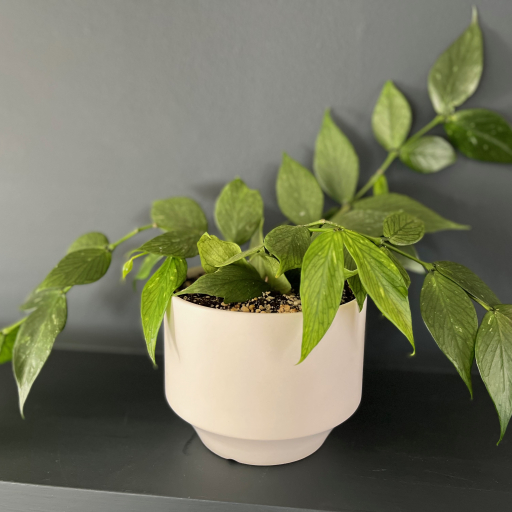
Known as the "Fishtail Hoya," this architectural beauty hails from the high altitudes of the Himalayas. Unlike its waxier, rounder cousins, the Hoya polyneura creates a stunning visual rhythm with its symmetrical, winged leaves that resemble the tail of a mermaid. It is a prized specimen for indoor gardeners seeking a lush, vining plant that looks more like a work of art than a standard houseplant.
🔍 How to Identify
- 🍃 Fishtail Foliage: The leaves are flat, thin, and shaped like a wide "V" or a triangle, perfectly mimicking a fish’s tail.
- 🕸️ Dark Veining: Intricate, dark green veins create a distinct "skeleton" pattern against the lime-green surface of the leaf.
- 🌸 Starry Blooms: It produces clusters (umbels) of waxy, cream-colored flowers with a deep maroon or purple center that emit a faint, sweet fragrance.
🏡 In Your Garden
- 🏔️ Cooler Climates: Unlike tropical Hoyas that crave sweltering heat, this Himalayan native prefers "intermediate" temperatures. It may actually stop growing or drop leaves if it gets too hot or if the air becomes bone-dry during the summer.
- 💧 Thirsty Tendencies: Because its leaves are thinner than the thick, succulent leaves of a Hoya carnosa, it prefers to stay slightly more moist. It hates "wet feet," but the "soak and dry" method should be adjusted so the soil never stays parched for long.
- 🧗 Trailing Habit: Its stems are somewhat stiff but eventually cascade beautifully. It is best displayed in a hanging basket where the "tails" can overlap and create a shingled, green curtain.
⚠️ Safety & Toxicity
- 🐾 Pet Friendly: Hoya polyneura is generally considered non-toxic to cats, dogs, and horses, making it a safe choice for multi-pet households.
- 🧪 Sap Sensitivity: Like most Hoyas, it contains a milky white latex sap. While not deadly, this sap can cause mild skin irritation for people with latex allergies or stomach upset if ingested in large quantities.
✨ Fun Fact
The name polyneura literally translates to "many nerves" in Latin. This refers to the dense, beautiful vein structure that becomes almost translucent and glows like stained glass when the plant is placed in front of a sunny window.

Detailed Care Instructions
| Humidity | Normal |
| Lighting | Full Sun |
| Difficulty | Medium |
| Temperature | 18°C - 35°C |
| Hardiness Zones | 11 - 12 |
Here are some tips on how to grow Hoya Polyneura plant:
- Light: Place the Hoya Polyneura plant in bright, indirect light. It can tolerate some morning or late afternoon sun, but avoid placing it in direct sunlight as it can cause leaf burn.
- Temperature: Hoya Polyneura prefers moderate temperatures between 60-80°F (15-26°C). Avoid exposing it to extreme temperatures or drafts.
- Watering: Water the plant when the top inch of soil feels dry. Hoya Polyneura prefers to dry out slightly between waterings, so be careful not to overwater. Provide good drainage to avoid waterlogged roots.
- Humidity: Hoya Polyneura thrives in humid conditions. Mist the plant regularly or place it on a tray filled with pebbles and water to increase humidity levels. Avoid misting directly on the leaves to prevent fungal issues.
- Soil: Use a well-draining potting mix that contains a good amount of organic material. A mixture of orchid bark, perlite, and peat moss or coco coir can work well for Hoya plants.
- Fertilizer: Feed the plant with a balanced, water-soluble fertilizer formulated for houseplants every 4-6 weeks during the growing season (spring and summer). Follow the instructions on the fertilizer package for proper dilution and application.
- Pruning: Prune the Hoya Polyneura plant to maintain its shape and encourage bushier growth. You can trim back leggy stems or remove any damaged or yellowing leaves.
- Support: Hoya Polyneura is a vining plant, so it benefits from some support. You can provide a trellis or moss pole for the plant to climb on. Regularly check and adjust the support as the plant grows.
- Propagation: Hoya Polyneura can be propagated through stem cuttings. Take a cutting with at least one node and place it in a well-draining potting mix. Keep the soil slightly moist and provide indirect light until roots develop.
Remember to be patient, as Hoyas can be slow-growing plants. With proper care and attention, your Hoya Polyneura plant should thrive and grow beautifully.

Place in a window with dappled sun or a spot in the middle of a room. Or directly in a window facing west or east.

To water this plant, first check the soil moisture level by touching the top layer of soil. If it feels dry, it's time to water. Use room temperature water and pour slowly into the soil until it runs out of the drainage holes at the bottom of the pot. Avoid letting the plant sit in standing water as it can lead to root rot. Watering frequency will depend on the environment, but typically it's every 1-2 weeks. In winter months, reduce watering to every 3-4 weeks. Lastly, make sure the pot has good drainage and the soil dries out slightly between waterings.
To properly fertilize this plant, use a well-balanced liquid fertilizer diluted to half strength. Apply the fertilizer every month during the growing season, which is typically from spring to summer. Avoid over-fertilizing and always follow the instructions provided by the manufacturer.
Hoya Polyneura plant requires soil that is loose and well-draining. The soil should have good aeration to enable the roots to breathe, and it should be able to retain moisture without becoming waterlogged. The best soil for this plant consists of a mixture of peat moss, perlite, and sand. It should have a slightly acidic pH level between 5.5 and 6.5. The soil should be light and porous to allow for proper water drainage, yet it should also retain enough moisture to keep the plant hydrated. A high-quality potting mix that is designed for tropical plants works well for Hoya Polyneura plant. Avoid using heavy garden soil or low-quality potting soil as they tend to retain too much moisture and can cause root rot.
To propagate this plant, select a healthy stem from the parent plant that has at least one node. Using a clean, sharp blade, make a clean cut just below the node, taking care not to damage the stem. Remove any leaves from the lower half of the stem, leaving only a few at the top.
Fill a small pot with a well-draining soil mixture, such as a 50/50 mix of perlite and peat moss. Moisten the soil, but do not saturate it. Create a small hole in the soil with a pencil or your finger, and insert the stem cutting.
Place the pot in a bright, warm location with indirect light and mist the cutting daily to keep it moist. Within a few weeks, the cutting should start to form roots and new growth.
After a month or so, the new plant can be carefully transplanted into a larger pot or planted in the garden, if desired. Keep the new plant moist but not waterlogged, and provide it with bright, indirect light. You now have successfully propagated a new Hoya Polyneura plant!
Common pests of the fishtail hoya include Scale insect, mealybugs, spider mites. Make a habit of checking your fishtail hoya frequently for pests so that any infestations can be caught and managed early.








