Plant Overview
Known affectionately as the "String Bean Hoya," Hoya shepherdii is a striking climbing or trailing vine hailing from the cool, misty mountain ranges of the Himalayas. Unlike its broad-leafed cousins, this Hoya features long, slender foliage that drapes gracefully, making it look more like a succulent green-bean bush than a typical tropical plant. It is a favorite among indoor gardeners for its elegant silhouette and its surprisingly fragrant, waxy blooms.
🔍 How to Identify
- 🍃 The Foliage: The leaves are remarkably long, narrow, and dark green. They are often slightly curved or "channeled" down the middle, looking almost exactly like hanging green beans.
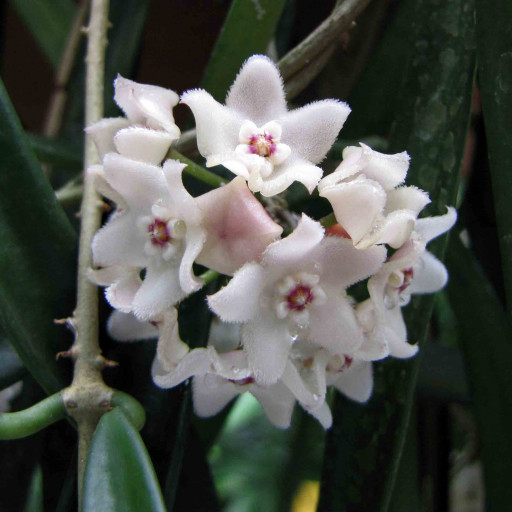
- 🌸 The Blooms: It produces pendulous clusters (umbels) of star-shaped flowers. Each tiny flower is fuzzy, white to pale pink, with a deep red center (corona).
- 🌿 Growth Habit: This is an epiphytic vine, meaning in the wild, it climbs up trees. In a home, it will either trail beautifully from a hanging basket or climb a moss pole with its twinable stems.
🏡 In Your Garden
- 🏔️ Mountain Origins: Because it originates from higher altitudes, Hoya shepherdii actually prefers slightly cooler temperatures than other tropical Hoyas. It often needs a "cool spell" in the winter to trigger its spectacular flowering in the spring.
- 💧 The "Taco Test": This plant is sensitive to overwatering. Instead of following a strict schedule, wait until the long leaves feel slightly flexible—if you can gently bend them toward each other like a taco shell, it’s time to water. If they are stiff, the plant is still hydrated.
- ☀️ Indirect Light: While it loves brightness, its thin leaves can scorch easily. Place it in a spot with filtered light to keep the deep green color vibrant and avoid yellowing.
⚠️ Safety & Toxicity
- ✅ Pet Friendly: Like most members of the Hoya family, Hoya shepherdii is considered non-toxic to cats, dogs, and horses.
- 💧 The Milky Sap: If you prune the plant or a leaf breaks, it will leak a white, milky latex. While not poisonous, this sap can be very sticky and may cause mild skin irritation for people with latex sensitivities.
✨ Fun Fact
The scent of Hoya shepherdii is its most famous trait! While many Hoyas smell like citrus or jasmine, the "String Bean Hoya" is often described as having a rich, intoxicating aroma of dark chocolate and honey, which becomes much stronger in the evening to attract nocturnal pollinators.

Detailed Care Instructions
To grow Hoya Shepherdii (also known as the Sweetheart Hoya), follow these steps:
- Choose a suitable location: Hoya Shepherdii prefers bright but indirect light. A few hours of morning or late afternoon sun is acceptable, but avoid intense midday sun as it can damage the leaves.
- Potting: Use a well-draining potting mix that consists of a blend of regular potting soil, perlite, and orchid bark. This will allow for adequate drainage and prevent waterlogged roots. Select a pot with drainage holes to ensure excess water can escape.
- Watering: Hoya Shepherdii prefers slightly moist soil. Water the plant thoroughly when the top inch of soil feels dry, but avoid overwatering as this can lead to root rot. Ensure the pot drains excess water completely.
- Humidity: These plants prefer higher humidity levels. You can increase humidity by placing a tray of water near the plant or using a humidifier. Mist the leaves occasionally to provide additional moisture.
- Temperature: Keep the plant in an area with temperatures ranging from 60-80°F (15-27°C). It can tolerate slightly cooler temperatures but should be protected from frost.
- Fertilizer: Feed the plant with a balanced, water-soluble fertilizer every 2-4 weeks during the growing season (spring and summer). Dilute the fertilizer to half-strength and apply it to moist soil.
- Pruning: Hoya Shepherdii responds well to pruning. Regularly trim back leggy or unruly stems to maintain a compact, bushy shape. You can also propagate new plants from the cuttings.
- Propagation: To propagate a new Hoya Shepherdii plant, take stem cuttings with at least one node. Dip the cut end in a rooting hormone and plant it in a well-draining potting mix. Keep the soil moist and place the cutting in a warm, bright location until roots develop.
- Support: Hoya Shepherdii is a vining plant that benefits from support. You can provide a trellis, stake, or allow it to trail in a hanging basket. This will help maintain the plant's upright growth and prevent it from becoming tangled.
- Pest control: Monitor the plant for common pests like aphids, mealybugs, or spider mites. If you spot any pests, treat them promptly with insecticidal soap or a diluted neem oil solution.
Remember to be patient as Hoya Shepherdii is a slow-growing plant. With proper care and attention to its needs, it will gradually grow into a beautiful and healthy plant.

Place in a window with dappled sun or a spot in the middle of a room. Or directly in a window facing west or east.

To properly water this plant, first, make sure the soil in the pot is completely dry before watering. Once you have confirmed the soil is dry, use room temperature water and water slowly around the base of the plant until the water starts to drip out of the drainage holes in the pot. Avoid getting water on the leaves or the stem of the plant as this can cause damage. During the winter months, watering should be reduced as the plant enters dormancy. Always monitor the plant to ensure it is not receiving too much or too little water, and adjust the watering schedule as needed.
To fertilize the Hoya Shepherdii plant, use a balanced liquid fertilizer that is designed for indoor plants. Feed it once a month during the growing season, which is usually from spring to early fall. Be sure to dilute the fertilizer to half the recommended strength, and water the plant thoroughly before and after fertilizing. Avoid over-fertilizing, as this can cause damage to the roots and leaves. Always follow the instructions on the fertilizer package carefully, and adjust your fertilizing schedule as needed based on the growth and health of your plant.
When planting or repotting a Hoya Shepherdii plant, it is important to use a soil that is well-draining and has good aeration. A mix that consists of peat moss, perlite, and vermiculite is an excellent choice. This mix will provide the Hoya Shepherdii with the proper drainage it needs while also maintaining moisture in the soil. It is important to avoid using heavy or compact soils that may suffocate the plant's roots. Additionally, adding some slow-release fertilizer to the soil mix can provide the plant with the necessary nutrients for healthy growth. It is important to note that Hoya Shepherdii plants can be sensitive to overwatering, so it is essential to allow the soil to dry out between waterings.
To propagate this particular plant, take a stem cutting that is about 6-8 inches long and has at least 1-2 leaves. Remove any leaves that are close to the bottom of the cutting. Then, dip the cut end of the stem in rooting hormone and place it in a pot filled with moist soil. Cover the pot with a plastic bag and place it in a warm, bright location with indirect sunlight. It is important to keep the soil moist but not saturated. Rooting should occur in about 2-3 weeks. Once the roots have formed and the cutting has begun to grow new foliage, it can be transplanted into its own pot.
Common pests of the hoya shepherdii include Scale insect, mealybugs, spider mites. Make a habit of checking your hoya shepherdii frequently for pests so that any infestations can be caught and managed early.








