Plant Overview
Known as the "Velvet Shrub of Réunion," Hubertia tomentosa is a shimmering highlight of the Mascarene landscape. This resilient survivor thrives in the harsh, high-altitude volcanic regions where few other plants dare to grow. Its striking silvery foliage isn't just for show—it is a clever evolutionary adaptation designed to reflect intense mountain sunlight and trap precious moisture.
🔍 How to Identify
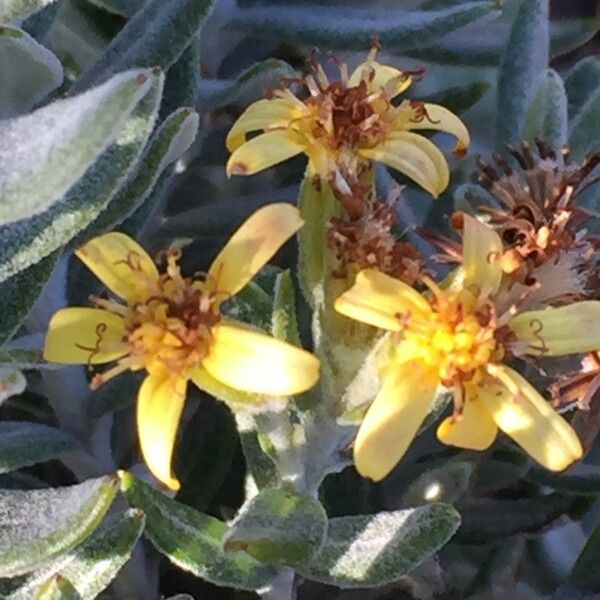
- ☁️ Foliage: The leaves are oval and covered in a thick, woolly layer of white hairs (tomentum), giving the entire plant a ghostly, silver-blue appearance.
- 🌼 Flowers: It produces clusters of cheerful, bright yellow daisy-like blooms that sit atop the silvery branches, creating a high-contrast visual pop.
- 🪵 Growth Habit: A woody, multi-branched shrub that naturally forms a dense, rounded mound, helping it withstand the buffeting winds of its island home.
🏡 In Your Garden
- ☀️ Sun & Silver: To keep that signature silver sheen, this plant needs full, direct sun. In shaded areas, the "felt" on the leaves may thin out, and the plant will lose its compact, ornamental shape.
- 🪨 Drainage is Key: Reflecting its volcanic origins, it thrives in gritty, rocky, or sandy soils. It is highly sensitive to "wet feet," so avoid heavy clay or overwatering, which can lead to rapid root decline.
- ✂️ Pruning Nuance: While it is a slow grower, a light trim after the flowering season helps maintain its bushy form and prevents the center from becoming too woody or bare.
⚠️ Safety & Toxicity
- 🚫 Status: Potentially toxic if ingested.
- 🐾 Details: As a member of the tribe Senecioneae, it may contain pyrrolizidine alkaloids. These compounds can be harmful to the livers of pets (cats, dogs, and horses) and humans if eaten in significant quantities.
- 🧤 Sensitivity: Some gardeners with sensitive skin may find the fine hairs slightly irritating; wearing gloves during heavy pruning is recommended.
✨ Fun Fact
🌋 The Pioneer: Hubertia tomentosa is an endemic treasure of Réunion Island. It is often one of the first plants to colonize "lapilli" (volcanic cinders) after an eruption, acting as a pioneer species that helps stabilize the ground for future life to take hold.

Detailed Care Instructions

Place in a window with dappled sun or a spot in the middle of a room. Or directly in a window facing west or east.

Hubertia Tomentosa plant is a type of flowering plant that is native to certain regions. When it comes to watering this particular plant, it is important to keep in mind that it prefers well-draining soil. Over-watering can cause the roots to rot, so it is important to let the soil dry out slightly in between watering sessions.
One way to gauge when it is time to water this plant is by sticking your finger a few inches deep into the soil. If it feels dry to the touch, then it is time to water. When watering, it is best to water at the base of the plant to avoid getting water on the leaves and flowers. This can lead to disease and rot.
It is important to avoid letting the soil become completely dry, as this can cause stress to the plant and lead to wilting. However, it is equally important not to over-water the plant, as this can be just as damaging.
In summary, Hubertia Tomentosa plant prefers well-draining soil and should be watered when the soil feels dry a few inches deep. Water at the base of the plant to avoid getting water on the leaves and flowers, and avoid letting the soil become completely dry or over-watering.
It is recommended to use a well-draining soil mix that is rich in organic matter and has a slightly acidic to neutral pH for this plant. The soil should be moist but not waterlogged, as excessive moisture can lead to root rot. Avoid using heavy clay soils or those that are prone to compaction, as they can hinder root growth and lead to poor plant performance. Additionally, adding a layer of mulch around the base of the plant can help retain moisture and improve soil structure over time.








