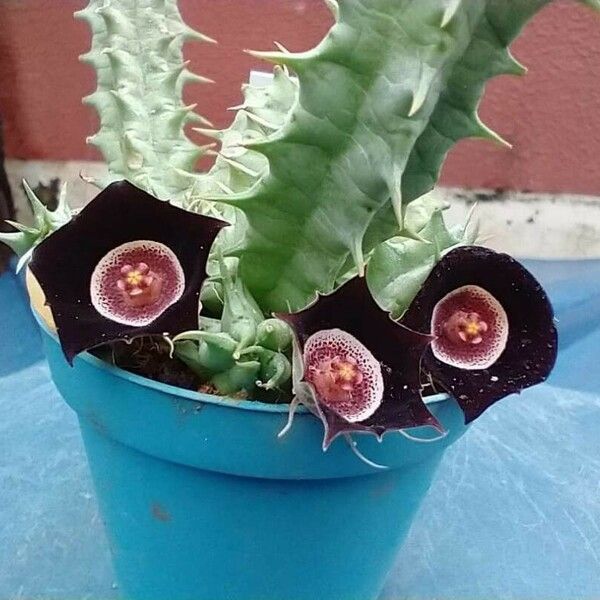
Plant Overview
Known as the "Owl’s Eye" or the "Small Dragon Flower," Huernia oculata is a striking succulent that looks like it belongs in a dark fantasy novel. Native to the rocky deserts of Namibia and Angola, this plant is famous for its uncanny flowers that resemble a wide-open, staring eye. It is a favorite among collectors who enjoy "weird" plants that pack a lot of personality into a small, windowsill-friendly package.
🔍 How to Identify
- 🌵 The Stems: It features succulent, leafless stems that are usually four- or five-angled. These stems are matte green but can turn a moody purple or reddish-brown when exposed to bright sunlight.
- 👁️ The "Eye" Flower: The bloom is a deep, velvety maroon or near-black bell shape. The "eye" effect comes from a stark, contrasting white ring at the base of the inner tube.
- 📐 Spiky Silhouette: The edges of the stems are lined with soft, tooth-like protrusions (tubercles) that give it a "prickly" look without the painful sting of a true cactus.
🏡 In Your Garden
- 🏜️ The Drainage Dilemma: Because it evolved in arid, rocky crevices, this plant is terrified of sitting in wet soil. It has a shallow root system that will rot almost overnight if overwatered; always use a gritty, cactus-heavy potting mix and terracotta pots to help moisture evaporate.
- 🌤️ Light Nuance: It prefers "bright shade" or filtered sunlight. While it needs light to produce those famous "eyes," direct midday sun can scorch the stems. A southern or eastern window with a sheer curtain is its "sweet spot."
⚠️ Safety & Toxicity
- 🐾 Non-Toxic: Great news for pet owners—Huernia oculata is generally considered non-toxic to cats, dogs, and horses.
- 💧 Sap Sensitivity: While it isn't poisonous, the clear sap inside the stems can be a mild irritant. It’s a good idea to wear gloves or wash your hands after pruning or taking cuttings to avoid any skin tingling.
✨ Fun Fact
🪰 The Fly Trick: Like many members of the "carrion flower" family, Huernia oculata uses a clever trick for pollination. It emits a faint scent of decaying protein to trick carrion flies into visiting the flower. Don't worry—the scent of this specific species is so faint that humans usually can't smell it at all, though the flies find it irresistible!

Detailed Care Instructions
To grow Huernia Oculata, also known as the "Carrion Plant" or "Lifesaver Plant," follow these steps:
- Select a suitable pot: Choose a small to medium-sized pot with drainage holes. It is recommended to use a clay pot as it helps promote better airflow and prevents waterlogged soil.
- Soil mixture: Huernia Oculata prefers well-draining soil. Use a combination of cactus or succulent soil mix with perlite or coarse sand to improve drainage. It is also advisable to add some gravel at the bottom of the pot to enhance drainage.
- Planting: Place the plant in the pot, ensuring that the roots are spread out evenly. Fill the pot with the prepared soil mix, leaving some space at the top to allow for watering. Gently press the soil down around the roots to secure the plant.
- Light requirements: Huernia Oculata thrives in bright, indirect light. Place the pot in a spot that receives at least 4-6 hours of bright, indirect sunlight each day. Rotating the plant occasionally can help ensure even growth.
- Temperature and humidity: This plant prefers moderate temperatures between 65-85°F (18-29°C). It can tolerate slightly lower temperatures but is not frost-resistant. Maintain average indoor humidity levels, around 40-50%.
- Watering: Water the plant sparingly, allowing the soil to dry out between waterings. Overwatering can cause root rot. During the active growing season (spring and summer), water about once a week. Reduce watering during the winter months to prevent excess moisture.
- Fertilization: Feed the plant with a diluted, balanced liquid fertilizer specifically formulated for succulents or cacti during the growing season (spring and summer). Follow the instructions on the package for the correct dosage.
- Pruning: Regular pruning is not necessary for Huernia Oculata. However, you can trim off any dead or withered stems to maintain the plant's appearance.
- Propagation: Carrion Plants can be propagated through stem cuttings. Take a healthy stem cutting, allow it to dry for a few days, and then plant it in a well-draining succulent mix. Keep the soil slightly moist until new roots develop.
- Pests and diseases: Huernia Oculata is generally resistant to pests and diseases. However, it is important to regularly inspect for common succulent pests like mealybugs and spider mites. If necessary, treat infestations with an appropriate insecticide or insecticidal soap.
By following these care instructions, you should be able to successfully grow Huernia Oculata. Remember to adjust watering frequency and care during extreme weather conditions or if the plant shows signs of stress.

Place in a window with dappled sun or a spot in the middle of a room. Or directly in a window facing west or east.

Huernia oculata is a succulent plant that requires specific care when it comes to watering. Here's a detailed guide on how to water it properly:
1. Understanding the watering needs: Huernia oculata is a drought-tolerant plant, native to dry regions. It has adapted to survive in arid conditions, storing water in its thick, fleshy stems and leaves. Over-watering can lead to root rot, so it's important to strike the right balance.
2. Watering frequency: Water your Huernia oculata sparingly, allowing the soil to dry out almost completely between waterings. This typically means watering the plant once every 10-14 days during the growing season (spring and summer), and reducing the frequency to once every 3-4 weeks during the dormant period (fall and winter).
3. Watering method: When watering, it's crucial to avoid getting the water on the leaves or stems, as this can encourage rot. Instead, aim to water directly at the base of the plant, near the soil. You can use a narrow-spouted watering can or a drip irrigation system to control the flow of water and avoid over-saturation.
4. Soil drainage: Huernia oculata requires well-draining soil to prevent water from sitting around its roots. Use a specialized cactus or succulent potting mix, or create your own by combining regular potting soil with perlite or coarse sand. This helps excess water to drain away quickly.
5. Check for dryness: Before watering, always check the moisture level of the soil. Insert your finger about an inch or two into the soil; if it feels dry at that depth, it's time to water. Avoid watering if the soil still feels moist.
6. Adjusting watering schedule: Environmental factors can influence how frequently you need to water your Huernia oculata. Take into account the temperature, humidity levels, and amount of sunlight it receives. In hotter, drier conditions, you may need to water slightly more often, while in cooler, more humid conditions, watering less frequently is advisable.
Remember, it's better to underwater than overwater a Huernia oculata. Always observe the plant for signs of underwatering or overwatering, such as shriveled leaves or a mushy stem, and adjust your watering routine accordingly.
To fertilize the Huernia Oculata plant, follow these instructions:
- Choose a balanced liquid fertilizer suitable for succulent plants.
- Dilute the fertilizer to half the recommended strength, as these plants prefer a light feeding.
- Water the plant thoroughly before fertilizing to ensure the soil is moist.
- Pour the diluted fertilizer solution evenly around the base of the plant, taking care not to splash it on the leaves or stems.
- Allow the excess fertilizer to drain away to prevent overfeeding.
- Fertilize the Huernia Oculata plant once every four to six weeks during the growing season, which typically spans spring and summer.
- During the dormant period in fall and winter, suspend fertilization to allow the plant to rest.
- Monitor the plant closely for any signs of nutrient deficiency or excess, such as yellowing or wilting leaves. Adjust the fertilization frequency or strength accordingly.
- Always follow the specific instructions on the fertilizer product for the most accurate usage guidelines for your particular brand.
When selecting soil for Huernia Oculata plant, it is important to consider its specific requirements to ensure optimal growth and health. This plant thrives in well-draining soil that replicates its natural habitat, providing ideal conditions for root development.
A suitable soil mixture for Huernia Oculata should primarily be porous and well-draining to prevent overwatering and the development of root rot. It should allow water to pass through easily while also holding sufficient moisture for the plant to access.
The ideal soil composition could include a combination of organic matter, such as compost or well-rotted manure, to enhance nutrient availability and improve soil structure. This organic matter helps retain moisture without causing waterlogged conditions. Additionally, adding perlite, pumice, or coarse sand to the soil mixture can further improve drainage and aeration.
Ensuring that the soil has a balanced pH level is also important, as Huernia Oculata tends to prefer slightly acidic to neutral soil conditions. Testing the pH of the soil and adjusting it if necessary can be beneficial for the plant's overall health.
It is important to note that Huernia Oculata is a succulent plant, meaning it is adapted to arid environments and therefore has low water requirements. Consequently, the soil should not retain excessive moisture, as this could lead to root rot and other issues. Therefore, it is advised to avoid using heavy, compacted soils or those that retain water for extended periods.
Overall, using a well-draining, porous soil that contains organic matter while maintaining a slightly acidic to neutral pH level should provide an ideal growing medium for the Huernia Oculata plant.
To propagate Huernia Oculata plants, follow these steps:
- Start by selecting a healthy and mature Huernia Oculata plant from which you want to propagate. Look for a plant that has strong stems, vibrant color, and no signs of disease or pest infestation.
- Prepare the propagation medium, which should consist of well-draining soil or a mixture of cactus potting mix and perlite. Make sure the medium is moist but not overly wet.
- Choose a suitable container for propagation, such as a small pot or tray with drainage holes. Fill it with the prepared propagation medium, leaving some space at the top.
- Take a cutting from the Huernia Oculata plant. Locate a healthy stem that is at least 4-6 inches long and has several leaf nodes. A leaf node is a small bump on the stem where the leaves emerge.
- Using a clean and sharp knife or pruning shears, make a clean cut just below a leaf node on the selected stem. Ensure that the cutting is not too long, as it may become unstable during the propagation process.
- Remove the lower leaves from the cutting, leaving only a few at the top. This will prevent leaf rot and allow the cutting to focus its energy on rooting.
- Optionally, you can dip the cut end of the cutting in a rooting hormone powder or gel to promote faster root development. This step is not necessary, but it can increase the success rate of propagation.
- Make a small hole in the propagation medium using your finger or a pencil and gently insert the cut end of the Huernia Oculata cutting into it. Ensure that the node from which the leaves were removed is below the soil surface.
- Firmly press the soil around the cutting to secure it in place and provide stability. Lightly water the potting medium to settle it around the cutting.
- Place the container in a warm and bright location, preferably with indirect sunlight. Avoid exposing the cutting to direct sunlight, as it can cause damage or burn the delicate tissues.
- Maintain a consistently moist but not soggy soil by watering the cutting when the top inch of the medium feels dry. Be careful not to overwater, as excessive moisture can lead to root rot.
- After a few weeks, usually 4-6 weeks, the Huernia Oculata cutting should start developing roots. You can gently tug the cutting to check for resistance, which indicates that roots have formed.
- Once the cutting has a well-established root system, you can transplant it into its own individual pot. Use a well-draining cactus potting mix and maintain the same care routine as for a mature Huernia Oculata plant.
By following these steps, you can successfully propagate Huernia Oculata plants and expand your collection of these unique and fascinating succulents.
Common pests of the huernia oculata include Scale insect, mealybugs, spider mites, thrips. Make a habit of checking your huernia oculata frequently for pests so that any infestations can be caught and managed early.








