Plant Overview
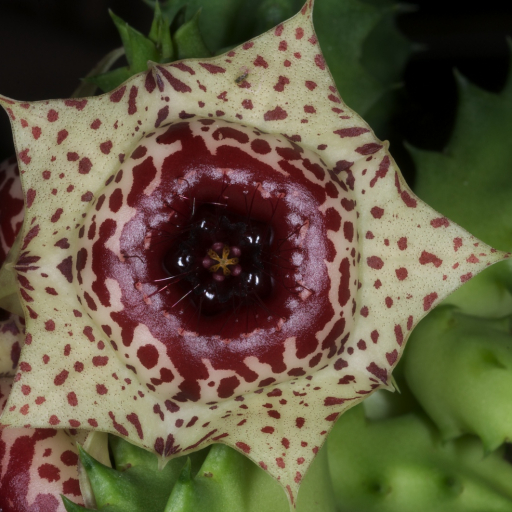
Often called the "Miniature Lifebuoy Plant," Huernia plowesii looks like something plucked from an alien landscape. This low-growing succulent is a favorite among collectors for its dramatic, dark-as-night flowers that feature a glossy, raised ring in the center. While its jagged stems might look intimidating, it is a slow-growing gem that rewards the patient gardener with some of the most architecturally unique blooms in the botanical world.
🔍 How to Identify
- 🌵 The Stems: Fleshy, four-sided stems that grow upright or trail slightly. They feature sharp-looking (but relatively soft) teeth along the edges and can turn a reddish-purple hue when "stressed" by bright sunlight.
- ⭐ The Bloom: Small, star-shaped flowers with five pointed lobes. The color is typically a deep, velvety maroon or chocolate brown—almost appearing black under certain lighting.
- 🍩 The Annulus: A very prominent, shiny, circular ring in the center of the flower (the "lifebuoy") that is smooth and contrasts beautifully with the textured, matte petals.
🏡 In Your Garden
- 🪨 The Drainage Rule: Because Huernia plowesii has a shallow root system, it is highly prone to "wet feet" and rot. Always use a gritty, mineral-heavy cactus mix and consider terracotta pots, which allow the soil to breathe and dry out faster.
- ☀️ Light Nuance: It thrives in bright, indirect light. While it can handle some morning sun, the harsh afternoon rays can scorch the stems. If the plant turns a deep burgundy, it’s telling you it’s reaching its limit for sun exposure.
- 💤 The Winter Nap: This plant requires a strict dry period during the winter. Withholding water during the cold months mimics its natural habitat and is often the "secret key" to triggering a massive bloom in the following spring.
⚠️ Safety & Toxicity
- 🐾 Status: Generally considered non-toxic to cats, dogs, and humans. It is a much safer alternative for pet owners than the toxic Euphorbia species it often resembles.
- 🧴 Sap Sensitivity: While not poisonous, the clear sap inside the stems can be sticky and may cause mild skin irritation for those with sensitive skin. It’s a good idea to wash your hands after pruning or taking cuttings.
✨ Fun Fact
- 🪰 Deceptive Advertising: To ensure pollination, Huernia plowesii uses "carrion mimicry." The flower produces a faint scent of decaying meat to trick flies into visiting. Fortunately, because the flowers are so small, the smell is rarely noticeable to humans unless you get very close!

Detailed Care Instructions
Growing Huernia plowesii, like other succulent plants, can be a rewarding experience if you provide it with the right care. Here's a detailed guide to help you grow and care for your Huernia plowesii:
Light:
- Optimal Lighting: Ensure your plant receives bright, indirect sunlight. These succulents can tolerate some direct sunlight, especially during the morning or late afternoon, but too much direct sunlight can cause sunburn.
- Indoor Placement: If growing indoors, place the plant near a south-facing window, but shield it from the harshest midday sun with a sheer curtain.
Watering:
- Water Sparingly: Huernia plowesii is a succulent and stores water in its fleshy stems. Water the plant thoroughly when the soil is completely dry.
- Avoid Overwatering: Overwatering is a common reason for failure. Make sure the pot has excellent drainage, and water less frequently during the winter months when the plant's growth slows down.
Soil:
- Well-Draining Soil: Use a soil mix designed for succulents or cacti. You can also make your own by combining regular potting soil with sand, perlite, or pumice to ensure good drainage.
- Pot Selection: Use pots with drainage holes to prevent water from accumulating at the bottom, which can lead to root rot.
Temperature and Humidity:
- Temperature Range: Huernia plowesii prefers temperatures between 60°F to 80°F (15°C to 27°C). It can tolerate slightly cooler temperatures but should be protected from frost.
- Humidity: These succulents thrive in low humidity environments, which makes them perfect for dry, indoor conditions.
Fertilizing:
- Moderate Feeding: Fertilize sparingly, only during the growing season (spring and summer). Use a balanced, diluted cactus or succulent fertilizer once a month.
Repotting:
- When to Repot: Repot every 2-3 years or when the plant outgrows its pot. Choose a slightly larger pot and refresh the potting mix.
- Handle Gently: Handle the plant carefully during repotting to avoid damaging its delicate roots.
Propagation:
- Stem Cuttings: The easiest method to propagate Huernia plowesii is through stem cuttings. Allow the cut ends to dry and callous over for a few days before planting in well-draining soil.
- Light Watering: After planting the cuttings, water sparingly until roots develop, then follow usual watering practices.
Pests and Diseases:
- Watch for Pests: Look out for common pests like mealybugs and spider mites. Treat infestations promptly with insecticidal soap or neem oil.
- Prevent Disease: Maintain good air circulation around the plant and avoid splashing water on the stems to prevent fungal diseases.
Flowering:
- Encourage Blooms: With proper care, Huernia plowesii can produce unique and attractive flowers. Adequate sunlight and balanced fertilization contribute to blooming.
By providing the right conditions and regularly monitoring your Huernia plowesii, you'll be able to enjoy a healthy and thriving plant. Happy gardening!
Huernia plowesii is a fascinating succulent that requires specific care when it comes to watering. Here's a detailed guide:
1. Drainage:
- Ensure the pot has good drainage to prevent water from pooling at the bottom. The soil should be a well-draining cactus or succulent mix.
2. Frequency: - During the active growing season, typically spring and summer, water the plant thoroughly but infrequently. Allow the soil to dry out completely between waterings.
- In the dormant season, usually fall and winter, reduce watering significantly. It's often sufficient to water once every few weeks or even less, depending on the humidity and temperature.
3. Watering Method: - Water the soil directly rather than from above to avoid the risk of water sitting on the plant, which can lead to rot. A method like bottom watering, where the pot sits in a tray of water and absorbs moisture from below, can be effective.
4. Amount: - When you do water, water deeply until water runs out of the drainage holes. This ensures that the entire root system gets moisture.
5. Environment: - Monitor the humidity and temperature. A higher temperature might necessitate more frequent watering, while higher humidity might reduce the need for supplemental watering.
6. Signs to Watch: - Observe the plant for signs of drought stress, such as shriveling or wrinkling stems, which indicate it might need water.
- Conversely, watch for signs of overwatering, such as soft, mushy stems or yellowing, which can indicate root rot.
Following these steps will help keep your Huernia plowesii healthy and thriving. Adjust your watering habits based on the specific environmental conditions and the plant's growth cycle.
When fertilizing your Huernia plowesii, follow these guidelines for best results:
- Seasonal Timing: Fertilize during the growing season, which typically spans from spring to early fall. Avoid fertilizing during the winter when the plant is dormant.
- Fertilizer Type: Use a balanced, water-soluble cactus or succulent fertilizer. A formulation like 10-10-10 or 20-20-20 with micronutrients works well.
- Dilution: Dilute the fertilizer to half or quarter of the recommended strength. This is important to avoid over-fertilizing, which can cause nutrient burn.
- Frequency: Apply the diluted fertilizer approximately once a month during the active growing season. If you notice any signs of over-fertilization, such as yellowing leaves or stunted growth, reduce the frequency or further dilute the fertilizer.
- Application Method: Water the plant thoroughly before applying the fertilizer to prevent root burn. Then, apply the fertilizer solution to the soil, avoiding direct contact with the leaves and stems.
- Slow-Release Option: If you prefer, you can use a slow-release fertilizer formulated for succulents. Follow the package instructions for the appropriate amount and frequency.
- Observation: Regularly monitor your plant for signs of nutrient deficiency or excess. Adjust the fertilization schedule as needed based on the plant's health and growth patterns.
By following these instructions, you can ensure that your Huernia plowesii receives the nutrients it needs without the risk of over-fertilization.
Huernia plowesii is a succulent plant that thrives in well-draining soil. Here are specific details about the type of soil you should use:
- Soil Composition:
- Cactus or Succulent Mix: A commercial cactus or succulent potting mix is a good choice since it is specially formulated to provide excellent drainage.
- DIY Mix: If you prefer to make your own mix, combine the following in approximate ratios:
- 2 parts perlite or pumice: These materials improve aeration and drainage.
- 1 part coarse sand: This helps with drainage and prevents soil compaction.
- 1 part potting soil or coconut coir: Provides some organic matter but retains a minimal amount of moisture.
- Optionally, you can add some crushed granite or fine gravel to further improve drainage.
- 2 parts perlite or pumice: These materials improve aeration and drainage.
- Cactus or Succulent Mix: A commercial cactus or succulent potting mix is a good choice since it is specially formulated to provide excellent drainage.
- pH Level:
- The soil should be neutral to slightly acidic, typically within a pH range of 6.0 to 7.0.
- The soil should be neutral to slightly acidic, typically within a pH range of 6.0 to 7.0.
- Aeration and Drainage:
- Ensure the soil mix is porous and loose to prevent waterlogging, which can lead to root rot.
- The container you use should have adequate drainage holes to allow excess water to escape.
- Ensure the soil mix is porous and loose to prevent waterlogging, which can lead to root rot.
- Water Retention:
- Minimal water retention is crucial. Succulents, including this one, prefer drying out completely between waterings.
- Minimal water retention is crucial. Succulents, including this one, prefer drying out completely between waterings.
- Nutrients:
- While succulents do not require highly fertile soil, an occasional diluted balanced fertilizer during the growing season can support healthy growth.
- Avoid soil mixes that contain high levels of organic material, like peat moss, as these retain too much moisture.
By following these guidelines, you can create an ideal soil environment that will help your Huernia plowesii thrive.
- While succulents do not require highly fertile soil, an occasional diluted balanced fertilizer during the growing season can support healthy growth.
Propagating Huernia Plowesii involves a process that is quite similar to the propagation of other succulent species. Here's a step-by-step guide including the key details:
Materials Needed:
- Healthy Parent Plant: Choose a healthy, mature plant from which to take cuttings.
- Sharp Knife or Pruning Shears: Sterilize these tools beforehand to prevent disease.
- Succulent Potting Mix: A well-draining soil mix is essential to prevent root rot.
- Small Pots or Containers: Ensure they have drainage holes.
- Rooting Hormone (Optional): This can accelerate root development but is not strictly necessary.
Steps for Propagation:
1. Taking Cuttings:
- Select Stem Segments: Identify healthy stems on the parent plant, avoiding those with any signs of disease or damage.
- Cut the Stem: Using a sterilized knife or pruning shears, cut a segment that is at least a few inches long. Ensure the cut is clean and precise.
2. Drying the Cuttings:
- Allow to Callous Over: Place the cut stem segments in a dry, shaded area for several days. This drying period allows the cut surfaces to form a callous, which significantly reduces the risk of rot when planted.
3. Preparing the Soil:
- Fill Containers: Place the succulent potting mix into your small pots or containers. The mix should allow for excellent drainage.
- Moistening Soil: Lightly moisten the soil, but do not water it to the point where it is soggy.
4. Planting the Cuttings:
- Insert Cuttings: Once the cuttings have calloused, insert them into the soil, making sure the cut ends are buried just enough to be stable.
- Spacing: If you are planting multiple cuttings in a single pot, ensure they are spaced adequately to allow for growth.
5. Care After Planting:
- Initial Watering: Avoid watering immediately after planting the cuttings. Wait for about a week before giving them their first light watering.
- Light Conditions: Place the pots in a location with bright, indirect sunlight. Direct sunlight can cause stress to the new cuttings.
- Watering Schedule: Water the soil lightly, ensuring it dries out completely between watering sessions. Over-watering can cause the cuttings to rot.
6. Monitoring Growth:
- Root Development: Roots usually begin to develop within a few weeks. You can check for root development by gently tugging on the cuttings; if you feel resistance, roots have likely formed.
- Transplanting: Once the cuttings are well-established and begin to show new growth, they can be transplanted into larger pots if needed.
Tips for Successful Propagation:
- Avoid Over-Watering: Succulents are prone to rot if over-watered. Ensure the soil is dry before re-watering.
- Proper Lighting: Provide enough light to prevent etiolation, where the plant becomes leggy due to insufficient light.
- Temperature: Keep the cuttings in a warm environment, ideally between 70-80°F (21-27°C), which is conducive to root development.
By following these steps, you can successfully propagate Huernia Plowesii and enjoy the growth of new plants.








