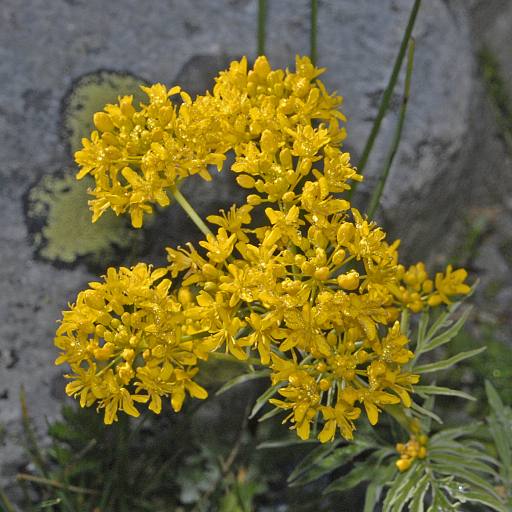
Plant Overview
Often called the Tansy-leaved Rocket, this golden alpine beauty looks like a delicate cross between a feathery fern and a wild mustard plant. Hailing from the high-altitude rocky slopes of the Alps and Pyrenees, it brings a touch of rugged, sun-drenched mountain elegance to any landscape. It is a resilient perennial that thrives where many other plants would struggle against the wind and thin air.
🔍 How to Identify
- 🌿 The Foliage: The leaves are its most striking feature—deeply divided, gray-green, and feathery. They closely mimic the appearance of the Common Tansy (Tanacetum), which gives the plant its name.
- ☀️ The Blooms: In mid-summer, it erupts with dense, rounded clusters of tiny, four-petaled flowers in a brilliant, sulfur-yellow hue.
- 📏 The Structure: It grows in tidy, upright clumps with multiple stems, typically reaching between 12 to 24 inches in height.
🏡 In Your Garden
- ⛰️ Alpine Pedigree: Because it naturally lives in mountain scree, it demands exceptional drainage. It is happiest in "lean" soil—think gravelly or sandy mixes—and will quickly rot if its feet stay wet in heavy clay.
- ❄️ Temperature Resilience: This is a true cold-hardy plant. It can withstand harsh winters and frost with ease, but it may wilt or suffer in areas with extreme, humid summer heat.
⚠️ Safety & Toxicity
- 🛡️ Safety Status: Generally considered non-toxic to humans and common household pets.
- 👅 The Bitter Defense: Like many members of the Mustard family (Brassicaceae), it contains glucosinolates. This gives the plant a sharp, bitter taste that usually discourages dogs, cats, or deer from taking more than a tiny, curious nibble.
✨ Fun Fact
The genus name Hugueninia was created to honor Auguste Huguenin, a 19th-century French botanist who was famous for his deep botanical explorations of the Western Alps, where this plant still clings to the limestone cliffs today.

Detailed Care Instructions








