Plant Overview
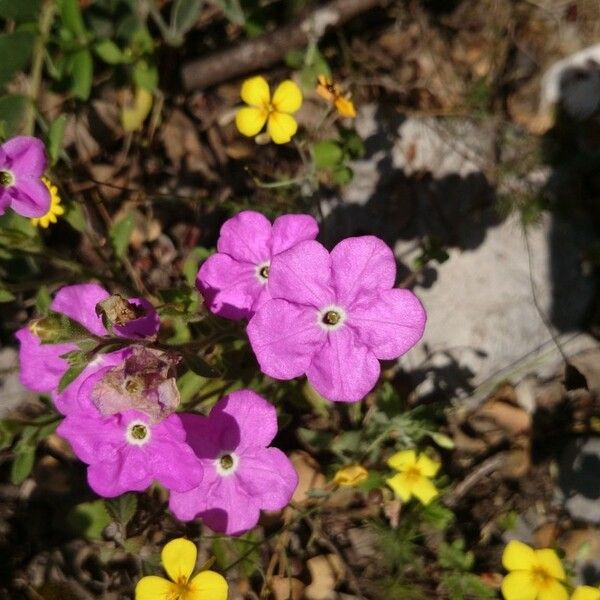
Often called the Texas Hunzikeria, this low-growing beauty is a hidden gem of the Chihuahuan Desert and the rocky Edwards Plateau. While it might look like a delicate wildflower, it is a tough-as-nails member of the Nightshade family, perfectly adapted to the harsh, sun-drenched limestone of the Southwest. Its charming, funnel-shaped blooms earn it comparisons to miniature petunias, often dotting the dusty ground with splashes of deep violet.
🔍 How to Identify
- 🌸 The Flowers: Small, trumpet-shaped blossoms typically ranging from deep purple to lavender with a distinct bright yellow or white "throat" at the center.
- 🌿 The Foliage: Small, narrow green leaves that are often covered in fine, glandular hairs, giving the plant a slightly sticky or "tacky" feel to the touch.
- 🌱 Growth Habit: A sprawling, multi-branched perennial that hugs the ground, rarely reaching more than a few inches in height but spreading out to form a textured mat.
🏡 In Your Garden
- 🪨 Rocky Foundations: This plant is a "calciphile," meaning it thrives in lime-rich, rocky soils where other plants might struggle. It is an excellent choice for rock gardens or xeric landscaping.
- ☀️ Sun Seeker: To see those vibrant purple bells open wide, the plant needs intense, direct sunlight. In the wild, it often tucks itself into crevices between limestone rocks to keep its roots slightly cooler while the foliage soaks up the heat.
- 💧 Drought Specialist: It has evolved to survive long dry spells. Overwatering is its biggest enemy, as soggy soil can quickly lead to root rot for this desert native.
⚠️ Safety & Toxicity
- 🚫 Family Status: As a member of the Solanaceae (Nightshade) family, Hunzikeria texana should be treated with caution.
- 🐾 Toxicity: Most plants in this family contain alkaloids that are toxic if ingested. Keep it away from curious pets or toddlers who might be tempted to sample the small leaves or flowers. It may also cause mild skin irritation for those with sensitive skin due to its sticky hairs.
✨ Fun Fact
The genus name Hunzikeria was chosen to honor the famous Argentine botanist Armando Hunziker, who was one of the world’s leading experts on the Nightshade family. He spent decades documenting the incredible diversity of these plants across the Americas!

Detailed Care Instructions

Place in a bright room that is sun drenched almost all day. Or directly in a south-facing window.

Some plants require more regular watering than others, which should be done every few days. It's critical to maintain the soil moist all of the time. The water requirements of the same plant placed in pots with varying sizes will differ. Because the water in the smaller pot evaporates faster than the water in the larger pot, it will require more watering. Regardless of pot size, the surface should constantly be maintained moist.








