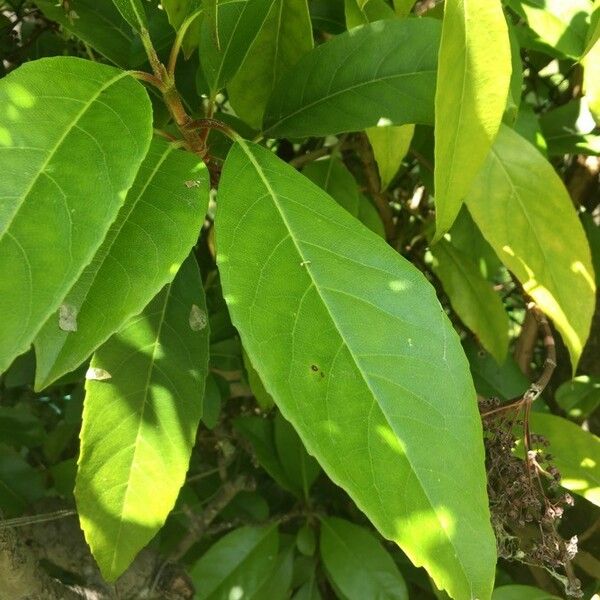
Plant Overview
Known as the Seemann's Climbing Hydrangea, this rare evergreen treasure hails from the mist-shrouded Sierra Madre mountains of Mexico. Unlike its common deciduous cousins that drop their leaves in winter, this sophisticated climber stays lush and vibrant year-round. It is a master of vertical design, using specialized "sticky" roots to scale walls and tree trunks with the grace of a slow-moving green tide.
🔍 How to Identify
- 🍃 Evergreen Foliage: The leaves are thick, leathery, and remarkably glossy. They maintain a deep, emerald-green color even when the rest of the garden has gone dormant.
- 🧗 Aerial Rootlets: Along the woody stems, you will find tiny, fringe-like roots that act like natural Velcro, allowing the plant to cling to rough surfaces without needing a trellis.
- 🤍 Lacecap Blooms: In midsummer, it produces dome-shaped clusters of flowers. The center is filled with tiny fertile florets, surrounded by a delicate ring of larger, creamy-white sterile petals.
🏡 In Your Garden
- 🧱 Vertical Ambition: Because it is a "self-clinging" vine, it is perfect for covering unsightly North-facing brick walls or old tree stumps. However, be patient—it often spends its first two years focusing on root growth before it decides to "take off" vertically.
- 💧 Cool & Consistent: This hydrangea thrives in partial to full shade. It mimics its mountain home by demanding consistent moisture and protection from the scorching afternoon sun, which can bleach its beautiful waxy leaves.
- 🪵 Minimal Maintenance: Unlike other vines that need constant tying back, Seemannii is very well-behaved. Pruning is rarely needed except to direct its path or remove dead wood after the flowering season.
⚠️ Safety & Toxicity
- 🐾 Mildly Toxic: Like all members of the Hydrangea family, this plant contains cyanogenic glycosides.
- 🤢 The Risk: While not usually fatal, ingestion of the leaves or flowers can cause stomach upset, vomiting, and lethargy in cats, dogs, and small children. It is best placed where curious pets won't be tempted to chew on the low-hanging foliage.
✨ Fun Fact
Despite its delicate appearance, Hydrangea seemannii is a survivor from a warmer prehistoric era. It is one of the very few hydrangea species that evolved to be evergreen, allowing it to act as a "living bridge" of greenery in its native Mexican cloud forests.

Detailed Care Instructions
To grow Hydrangea Seemannii plant, follow these steps:
- Choose the right location: Hydrangea Seemannii prefers a partially shaded spot, away from direct sunlight. It also requires well-draining soil rich in organic matter.
- Prepare the soil: Before planting, prepare the soil by removing any weeds or grass. Amend the soil with compost or aged manure to improve its fertility and drainage.
- Planting: Dig a hole that is twice as wide and as deep as the root ball of the plant. Place the plant in the hole, ensuring that the top of the root ball is level with or slightly above the soil surface. Backfill the hole with soil and gently tamp it down.
- Watering: Hydrangea Seemannii plants require regular watering, especially during hot and dry periods. Water deeply at the base of the plant, and avoid wetting the foliage to prevent disease.
- Mulching: Apply a layer of mulch around the plant to help retain moisture, suppress weeds, and regulate soil temperature. Use organic mulch, such as wood chips or compost.
- Pruning: Prune Hydrangea Seemannii in late winter or early spring to remove dead or damaged wood and maintain a desired shape. Avoid pruning too heavily, as it blooms on previous year's growth.
- Fertilizing: Feed Hydrangea Seemannii with a balanced, slow-release fertilizer in spring as new growth begins. Follow the fertilizer manufacturer's instructions for application rates.
- Protecting from frost: If you live in an area with harsh winters, protect the plant from frost by covering it with burlap or a frost cloth. This will help protect the plant and ensure healthy growth in the following season.
Hydrangea Seemannii is a vigorous climber, so you may need to provide it with a trellis or support structure as it grows. With proper care and attention, your Hydrangea Seemannii plant will thrive and produce beautiful blooms.
Hydrangea Seemannii is a flowering plant that requires a certain amount of water to thrive. When watering this plant, it's essential to ensure that you don't overwater or underwater it, as both can lead to problems.
To water this plant, it's important to check the soil's moisture level before watering. Insert your finger about 1-2 inches into the soil to check if it feels dry or moist. If the soil feels dry to touch, it's time to water your plant.
You should aim to water Hydrangea Seemannii deeply and thoroughly. Use a watering can or a hose with a gentle spray nozzle to water the base of the plant. Water until the water starts to run off, indicating that the soil is saturated.
Once you have finished watering, allow the soil to drain completely and make sure there is no water sitting in the saucer or pot. Be careful not to water the leaves of the plant, as this can encourage fungal growth and disease.
During the summer months, when the weather is hot and dry, you may need to water your Hydrangea Seemannii more frequently. In contrast, during winter, you should reduce watering and allow the soil to dry out slightly before watering again.
In summary, to water Hydrangea Seemannii, you need to check the soil's moisture level, water deeply and thoroughly, avoid watering the leaves and reduce watering during winter.
To fertilize the Hydrangea Seemannii plant, start by selecting a balanced, slow-release fertilizer specifically formulated for flowering plants. Follow the instructions on the fertilizer packaging for dilution rates and application methods. Here are some general guidelines:
- Timing: Begin fertilizing in early spring when the plant starts to emerge from dormancy and continue monthly throughout the growing season until late summer.
- Watering: Water the plant thoroughly before applying fertilizer to ensure the soil is moist.
- Dilution: Mix the fertilizer according to the instructions provided on the packaging. Usually, it is recommended to dilute the fertilizer in water.
- Application: Apply the diluted fertilizer evenly around the base of the plant, avoiding direct contact with the stems and foliage.
- Amount: Use the recommended amount of fertilizer based on the size and age of the plant. Do not over-fertilize, as it can lead to nutrient burn or excessive growth.
- Watering after fertilization: After applying the fertilizer, water the plant again to help nutrients penetrate into the soil and reach the root zone.
- Mulching: Consider applying a thin layer of organic mulch around the base of the plant to retain soil moisture and prevent weed growth.
Remember to always follow the specific fertilizing instructions for the brand of fertilizer you choose, as the concentration and application rates can vary. Additionally, it's important to observe the plant for any signs of nutrient deficiencies or excesses and adjust the fertilization schedule accordingly.
The ideal soil for Hydrangea Seemannii plant must be well-draining with a pH range between 5.5 and 6.5. The plant requires fertile soil that is rich in essential nutrients such as potassium and phosphorus but does not require soil that is too high in nitrogen.
It is recommended to mix organic matter such as compost or well-rotted manure into the soil prior to planting to enhance the soil's nutrient content and water holding capacity. The plant prefers soil that is moist but not waterlogged and can tolerate some level of drought.
To ensure optimal growth and development of the plant, it is recommended to conduct a soil test before planting to determine the soil's nutrient content and pH level, which will help determine the necessary amendments required for the soil.
To propagate the Hydrangea Seemannii plant, follow these steps:
- Choose a healthy and well-established mother plant to take cuttings from. Ensure that it is free from any diseases or pests.
- Prepare a clean and sharp pair of pruning shears or scissors, and sanitize them by wiping with rubbing alcohol or dipping in a solution of one part bleach to nine parts water. This helps prevent the transmission of any potential diseases.
- Select the stem you wish to take a cutting from. Ideally, choose a current season's growth that is semi-hardwood, meaning it is not too flexible or too firm. The stem should be around 4-6 inches long.
- Make a clean, sharp cut just below a node. A node is the point on the stem where leaves or buds emerge. This is where new roots will eventually grow from.
- Remove any lower leaves, leaving only a few at the top of the cutting to reduce water loss through transpiration. This is especially important if the leaves are large.
- Optional: If you want to enhance the chances of successful rooting, you can dip the cut end of the stem into a rooting hormone, following the manufacturer's instructions. Although it is not always necessary for hydrangeas, it can improve the odds of successful propagation.
- Fill a small pot or container with a well-draining rooting medium, such as a mixture of perlite and peat moss, or a commercial seed-starting mix. Moisten the medium slightly, ensuring it is evenly damp but not soggy.
- Create a hole in the rooting medium using a pencil or your finger, and insert the cutting about 2 inches deep, ensuring that at least one node is buried below the soil level.
- Gently press the soil around the cutting to hold it in place.
- Place the pot or container in a warm and bright location, away from direct sunlight, as excessive heat and light can cause wilting or scorching of the cutting.
- Mist the cutting with water from a spray bottle periodically to maintain a humid environment. Covering the pot with a clear plastic bag or using a propagating tray with a dome can also help retain moisture.
- Keep the soil slightly moist at all times but avoid overwatering, as this may lead to rotting. Gently lift the pot to check the moisture level or use a moisture meter to ensure appropriate watering.
- After a few weeks to a couple of months, depending on the conditions, the cutting should start developing roots. You can gently tug on the cutting to check if it has anchored itself in the soil.
- Once the cutting has developed a sufficient root system, typically at least an inch long, it can be transplanted into a slightly larger pot or directly into the garden. Gradually expose the new plant to outdoor conditions if transplanted outside.
- Continue to care for the propagated plant as you would a mature Hydrangea Seemannii, providing it with adequate water, sunlight, and nutrients.
Remember, propagating plants can sometimes be a trial-and-error process, and success rates may vary. Patience and persistence are key when attempting to propagate Hydrangea Seemannii or any other plants.








