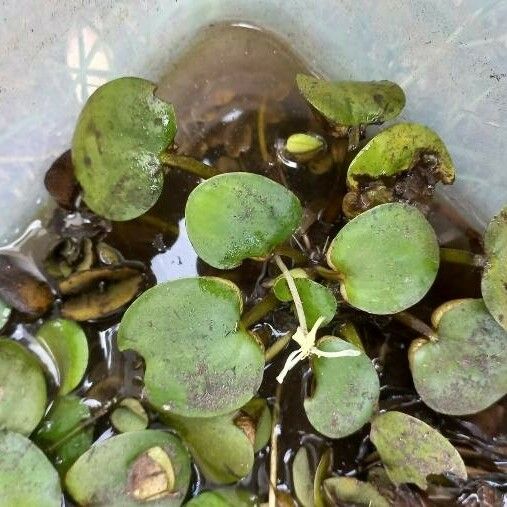
Plant Overview
Often called the Amazon Frogbit, this floating beauty is the aquatic world’s version of a miniature lily pad. Originally hailing from the freshwater systems of Central and South America, it has become a superstar in the aquarium hobby for its ability to create a "jungle" look while keeping the water crystal clear. Its thick, pillowy leaves and trailing roots provide a perfect sanctuary for tiny fish and shrimp.
🔍 How to Identify
- 🍃 Leaf Texture: The leaves are circular to heart-shaped, featuring a smooth, waxy bright green top and a distinctively spongy, pale underside filled with air pockets.
- 🕸️ Feathery Roots: Long, fine, purple-to-brown roots hang vertically into the water column, often reaching several inches deep, resembling a submerged forest.
- 🌱 Growth Pattern: It spreads horizontally by sending out "runners" (stolons) that sprout new plantlets, quickly carpeting the water’s surface.
🏡 In Your Garden & Aquarium
- 💧 The "Dry Leaf" Rule: While it lives in water, the tops of the leaves hate being wet. In a pond or tank, ensure there is gentle water movement; if constant splashes or condensation sit on the leaves, they will quickly turn yellow or rot.
- 🧪 Nutrient Sponge: This plant is a natural filter. It is incredibly efficient at sucking up nitrates and phosphates. If you notice the roots getting shorter or the leaves turning pale, it’s likely telling you the water is "too clean" and it needs a liquid fertilizer boost.
⚠️ Safety & Toxicity
- ✅ Status: Non-toxic and safe.
- 🐾 Details: It is generally safe for cats, dogs, and inquisitive toddlers. However, it is a fast grower and can be highly invasive in tropical climates. Never dispose of excess Frogbit in local lakes or streams, as it can block sunlight and oxygen for native species.
✨ Fun Fact
The "spongy" tissue on the underside of the leaf is called aerenchyma. These are specialized air-filled cells that act exactly like a life jacket, ensuring the plant remains buoyant even if it’s pushed underwater by a heavy rain or a curious frog!

Detailed Care Instructions
Growing Hydrocharis laevigata, commonly known as the European Frogbit, requires specific attention to its aquatic habitat preferences. Here's a guide to help you grow this plant successfully:
1. Environment and Placement
- Water Habitat: Hydrocharis laevigata thrives in still or slow-moving water bodies such as ponds, shallow lakes, and slow streams.
- Temperature: It prefers temperate climates and can tolerate a range of temperatures, but it grows best in water temperatures between 15-25°C (59-77°F).
- Light: This plant enjoys full to partial sunlight. Ensure it gets at least 4-6 hours of light daily.
2. Planting
- Propagation: Hydrocharis laevigata can be propagated by dividing clumps or from seed. However, it most commonly spreads vegetatively through runners.
- Placement in Water: Simply place the plant on the surface of the water. Roots will hang down and start growing into the substrate if available.
3. Water Quality and Maintenance
- Water: Use fresh, clean, and clear water. Ensure it is free from pollutants.
- Filtration: While not strictly necessary, gentle filtration can help keep the water clean without disturbing the floating plants.
- Nutrients: Being an aquatic plant, it absorbs nutrients directly from the water. Ensure the water has sufficient nutrients by using a balanced liquid fertilizer designed for aquatic plants if necessary.
4. Monitoring Growth
- Regular Inspection: Check the plant regularly to ensure it's not overcrowded, as it can spread rapidly and form dense mats.
- Pruning: To maintain healthy growth and prevent it from choking other plants, prune back any excess growth regularly.
- Pest Control: Keep an eye out for pests like aphids, which can sometimes infest aquatic plants. Use suitable aquatic-safe controls if necessary.
5. Winter Care
- Dormancy: In colder climates, Hydrocharis laevigata goes dormant in winter. The plant produces turions (winter buds) that sink to the bottom and remain dormant until conditions improve in spring.
- Protection: In areas where water may freeze solid, consider moving the plants or turions to a frost-free environment during the harshest months.
6. Invasive Potential
- Control Spread: In some regions, Hydrocharis laevigata can become invasive, spreading rapidly and outcompeting native species. Always check local regulations before planting and be prepared to manage its spread responsibly.
By providing the right environment and regular maintenance, you can successfully grow and enjoy the beauty of Hydrocharis laevigata in your aquatic garden or pond.
Hydrocharis laevigata is an aquatic plant that requires specific conditions to thrive. Here are detailed steps on how to water and maintain it:
Water Conditions:
- Water Quality: The plant thrives best in clean, clear water. Ensure the water is free from heavy pollutants and has a neutral pH (around 6.5 to 7.5).
- Water Temperature: Ideal water temperature ranges between 15°C to 25°C (59°F to 77°F). Avoid sudden temperature changes as they can stress the plant.
- Water Hardness: Soft to moderately hard water is optimal. If you have hard water, consider using a water softener to maintain the appropriate conditions.
Watering Tips:
- Water Level: Keep the water level consistent, ensuring it covers the plant's base. Fluctuating water levels can lead to instability and potential uprooting of the plant.
- Circulation: Moderate water circulation is essential. Stagnant water can lead to algae growth and reduced oxygen levels, detrimental to the plant’s health.
- Aeration: Use an air pump or filter to oxygenate the water. This helps in maintaining healthy water parameters and supports the plant’s growth.
Placement:
- Light Exposure: Place the plant in a location where it receives ample indirect sunlight. Direct sunlight for extended periods can cause algae blooms and overheat the water.
- Spacing: Ensure adequate spacing if you are growing multiple plants to avoid overcrowding and competition for nutrients and light.
Maintenance:
- Regular Cleaning: Periodically clean the water container or pond where the plant is housed to prevent debris accumulation and algae growth.
- Partial Water Changes: Perform partial water changes (about 25-30%) every couple of weeks to maintain water quality and remove any accumulated toxic substances.
- Nutrient Management: If you notice yellowing leaves, it could be due to nutrient deficiency. Consider using aquatic plant fertilizers, but avoid over-fertilizing as it can lead to excessive algae growth.
- Pest and Disease Control: Monitor the plant regularly for signs of pests or disease. If any are detected, treat with appropriate measures like removing affected parts or using safe, aquatic-friendly treatments.
By following these guidelines, you can ensure that Hydrocharis laevigata remains healthy and thrives in its aquatic environment.
To effectively fertilize Hydrocharis laevigata, follow these guidelines:
- Type of Fertilizer:
- Use a balanced, water-soluble fertilizer with an N-P-K ratio close to 10-10-10 or 20-20-20.
- Use a balanced, water-soluble fertilizer with an N-P-K ratio close to 10-10-10 or 20-20-20.
- Dilution:
- Dilute the fertilizer to about one-quarter of the recommended strength indicated on the product label. This plant is sensitive to over-fertilization, and a weak solution works best.
- Dilute the fertilizer to about one-quarter of the recommended strength indicated on the product label. This plant is sensitive to over-fertilization, and a weak solution works best.
- Application Frequency:
- Apply the diluted fertilizer once every 2-4 weeks during the active growing season, typically from spring to early fall.
- Apply the diluted fertilizer once every 2-4 weeks during the active growing season, typically from spring to early fall.
- Application Method:
- Add the diluted fertilizer directly into the water where the plant is growing since it absorbs nutrients through its surroundings.
- Add the diluted fertilizer directly into the water where the plant is growing since it absorbs nutrients through its surroundings.
- Water Quality:
- Ensure that the water is free of chlorine and heavy metals, as these can harm the plant. Using distilled water or letting tap water sit out for 24 hours to dechlorinate can be beneficial.
- Ensure that the water is free of chlorine and heavy metals, as these can harm the plant. Using distilled water or letting tap water sit out for 24 hours to dechlorinate can be beneficial.
- Monitoring:
- Regularly monitor the plant for signs of nutrient deficiencies, such as yellowing leaves or stunted growth, and adjust the fertilization regimen accordingly.
- Regularly monitor the plant for signs of nutrient deficiencies, such as yellowing leaves or stunted growth, and adjust the fertilization regimen accordingly.
- Avoid Over-fertilization:
- Be cautious not to over-fertilize, as this can cause algae growth and harm the plant. If algae becomes a problem, reduce the frequency or concentration of the fertilizer.
By following these steps, you can help ensure your Hydrocharis laevigata remains healthy and vibrant.
- Be cautious not to over-fertilize, as this can cause algae growth and harm the plant. If algae becomes a problem, reduce the frequency or concentration of the fertilizer.
Sure, Hydrocharis laevigata thrives best in aquatic environments and does not typically require traditional soil. Instead, you should focus on providing it with the right water conditions and, if needed, use substrates that help anchor the plant. Here are some key points to consider:
- Water Quality: Ensure that the water is clean and free of pollutants. This plant prefers stagnant or slow-moving, shallow water.
- pH Levels: Maintain a neutral to slightly acidic pH level, ideally between 6.5 and 7.5.
- Nutrient Availability: Aquatic plants like Hydrocharis laevigata absorb nutrients directly from the water. Ensure that the water is rich in essential nutrients, such as nitrogen, phosphorus, and potassium. This can be achieved through natural means or by adding aquatic plant fertilizers.
- Substrate: While this plant can float freely, if you prefer to have it anchored, you can use a substrate at the bottom of your aquatic environment. Materials like fine gravel or aquatic plant soil can be used. These substrates provide the necessary minerals and support for root development.
- Light: Ensure that the plant gets adequate sunlight or artificial lighting that mimics natural sunlight. Aquatic plants often require 6-8 hours of light per day for optimal growth.
By providing the right water conditions and using appropriate substrates if anchorage is needed, you can create a suitable environment for Hydrocharis laevigata to thrive.
Hydrocharis laevigata, an aquatic plant, can be propagated effectively through vegetative means, specifically by employing the following steps:
- Selecting a Healthy Parent Plant: Choose a robust and healthy plant. Ensure that it has vibrant green leaves and a well-developed root system.
- Identifying Runners: Hydrocharis laevigata spreads naturally via runners. These are horizontal stems that grow out from the parent plant.
- Cutting Runners: Locate the points where the runners have developed new plantlets. These young offshoots will typically have their own small root systems. Using sterilized scissors or a knife, carefully cut the runner segments, ensuring each segment has a plantlet with roots attached.
- Preparing the Environment: This species thrives in still or slow-moving water with shallow depths, often in nutrient-rich, muddy or clear water. You can prepare a similar controlled environment in a pond or an aquarium with rich substrate conditions.
- Planting the Offshoots: Gently place the cut plantlets in your prepared environment. If you're using an aquarium or a pond, allow the new plantlets to float on the surface. Their roots will naturally start to reach down into the substrate for nutrients.
- Providing Proper Care:
- Light: Hydrocharis laevigata prefers bright, indirect light. Ensure it receives ample light, about 6-8 hours a day, but not intense direct sunlight which could harm the delicate foliage.
- Temperature: Maintain a water temperature between 18-24°C (64-75°F) for optimal growth.
- Nutrients: Supplement the water with appropriate aquatic plant fertilizers if necessary. However, do not over-fertilize, as this could lead to nutrient imbalances and algal blooms.
- Water Quality: Keep the water clean and maintain good quality. Avoid pollutants and ensure minimal water disturbance to replicate the plant’s natural habitat.
- Light: Hydrocharis laevigata prefers bright, indirect light. Ensure it receives ample light, about 6-8 hours a day, but not intense direct sunlight which could harm the delicate foliage.
- Monitoring Growth: Regularly check the health of the new plants. They should establish roots within a few weeks and start producing their own runners eventually.
By following these steps, you can successfully propagate Hydrocharis laevigata, multiplying your plant population gently and effectively in a controlled environment.








