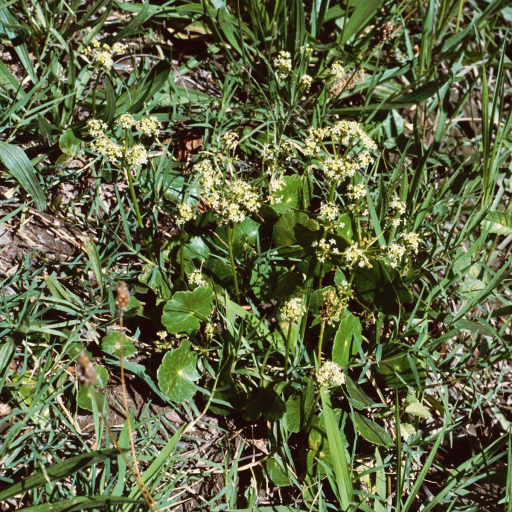
Plant Overview
Often called the Largeleaf Pennywort or Coastal Pennywort, this charming creeper looks like a collection of tiny, green umbrellas scattered across the ground. Native to the sandy coastlines of the Americas, it is a master of the "beach life," frequently found dancing across sand dunes and marshy edges. While some gardeners view it as a persistent weed, others prize it for its ability to create a lush, emerald carpet in places where other plants struggle to drink.
🔍 How to Identify
- ⛱️ The "Umbrella" Leaf: The leaves are perfectly circular (peltate), meaning the stem attaches right in the center of the leaf's underside rather than at the edge.
- 🌊 Scalloped Edges: Each glossy, bright green leaf features gently ruffled or scalloped margins, giving it a soft, ornate look.
- ☁️ Cloud-like Blooms: It produces small, branched clusters of tiny white or creamy-yellow flowers that hover slightly above the foliage like miniature clouds.
🏡 In Your Garden
- 💧 The Water Lover: This plant thrives in "wet feet" conditions. If you have a soggy spot in your yard or a pond margin that needs covering, it will move in happily. In dry soil, it will quickly wilt to let you know it’s thirsty.
- 🏃 A Determined Wanderer: It spreads via underground runners (rhizomes). Because it is so efficient at spreading, it is best kept in containers or areas where you don’t mind a dense groundcover, as it can be difficult to remove once it settles into a lawn.
⚠️ Safety & Toxicity
- ✅ Low Risk: Hydrocotyle bonariensis is generally considered non-toxic to humans and common household pets.
- 🛑 Environmental Filter: Be cautious—pennyworts are excellent at absorbing minerals from their environment. If the plant is growing in a ditch or near a road where there is chemical runoff or heavy metal pollution, it should not be handled excessively or ingested.
✨ Fun Fact
The name Hydrocotyle comes from the Greek words for "water" and "cup," referring to the slight cup-like depression in the center of the leaves of some species, which can actually hold a single drop of dew or rainwater!

Detailed Care Instructions
To grow Hydrocotyle bonariensis, also known as the pennywort or water pennywort, follow these steps:
- Choose a suitable location: Select a spot with partial to full sun exposure. The plant can tolerate some shade as well. Make sure the area has moist or wet soil, as this plant prefers constantly moist conditions.
- Prepare the soil: Pennywort thrives in rich, loamy soil. Before planting, amend the soil with compost or organic matter to improve fertility and drainage. The soil should be slightly acidic with a pH between 5.5 and 7.0.
- Sow the seeds: If starting from seeds, sow them directly on the soil surface or barely cover them with a thin layer of soil. Maintain moist soil throughout the germination process, which usually takes 10-20 days. Alternatively, you can purchase young nursery plants.
- Water regularly: Since Hydrocotyle bonariensis is a water-loving plant, it requires regular watering to keep the soil moist. If growing indoors, make sure the pot has proper drainage and water when the top inch of soil feels dry. Outdoor plants may require supplementary water during dry spells.
- Mulch around the plants: Apply a layer of organic mulch around the base of the plants to help conserve moisture and suppress weed growth. Mulching also keeps the soil temperature consistent.
- Fertilize when needed: Pennywort is not a heavy feeder, but you can apply a balanced, slow-release fertilizer or organic fertilizer once or twice a year during the growing season to promote lush foliage.
- Prune if necessary: If the plants become overgrown or start to decline, you can trim them back to rejuvenate growth. Regular pruning can also help maintain a tidy appearance.
- Pests and diseases: Hydrocotyle bonariensis is generally resistant to pests and diseases. However, occasional issues with aphids or powdery mildew can arise. Use organic pest control methods like insecticidal soaps or neem oil if necessary.
- Divide or propagate: Every few years, you may need to divide the plants to control their growth or expand your planting area. Simply dig up clumps of the plant, separate the individual stems, and replant them.
By following these steps, you should be able to successfully grow Hydrocotyle bonariensis plants in your garden or as a water plant.

Place in a bright room that is sun drenched almost all day. Or directly in a south-facing window.

To water this particular plant, you should ensure that you do not overwater or underwater it. Make sure to check the soil moisture level using a moisture meter or by sticking your finger into the soil. If the soil feels dry to the touch, water the plant deeply and evenly. Watering should be done at the base of the plant, ensuring that the leaves and stems remain dry to prevent fungal growth. It is recommended to water this plant regularly but with enough time in between to allow the soil to slightly dry out before watering again. It is also important to use good quality water, preferably filtered or rainwater, to avoid any mineral build-up in the soil. Watering should be adjusted based on the temperature and humidity of the plant's environment, as well as its growth stage.
To fertilize the Hydrocotyle Bonariensis plant, mix a balanced fertilizer with equal parts of nitrogen, phosphorus, and potassium. Apply the fertilizer using a liquid solution at a rate of two teaspoons per gallon of water every two weeks during the growing season. Avoid over-fertilizing, as this may lead to excessive growth or burnt leaves. Always follow the manufacturer's instructions on the fertilizer label.
Hydrocotyle Bonariensis requires a well-draining soil that is rich in organic matter. It does best in loamy, sandy, or clay soils that have good water retention capacity but don't become waterlogged. The pH level should be slightly acidic to neutral, around 5.5 to 7.0. A slow-release fertilizer may also be added to the soil to provide nutrients for healthy growth. It is important to avoid using heavy, compacted soils that may impede root growth and cause the plant to wilt or die. Additionally, maintaining adequate soil moisture and proper drainage is crucial for the plant's health.
Hydrocotyle Bonariensis plant can be propagated through several methods. One way is by using stem cuttings. Take stem cuttings from the main plant that are at least 4 inches in length and have several leaves. Place the cuttings in a container filled with water and change the water daily. After a few days, roots will start to develop, and you can then transplant the cutting into soil.
Another way to propagate Hydrocotyle Bonariensis plant is by division. Carefully separate the plant into smaller sections, making sure that each section has roots attached. Each new section can be planted in its own container or in the garden. Make sure to provide proper care, including adequate watering and fertilization, to help the new plants establish themselves.
Lastly, Hydrocotyle Bonariensis plant can also be propagated through seed. Collect the seeds from a mature plant and plant them in a well-draining soil mixture. Keep the soil moist, and the seeds will typically germinate within a couple of weeks. Once the seedlings are large enough, they can be transplanted into larger containers or directly into the ground.








