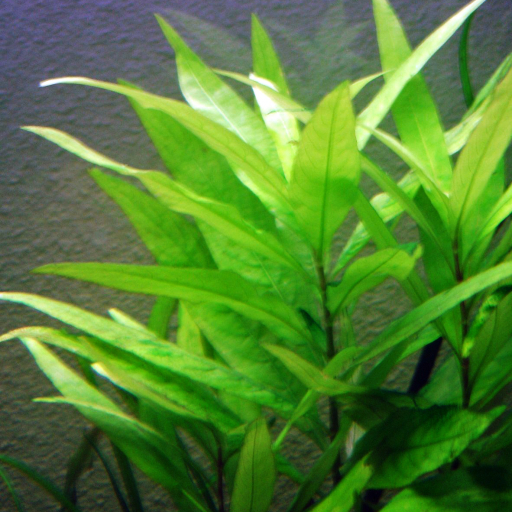
Plant Overview
Known affectionately as the "Temple Plant" or "Giant Hygro," Hygrophila corymbosa is a staple of the freshwater aquarium world. Native to the lush wetlands of Southeast Asia, this hardy beauty is famous for its rapid growth and its ability to transform a bare tank into a vibrant underwater jungle in just a few weeks. It is a "true" aquatic plant that can thrive both fully submerged or with its head poking out into the open air.
🔍 How to Identify
- 🌿 Leaf Structure: Features long, lance-shaped leaves that grow in opposite pairs along a thick central stem. Depending on the variety, leaves can be broad or narrow.
- 🎨 Color Palette: Usually displays a bright, lime-green hue, but under intense lighting, the top leaves can take on a beautiful bronze or reddish tint.
- 🌸 Emergent Blooms: If allowed to grow above the water surface, it develops stiffer, hairier leaves and produces small, charming purple flowers that look like tiny snapdragons.
🏡 In Your Garden (Aquarium Context)
- ✂️ The Pruning Game: Because it grows so quickly, it can easily take over a tank. To keep it bushy rather than leggy, you must regularly "top" the plant by cutting the stem; this encourages it to send out lateral shoots and grow wider.
- 🧪 Nutrient Hungry: While it is a beginner-friendly plant, it is a heavy feeder. It acts like a "sponge" for nitrates, helping to keep your water clean, but it will show signs of distress (like holes in the leaves) if it runs low on iron or potassium.
- 🪵 Substrate & Anchoring: It develops a massive root system. It prefers a nutrient-rich substrate where it can anchor itself firmly, as its thick stems can become quite buoyant.
⚠️ Safety & Toxicity
- 🛡️ Safe for Residents: This plant is completely non-toxic to fish, shrimp, and snails. In fact, many fry (baby fish) use its dense foliage as a safe haven from predators.
- 🐾 Pet Safety: It is generally considered safe for household pets (cats/dogs) if they happen to take a nibble of an emergent leaf, though it is intended strictly for aquatic environments.
✨ Fun Fact
Hygrophila corymbosa is a master of "morphing." This phenomenon, known as heterophylly, means the plant grows completely different leaf shapes and textures depending on whether it is underwater or in the air, allowing it to survive the dramatic seasonal floods of its native home.

Detailed Care Instructions
To grow Hygrophila corymbosa plant, also known as temple plant, you can follow these steps:
- Light: Provide bright to moderate light for the plant. If possible, give it access to at least 4-6 hours of direct sunlight each day. Artificial lighting with a color temperature of 6500k is also suitable.
- Water: Keep the soil consistently moist but not waterlogged. Consider using a well-draining potting mix with good moisture retention. Water the plant when the top inch of soil feels dry.
- Temperature and Humidity: The ideal temperature range for Hygrophila corymbosa is between 72-82°F (22-28°C). Maintain a moderate to high humidity level around the plant. Misting the leaves regularly can help increase humidity.
- Fertilizer: Feed the plant with a balanced aquatic plant fertilizer or a slow-release fertilizer pellet formulated for aquarium plants. Follow the manufacturer's instructions for dosage and frequency.
- Pruning: Regularly trim the plant to maintain its shape and encourage bushy growth. Cut back any dead or yellowing leaves to keep the plant healthy.
- Propagation: You can propagate Hygrophila corymbosa through stem cuttings. Cut a 4-6 inch section from a healthy stem and remove any lower leaves. Plant the cutting in a new pot with fresh soil, keeping it moist until roots develop.
- Tank Requirements: If growing the plant in an aquarium, provide a tank with sufficient depth and space for the plant to grow. Provide adequate filtration and water circulation to maintain water quality.
Remember to monitor the plant regularly for any signs of pests or diseases. With proper care, Hygrophila corymbosa can grow quickly and provide a beautiful addition to your indoor or outdoor garden or aquarium.

Place in a window with dappled sun or a spot in the middle of a room. Or directly in a window facing west or east.

To water this plant, you should thoroughly wet the soil of its pot. It is important not to let the soil dry out completely as this can damage the plant. You should also avoid overwatering, which can lead to root rot. It is recommended that you water the plant once a week or as needed depending on its environment and the size of its pot. Finally, you should take care to avoid getting water on the leaves of the plant, as this can promote the growth of bacteria and lead to disease.
To fertilize this plant, you should use a balanced liquid fertilizer once a week or every other week, depending on the strength of the fertilizer. Be sure not to over-fertilize, as this can lead to algae growth and other problems. Additionally, you may want to supplement with iron or micronutrients to promote healthy growth. Always follow the package instructions and adjust your fertilization schedule based on the needs of your individual plant.
Hygrophila Corymbosa requires a nutrient-rich substrate soil for optimal growth. The pH level of the soil should be slightly acidic to neutral, ranging between 6.5 to 7.5. The soil must be able to retain moisture as Hygrophila Corymbosa is a water-loving plant. The soil should also provide good aeration to ensure healthy root growth. A substrate that contains essential nutrients such as potassium, nitrogen, and phosphorus is ideal for this plant. The soil should be free from any harmful chemicals such as pesticides and fertilizers that may harm the plant. It is also important to ensure that the soil is free from any pests or diseases that could potentially harm the Hygrophila Corymbosa plant.
Hygrophila Corymbosa can be propagated through stem cuttings. Take a healthy stem cutting that is approximately 6-8 inches long and has a few leaves attached to it. Remove any leaves that are toward the bottom of the stem leaving only the top 1-2 leaves intact.
Next, prepare a small container with a substrate such as potting soil or sand. Place the stem cutting in the substrate so that the bottom of the stem is buried in the substrate. Water the cutting thoroughly and place it in a location with bright, indirect sunlight.
It is important to keep the substrate moist but not waterlogged, as too much moisture can cause the cutting to rot. After a few weeks, the cutting should start to develop roots and new shoots. Once the roots become established, the new plant can be transferred to a larger aquarium or container.
Propagation can also be achieved by allowing the plant to produce flowers and seeds. The seeds can be collected and sown in a substrate of choice to grow new plants. However, it should be noted that this method takes longer than stem cutting propagation.








