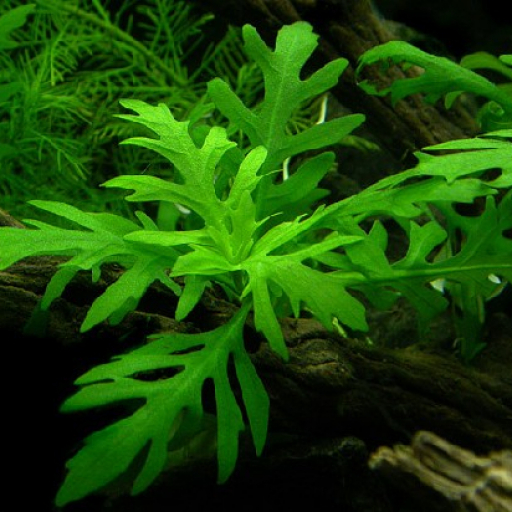
Plant Overview
Often called Water Wisteria, this vibrant green beauty is the ultimate "shape-shifter" of the freshwater world. Originally found in the marshy wetlands of South Asia, it has become a staple for aquarists because of its striking, lace-like foliage and legendary resilience. Whether you are a first-time fish keeper or a seasoned aquascaper, this plant is a reliable choice for adding a lush, jungle feel to any underwater environment.
🔍 How to Identify
- 🌿 Heterophilly: This plant exhibits "different leaves," meaning its submerged leaves are feathery and deeply lobed, while leaves grown above water (emersed) are small, round, and slightly hairy.
- ✳️ Lacy Texture: Underwater, the leaves look like delicate green snowflakes or fern fronds that sway beautifully with the water current.
- 📏 Stem Structure: It grows on a central green stem that can reach up to 20 inches in height, making it a dramatic background piece for larger tanks.
🏡 In Your Garden (Aquarium Context)
- 🧼 The Nutrient Sponge: This plant is famous for its rapid growth, which allows it to "suck up" excess nitrates and phosphates. This helps prevent algae blooms and keeps the water chemistry balanced for your fish.
- ✂️ Easy Propagation: You don't need seeds to grow more; simply snip a side shoot or the top of a main stem and push it into the substrate. It will grow roots and establish itself in a matter of days.
- 🌞 Light & Form: While it can survive in low light, brighter lighting encourages the leaves to become much more "feathery" and intricate. Under low light, the leaves may grow wider and less divided.
⚠️ Safety & Toxicity
- ✅ Safe Status: Water Wisteria is entirely non-toxic and is one of the safest plants to include in a community tank.
- 🐾 Pet & Fish Safety: It is a favorite for shrimp and baby fish (fry), providing excellent hiding spots and surface area for beneficial microorganisms to grow. It is not known to be harmful to cats or dogs, though it stays submerged.
✨ Fun Fact
- ✨ Fact: The leaf shape of Hygrophila difformis is so sensitive to its environment that it can be used as a "biological thermometer"—the colder the water, the less divided and more solid the leaves tend to become!

Detailed Care Instructions
Growing Hygrophila difformis, commonly known as Water Wisteria, is relatively easy due to its hardy nature. Here are the steps to cultivate this versatile aquatic plant:
1. Tank Setup:
- Tank Size: Water Wisteria thrives in medium to large tanks (20 gallons or more).
- Substrate: Use nutrient-rich soil, aquarium gravel, or plant-specific substrate. Water Wisteria also grows well in inert substrates if supplemented with root tabs.
- Water Parameters:
- Temperature: Ideally between 75-82°F (24-28°C).
- pH: Slightly acidic to neutral, ranging from 6.5 to 7.5.
- Hardness: Soft to moderately hard water (2-12 dKH).
2. Lighting:
- Temperature: Ideally between 75-82°F (24-28°C).
- Intensity: Moderate to high lighting ensures vibrant growth and vibrant coloring. Low light can result in leggy plants.
- Duration: Provide at least 8-10 hours of light per day. Adjust based on plant’s response and algae growth.
3. CO2 and Fertilization:
- CO2 Injection: While not mandatory, CO2 supplementation encourages faster and healthier growth.
- Fertilizers:
- Liquid Fertilizers: Use a comprehensive liquid fertilizer that provides essential nutrients, especially if the substrate is inert.
- Root Tabs: Beneficial for nutrient uptake through roots.
- Macro and Micronutrients: Ensure your plants receive nitrogen, phosphates, and potassium (macros), as well as iron and other trace elements (micros).
4. Planting:
- Liquid Fertilizers: Use a comprehensive liquid fertilizer that provides essential nutrients, especially if the substrate is inert.
- Method: Water Wisteria can be planted in the substrate or left floating. Cuttings can be planted directly in the substrate.
- Spacing: Give each plant some space (around 2-3 inches) to allow for growth and adequate water circulation.
5. Maintenance:
- Pruning: Regularly trim stems to maintain desired shape and encourage bushier growth.
- Propagation: Simply cut a portion of the stem with leaves and roots, and plant it in the substrate. It will develop new roots and grow.
- Cleanliness: Remove any decaying leaves to prevent detritus buildup and algae.
- Water Changes: Regular water changes (20-30% weekly) help keep nutrient levels balanced and water clean.
6. Common Problems:
- Yellowing Leaves: Can indicate a nutrient deficiency, often a lack of nitrogen or iron. Address with appropriate fertilizers.
- Leggy Growth: Usually a sign of insufficient light. Increase light intensity or duration as needed.
7. Tank Environment:
- Tank Mates: Compatible with most fish and invertebrates, non-aggressive species are ideal. Some fish may nibble on the leaves but Water Wisteria generally grows quickly enough to handle it.
- Algae Control: Healthy, fast-growing plants like Water Wisteria can outcompete algae for nutrients, aiding in controlling algae growth.
By providing these conditions and routine care, your Hygrophila difformis should thrive, adding a beautiful, lush look to your aquarium.
Watering Hygrophila Difformis, a popular aquatic plant in the aquarium hobby, requires specific care to maintain optimal growth conditions. Here's a detailed guide:
- Aquarium Condition:
- Submerged Growth: When fully submerged, ensure the plant is in an aquarium with stable water conditions. This plant thrives in a freshwater setup with temperatures ranging from 68-86°F (20-30°C).
- Water Changes: Perform regular water changes, typically 25-50% of the tank volume weekly, to maintain water quality and nutrient levels.
- Submerged Growth: When fully submerged, ensure the plant is in an aquarium with stable water conditions. This plant thrives in a freshwater setup with temperatures ranging from 68-86°F (20-30°C).
- Water Hardness and pH:
- Aim for a pH range between 6.5 and 7.5. The plant can tolerate a wide range of water hardness, but soft to moderately hard water is ideal.
- Aim for a pH range between 6.5 and 7.5. The plant can tolerate a wide range of water hardness, but soft to moderately hard water is ideal.
- Nutrient Supply:
- Substrate Fertilization: Use a nutrient-rich substrate or supplement with root tabs to provide essential nutrients like iron, potassium, and micronutrients.
- Water Column Fertilization: Liquid fertilizers can be added to the water column, especially ones containing nitrogen, phosphorus, and potassium (NPK) along with trace elements. This ensures the plant gets all necessary nutrients.
- Substrate Fertilization: Use a nutrient-rich substrate or supplement with root tabs to provide essential nutrients like iron, potassium, and micronutrients.
- Lighting:
- Provide moderate to high lighting to support vigorous growth and enhance the appearance of the foliage. Aim for lighting levels between 0.5 to 2 watts per liter, depending on the depth of the tank and the specific light intensity.
- Provide moderate to high lighting to support vigorous growth and enhance the appearance of the foliage. Aim for lighting levels between 0.5 to 2 watts per liter, depending on the depth of the tank and the specific light intensity.
- CO2 Supplementation:
- Consider supplementing with CO2 to promote lush growth and prevent nutrient deficiencies. Though not strictly necessary, CO2 injection can significantly enhance plant health and appearance.
- Consider supplementing with CO2 to promote lush growth and prevent nutrient deficiencies. Though not strictly necessary, CO2 injection can significantly enhance plant health and appearance.
- Filtration and Water Movement:
- Ensure the aquarium has good filtration to maintain water quality. Moderate water movement can help distribute nutrients and CO2 evenly, but avoid strong currents that might damage delicate leaves.
- Ensure the aquarium has good filtration to maintain water quality. Moderate water movement can help distribute nutrients and CO2 evenly, but avoid strong currents that might damage delicate leaves.
- Observation:
- Regularly observe the plant for signs of nutrient deficiencies or excesses, such as yellowing leaves (iron deficiency) or stunted growth (lack of CO2/nutrients). Adjust nutrient dosing, lighting, and CO2 levels as needed.
By maintaining stable water conditions, providing adequate nutrients, and ensuring proper lighting and CO2 levels, you can ensure that Hygrophila Difformis thrives in your aquarium.
- Regularly observe the plant for signs of nutrient deficiencies or excesses, such as yellowing leaves (iron deficiency) or stunted growth (lack of CO2/nutrients). Adjust nutrient dosing, lighting, and CO2 levels as needed.
Sure, here are the fertilizing instructions for Hygrophila difformis:
- Substrate Fertilizer: Use a nutrient-rich substrate or root tabs, as this plant absorbs nutrients through its roots. Root tabs should be inserted into the substrate near the plant base every 3-4 months.
- Liquid Fertilizer: Supplement with a liquid fertilizer that contains essential macro and micronutrients such as nitrogen (N), phosphorus (P), potassium (K), and trace elements like iron, manganese, and others. Dose according to the manufacturer’s instructions, typically once or twice a week.
- CO2 Injection: While not absolutely necessary, providing additional CO2 can greatly enhance growth and overall health. Aim for around 20-30 mg/L of CO2 concentration.
- Light: Ensure the plant receives moderate to high lighting (around 2-3 watts per gallon using T5 or LED lights). Proper lighting promotes better nutrient uptake and healthy growth.
- Water Parameters: Maintain stable water parameters with a temperature range of 68-82°F (20-28°C), a pH of 6.5-7.5, and moderate to high water hardness.
- Regular Maintenance: Regularly trim and remove any dead leaves to prevent nutrient deficiencies and promote new growth.
Regularly monitor plant health and adjust fertilization as needed, particularly if you notice any signs of nutrient deficiencies such as yellowing leaves or stunted growth.
Hygrophila difformis is a popular aquatic plant commonly used in freshwater aquariums due to its attractive appearance and relatively easy care requirements. When it comes to the type of substrate or soil to use with Hygrophila difformis, it's essential to consider the following points to ensure optimal growth:
- Nutrient-rich Substrate:
- Aquarium Soil: An active, nutrient-rich aquarium soil is often recommended for Hygrophila difformis. These soils are designed specifically for planted tanks and provide essential nutrients such as nitrogen, phosphorus, and potassium, along with trace elements like iron, which are crucial for plant health.
- Fluorite or Laterite: These are clay-based substrates rich in iron and beneficial for root development. They can be used as a base layer beneath a cap of gravel or aquarium sand.
- Aquarium Soil: An active, nutrient-rich aquarium soil is often recommended for Hygrophila difformis. These soils are designed specifically for planted tanks and provide essential nutrients such as nitrogen, phosphorus, and potassium, along with trace elements like iron, which are crucial for plant health.
- Particle Size:
- A medium to fine-grained substrate is ideal for Hygrophila difformis. This allows the roots to penetrate easily and establish themselves. Coarse gravel may not be as suitable because it can restrict root growth and complicate nutrient absorption.
- A medium to fine-grained substrate is ideal for Hygrophila difformis. This allows the roots to penetrate easily and establish themselves. Coarse gravel may not be as suitable because it can restrict root growth and complicate nutrient absorption.
- Substrate Depth:
- A depth of approximately 2-3 inches (5-7.5 cm) is generally recommended. This depth allows adequate room for root systems to grow and anchor the plant firmly.
- A depth of approximately 2-3 inches (5-7.5 cm) is generally recommended. This depth allows adequate room for root systems to grow and anchor the plant firmly.
- Fertilization:
- While a nutrient-rich substrate provides a good start, additional fertilization is often beneficial. Liquid fertilizers or root tabs can be used to supplement nutrient levels. Root tabs can be inserted into the substrate near the base of the plant, providing a sustained release of nutrients directly to the root zone.
- While a nutrient-rich substrate provides a good start, additional fertilization is often beneficial. Liquid fertilizers or root tabs can be used to supplement nutrient levels. Root tabs can be inserted into the substrate near the base of the plant, providing a sustained release of nutrients directly to the root zone.
- Water Chemistry:
- Hygrophila difformis prefers slightly acidic to neutral water (pH 6-7.5) and moderate hardness (dGH 4-12). Ensuring that the substrate does not significantly alter the water parameters is essential for maintaining a stable environment.
- Hygrophila difformis prefers slightly acidic to neutral water (pH 6-7.5) and moderate hardness (dGH 4-12). Ensuring that the substrate does not significantly alter the water parameters is essential for maintaining a stable environment.
- Maintenance:
- With nutrient-rich substrates, it's important to monitor water quality and perform regular water changes to prevent the accumulation of excess nutrients, which could lead to algae growth and other issues.
By providing an appropriate substrate that meets these criteria, you can support robust growth and vibrant health in your Hygrophila difformis plants.
- With nutrient-rich substrates, it's important to monitor water quality and perform regular water changes to prevent the accumulation of excess nutrients, which could lead to algae growth and other issues.
Hygrophila Difformis, a popular aquatic plant used in aquascaping, can be propagated through a process that primarily involves cuttings. Here's a detailed guide on how to propagate this plant:
Step-by-Step Propagation Guide:
Materials Needed:
- Sharp scissors or plant shears
- Plant substrate (aquarium gravel, sand)
- Rooting hormone (optional)
- Aquarium or suitable water container
Steps:
- Selection of Mother Plant:
- Choose a healthy, mature plant with robust growth. Ensure it does not show signs of disease or pest infestation.
- Choose a healthy, mature plant with robust growth. Ensure it does not show signs of disease or pest infestation.
- Trimming the Plant:
- Using sharp scissors or plant shears, cut off the top portion of the plant. Aim for a stem length of about 4-6 inches (10-15 cm). Ensure that the cutting has several leaves attached.
- Using sharp scissors or plant shears, cut off the top portion of the plant. Aim for a stem length of about 4-6 inches (10-15 cm). Ensure that the cutting has several leaves attached.
- Preparing the Cutting:
- Remove leaves from the lower part of the stem (approximately 1-2 inches or 2.5-5 cm from the cut end). This area will be inserted into the substrate.
- Remove leaves from the lower part of the stem (approximately 1-2 inches or 2.5-5 cm from the cut end). This area will be inserted into the substrate.
- Optional Step - Rooting Hormone:
- Dip the cut end of the stem in rooting hormone to potentially boost root development and provide protection against rot.
- Dip the cut end of the stem in rooting hormone to potentially boost root development and provide protection against rot.
- Planting the Cutting:
- Insert the cut end of the stem into the substrate. Ensure that it is planted deep enough so that it can remain upright and stable. The cuttings can be placed directly into the substrate in an aquarium or grown in a separate environment initially.
- Insert the cut end of the stem into the substrate. Ensure that it is planted deep enough so that it can remain upright and stable. The cuttings can be placed directly into the substrate in an aquarium or grown in a separate environment initially.
- Environmental Conditions:
- Ensure the cutting gets sufficient light, typically 2-3 watts per gallon if using fluorescent lighting, or appropriate lumens if using LED lights. Maintain a temperature range of 72-82°F (22-28°C) and an optimal pH level of around 6.5-7.5.
- Ensure the cutting gets sufficient light, typically 2-3 watts per gallon if using fluorescent lighting, or appropriate lumens if using LED lights. Maintain a temperature range of 72-82°F (22-28°C) and an optimal pH level of around 6.5-7.5.
- Nutrient Supply:
- Provide adequate nutrients through either a nutrient-rich substrate or by using liquid fertilizers. CO2 supplementation, while not absolutely necessary, will promote faster and healthier growth.
- Provide adequate nutrients through either a nutrient-rich substrate or by using liquid fertilizers. CO2 supplementation, while not absolutely necessary, will promote faster and healthier growth.
- Monitoring Growth:
- Over the next few weeks, monitor the cutting for signs of new root and leaf growth. Adjust lighting and nutrient levels as needed to support healthy development.
- Over the next few weeks, monitor the cutting for signs of new root and leaf growth. Adjust lighting and nutrient levels as needed to support healthy development.
- Replanting:
- Once the cutting has developed a sufficient root system, generally within a few weeks to a month, it can be replanted to provide better spatial arrangement within the aquarium.
Tips for Successful Propagation:
- Once the cutting has developed a sufficient root system, generally within a few weeks to a month, it can be replanted to provide better spatial arrangement within the aquarium.
- Ensure that cutting instruments are sterile to prevent infection.
- Keep algae growth in check as it can compete for nutrients.
- Regularly trim and maintain both the mother plant and newly propagated plants to encourage bushier and healthier growth patterns.
Through these steps, you can effectively propagate and expand your collection of Hygrophila Difformis in your aquarium, ensuring that it remains a lush and vibrant feature of your aquatic environment.








