Plant Overview
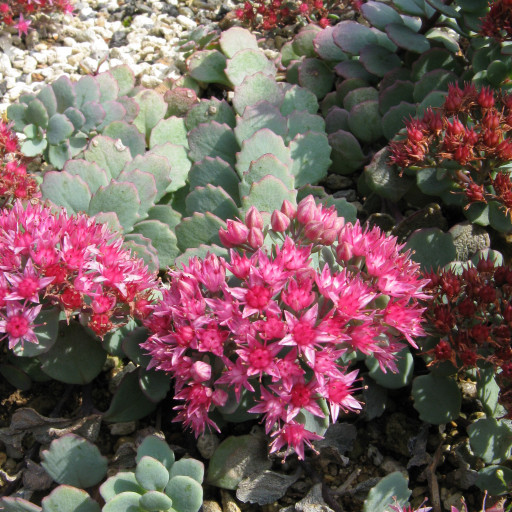
Often still affectionately referred to by their former botanical name, Sedum, the Hylotelephium genus contains some of the most resilient "live-forever" plants in the garden. These hardy succulents are famous for their ability to thrive in poor soil and their stunning transformation from cool green buds to vibrant pink and copper tones as autumn approaches. They are the ultimate "set it and forget it" plants for busy gardeners.
🔍 How to Identify
- 🍃 Fleshy Foliage: The leaves are thick, succulent-like, and waxy, designed to store water during long periods of drought.
- 🌸 Starry Clusters: They produce massive, flat-topped clusters of tiny, star-shaped flowers that act as a landing pad for butterflies.
- 🏗️ Upright Habit: Unlike creeping stonecrops, Hylotelephium grows in sturdy, upright clumps that look like miniature broccoli stalks before the flowers bloom.
🏡 In Your Garden
- ☀️ Sun Seekers: To keep their stems strong and prevent them from flopping over, they need a spot with full sun. In the shade, they become "leggy" and lose their vibrant leaf coloring.
- 💧 Dry Feet Only: These plants are experts at surviving neglect. They prefer well-draining, even gritty soil, and will suffer from root rot if left in standing water or heavy, wet clay.
- 🦋 Pollinator Magnets: They are one of the most important late-season nectar sources for bees and migrating Monarch butterflies, blooming when many other flowers have already faded.
⚠️ Safety & Toxicity
- 🐾 Low Risk: Hylotelephium is generally considered non-toxic to humans and is not listed as a major threat on most ASPCA lists.
- 🤢 Mild Irritation: While not deadly, the sap contains some alkaloids that can cause mild stomach upset or mouth irritation if chewed on by curious cats or dogs. It is best to keep them out of reach of heavy "nibblers."
✨ Fun Fact
The common name "Live-forever" isn't just hyperbole—if you snap a stem off and leave it on a garden bench, it can survive for weeks on its stored water. If you eventually stick that same dried-out stem into the dirt, it will likely grow roots and start a whole new plant!

Detailed Care Instructions
To grow Hylotelephium plants, also known as stonecrop or sedum, follow these steps:
- Select a suitable planting location: Choose an area with well-draining soil and full sun to partial shade. Hylotelephium plants can tolerate a variety of soil types, but they prefer slightly acidic to neutral conditions.
- Prepare the soil: Loosen the soil and remove any weeds or debris. If the soil is heavy and clay-like, amend it with compost or sand to improve drainage.
- Planting: Dig a hole slightly larger than the root ball of the Hylotelephium plant. Place the plant in the hole, ensuring that the crown is level with the soil surface. Backfill the hole with soil, gently firming it around the roots.
- Watering: Water the newly planted Hylotelephium thoroughly to settle the soil. Afterward, water as needed to keep the soil slightly moist but not waterlogged. During hot and dry periods, increase watering frequency.
- Mulching: Apply a layer of organic mulch around the base of the plant to help retain moisture and suppress weed growth. Leave a small gap between the mulch and the stem to prevent stem rot.
- Fertilization: Hylotelephium plants are relatively low-maintenance and do not typically require frequent fertilization. However, you can apply a balanced, slow-release fertilizer in spring if desired.
- Pruning: Deadhead the spent flower heads to encourage continuous blooming and prevent self-seeding. In late winter or early spring, before new growth emerges, you can also trim back old foliage to tidy up the plant.
- Division: Hylotelephium plants can be divided every few years to maintain their vigor. Dig up the entire plant, divide the clumps into smaller sections, and replant them in suitable locations.
- Winter care: Hylotelephium plants are generally hardy, but in areas with freezing temperatures, it may be necessary to provide winter protection. This can be done by adding a layer of mulch around the base of the plant or by temporarily covering it with a frost blanket.
By following these steps, you can successfully grow and maintain Hylotelephium plants in your garden.

Place in a bright room that is sun drenched almost all day. Or directly in a south-facing window.

To water this particular plant, it is important to pay attention to the soil moisture level. Feel the top inch of soil to determine if it is dry to the touch. If so, it is time to water. Provide enough water so that the soil is moistened throughout the root system, but be sure to avoid watering too deeply or frequently as this can cause root rot. It is also important to ensure proper drainage, as over-watering can lead to standing water in the soil which can be harmful to the plant. Additionally, this plant prefers to dry out between waterings, so do not keep the soil too wet. Overall, provide good soil drainage and water only when needed to promote healthy growth and prevent over-watering.
To fertilize this plant, apply a balanced, slow-release fertilizer in early spring. Use a fertilizer with an NPK ratio of 10-10-10 and apply according to the manufacturer's instructions. Be careful not to over-fertilize as this can cause damage to the plant. Water thoroughly after fertilizing to help the nutrients reach the roots. Repeat the application once more in mid-summer if necessary.
The ideal soil for this particular plant should have a well-drained texture, with a slightly sandy or gritty consistency. It should be rich in organic matter, with a good balance of nutrients and a slightly alkaline pH. To improve drainage and prevent waterlogging, the soil can be mixed with coarse sand or gravel. A layer of mulch or compost can also be added to retain moisture and provide additional nutrients over time. It is important to avoid using heavy or clay-like soils, which can trap moisture and promote root rot. Additionally, excessive fertilization should be avoided as it may cause leggy growth and reduce flowering.
Propagation of this plant can be done through stem cuttings. Select a healthy stem from the parent plant and make a clean cut just below a node. Remove the lower leaves on the stem and leave only a few at the top. Dip the cut end of the stem in rooting hormone powder and plant it in a container filled with well-draining soil. Keep the soil moist and the cutting in a warm, bright location, but out of direct sunlight. After a few weeks, roots will begin to form and the new plant can be potted or planted in the ground.







