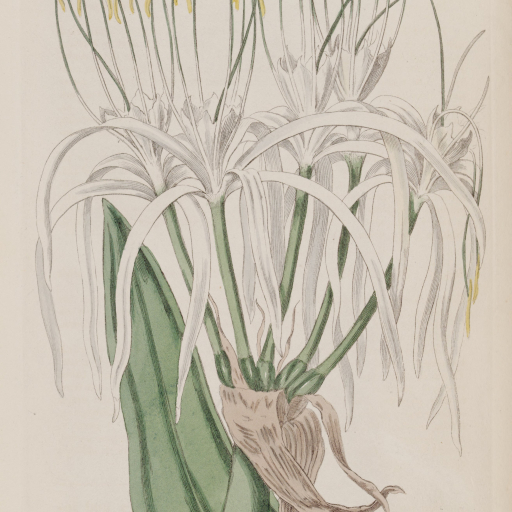
Plant Overview
Often called the Caribbean Spider Lily, this elegant perennial is a showstopper in tropical landscapes. With its delicate, spindly petals and sweet, vanilla-like fragrance, it looks like something plucked from a botanical fairytale. Indigenous to the sandy shores of the West Indies, it brings a touch of beachside luxury to any garden it inhabits.
🔍 How to Identify
- 🌸 The Flower: Each stalk carries a cluster of white blossoms featuring a central, papery "cup" (corona) with six long, thread-like petals radiating outward like spider legs.
- 🍃 The Foliage: It sports deep green, strap-shaped leaves that are thick and fleshy, often growing in a lush, fountain-like clump.
- 📏 Growth Habit: This plant grows from a large bulb and typically reaches about 2 to 3 feet in height and width, creating a dense, evergreen presence.
🏡 In Your Garden
- 🏖️ Coastal Queen: Because it originated on Caribbean beaches, this plant is exceptionally salt-tolerant. It’s a perfect choice for seaside gardens where salt spray might wither less hardy species.
- 💧 Moisture Balance: While it loves a good drink and thrives in humidity, the bulb is prone to rot if left in standing water. Ensure your soil is "sandy-loam"—meaning it holds some moisture but allows the excess to drain away quickly.
- ☀️ Light Needs: In hotter climates, it appreciates "dappled" sunlight. Too much harsh afternoon sun can scorch the tips of those beautiful dark leaves, making them look ragged.
⚠️ Safety & Toxicity
- 🚫 Status: Toxic to humans and pets.
- 🐾 Details: Like many members of the Amaryllis family, the Caribbean Spider Lily contains lycorine and other alkaloids. If ingested, it can cause vomiting, drooling, and stomach pain in cats and dogs. The bulb is the most concentrated source of these toxins, so keep curious "diggers" away from your planting beds.
✨ Fun Fact
The name Hymenocallis is derived from the Greek words for "Beautiful Membrane," referring to the delicate, translucent cup that connects the base of the flower's stamens. This structure is specifically designed to attract hawk moths, which visit the flowers at night to drink nectar!

Detailed Care Instructions
To grow a Hymenocallis Caribaea plant, follow these steps:
- Choose a suitable location: Hymenocallis Caribaea thrives in full sun or partial shade. Select a location in your garden that receives at least 4-6 hours of sunlight daily.
- Prepare the soil: The soil should be well-draining and rich in organic matter. Prepare the soil by adding compost or well-rotted manure to improve fertility and drainage.
- Planting: Plant the Hymenocallis Caribaea bulbs in the spring or early summer, after the last frost date in your area. Dig a hole that is about 6-8 inches deep and place the bulbs in the hole with the pointed ends facing upward. Space the bulbs about 12-18 inches apart to allow room for growth.
- Watering: Keep the soil consistently moist but not waterlogged. Hymenocallis Caribaea prefers evenly moist soil, so water the plant regularly, especially during dry spells. Ensure that the soil doesn't become waterlogged, as this can lead to root rot.
- Fertilizing: Apply a balanced, slow-release fertilizer at the beginning of the growing season. Additionally, you can supplement the plant with a liquid fertilizer every 4-6 weeks during the growing season to encourage healthy growth and blooming.
- Mulching: Mulch the soil around the plant to help conserve moisture, suppress weed growth, and provide insulation for the bulbs during winter. Apply a layer of organic mulch, such as wood chips or straw, around the base of the plant.
- Pruning: Remove any dead or yellow foliage to maintain the plant's appearance and encourage new growth. After the blooming season, you can cut back the spent flower stalks to facilitate better nutrient distribution to the bulbs.
- Winter care: In regions with cold winters, Hymenocallis Caribaea may need protection from frost. Mulch the area heavily to insulate the bulbs during winter. Consider digging up the bulbs and storing them in a cool, dry place until the following spring if your location experiences severe freezing temperatures.
- Dividing: Over time, Hymenocallis Caribaea bulbs can multiply and become crowded. Divide the clumps every few years to maintain healthy growth and encourage blooming. Dig up the bulbs in late summer or early fall, separate them gently, and replant them in well-prepared soil.
By following these steps and providing suitable care, you can successfully grow Hymenocallis Caribaea plants and enjoy their beautiful white, fragrant flowers.

Place in a window with dappled sun or a spot in the middle of a room. Or directly in a window facing west or east.

Hymenocallis Caribaea is a type of plant that thrives in moist soil. When watering this plant, it is important to give it just enough water to keep the soil consistently moist, but not overly saturated. Overwatering can lead to root rot and damage the plant.
To water the plant, you can start by checking the soil's moisture level. You can do this by inserting your finger into the soil about an inch deep. If the soil is dry, it is time to water the plant.
When watering the plant, use room temperature water. Cold water can shock the plant's roots and hot water can scald them. Water the plant slowly and carefully, aiming for the soil rather than the leaves to prevent fungal growth.
It is also important to make sure the plant's pot has drainage holes. This allows excess water to drain out of the plant's container to prevent waterlogging the soil.
In general, it is better to underwater Hymenocallis Caribaea than to overwater it. If the plant starts to wilt or the soil feels extremely dry, it is time to water it again. Always remember to check the soil's moisture level before watering and make sure the plant has adequate drainage.
To fertilize this plant, use a balanced fertilizer, with equal amounts of nitrogen, phosphorus, and potassium. Fertilize every two weeks during the growing season, but reduce the frequency to once a month during the fall and winter months. Apply the fertilizer at the base of the plant, being careful not to damage the roots. Water the plant well before and after fertilizing to prevent burning the roots.
When planting Hymenocallis Caribaea plant, it is important to choose a soil that is well-draining and has a good amount of organic matter. This will provide the roots with the necessary nutrients to grow and establish a strong foundation. A mixture of peat moss, perlite, and coarse sand is recommended to ensure good drainage and prevent root rot. Additionally, the soil pH should be slightly acidic to neutral, ideally between 5.5 and 7.5. Regular fertilization with a balanced fertilizer will also help support healthy growth.
Hymenocallis Caribaea is a plant that can be propagated through bulb division. To start, the plant should be removed from its pot and carefully shaken to remove excess soil from the bulbs. Once the bulbs have been separated, they can be replanted into individual pots or directly into the ground. It is important to ensure that the bulb is planted with its neck above the soil level, as burying it too deeply can cause rot. The new plants should be watered regularly and kept in a well-lit area. Bulbs can also be propagated through seed, but this method is less common and can take several years to produce a mature plant.








