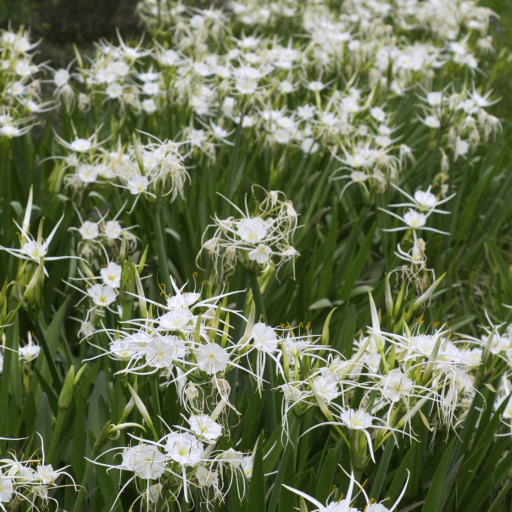
Plant Overview
Often called the Spring Spider Lily, this Southern belle is a master of the wetlands. Unlike its autumn-blooming cousins, Hymenocallis liriosme wakes up in late spring, signaling the true arrival of warmth across the Gulf Coast and Mississippi Valley. It carries an air of mystery, looking like a delicate tropical orchid but possessing the rugged grit of a swamp plant.
🔍 How to Identify
- 🌸 The Crown: Features a unique "staminal cup"—a white, webbed center that looks like a delicate piece of lace, often marked with a bright yellow or lime-green throat.
- 🕸️ Spidery Petals: Six long, slender white segments radiate outward from the base of the cup, giving the bloom its distinct "spider-like" silhouette.
- 🍃 Strap-like Foliage: Glossy, dark green leaves that are long, flat, and succulent, emerging directly from the underground bulb in a fan-like shape.
🏡 In Your Garden
- 💧 The "Wet Feet" Rule: This plant is a true wetland species. It is the perfect solution for "problem areas" in your yard with heavy clay or standing water, and it can even thrive submerged at the edge of a garden pond.
- ☀️ Sun Seeker: While it can tolerate dappled light, it needs several hours of direct sun to produce its fragrant blooms. In too much shade, the foliage will remain lush, but the flowers may never appear.
⚠️ Safety & Toxicity
- 🚫 Toxic if Ingested: Like many members of the Amaryllis family, the entire plant—especially the bulb—contains the alkaloid lycorine.
- 🐾 Pet & Child Safety: Keep this plant away from curious nibblers. If eaten, it can cause nausea, vomiting, and abdominal pain. The sap may also cause mild skin irritation in sensitive individuals.
✨ Fun Fact
The genus name Hymenocallis is derived from the Greek words for "Beautiful Membrane," referring to the translucent, webbed cup that connects the flower's stamens.

Detailed Care Instructions
To grow Hymenocallis Liriosme (commonly known as Spider Lily), follow these steps:
- Planting: Choose a well-draining soil mix and a spot with partial to full sunlight. Dig a hole or use a container with drainage holes that is large enough to accommodate the plant's root system.
- Watering: Spider Lilies prefer consistently moist soil but not waterlogged conditions. Water your plant regularly, especially during the growing season, and ensure the soil remains evenly moist but not saturated.
- Fertilization: Use a balanced, slow-release fertilizer during the growing season to provide necessary nutrients for healthy growth. Follow the manufacturer's instructions for proper application.
- Pruning: Deadhead spent flowers by removing the entire stalk after blooming. This helps redirect the plant's energy into new growth. Remove any yellowing or damaged leaves to maintain the plant's appearance.
- Mulching: Apply a layer of organic mulch around the base of the plant to retain moisture and suppress weed growth. Keep the mulch a few inches away from the stem to prevent rotting.
- Overwintering: In regions with frost or freezing temperatures, spider lilies may need protection during winter. Apply a layer of mulch around the base of the plant and consider bringing potted plants indoors or providing additional insulation if necessary.
- Propagation: Spider Lilies can be propagated through offsets or bulb division. Wait until the plant becomes dormant, then carefully separate the offsets or divide the bulbs, ensuring each new section has roots attached. Plant them in individual pots or directly into the garden.
Remember to check for specific care requirements for your specific climate and adjust accordingly. Regular monitoring and maintenance of your Hymenocallis Liriosme plant will help ensure its healthy growth and development.

Place in a bright room that is sun drenched almost all day. Or directly in a south-facing window.

To properly water the plant, it is important to provide it with consistent moisture. However, overwatering can be harmful to the plant and lead to root rot. The plant should be watered when the top inch of soil feels dry, typically once per week. When watering, use room temperature water and thoroughly saturate the soil until water runs out of the drainage holes in the pot. Allow the excess water to drain away and then empty the saucer underneath the pot to prevent water from sitting and potentially causing water damage. It is important to avoid getting the foliage wet when watering as this can increase the risk of disease.
To fertilize this plant, mix a balanced, slow-release fertilizer into the soil at the base of the plant. Use a fertilizer with equal parts nitrogen, phosphorus, and potassium and follow the manufacturer's instructions for the appropriate amount to use. Apply the fertilizer once in the spring and again in mid-summer. Avoid over-fertilizing, as this can harm the plant.
When planting and cultivating Hymenocallis Liriosme plants, it is important to use a well-draining soil mixture that is rich in organic matter. The soil should have a neutral pH level, typically around 6.5 to 7.5. It is also recommended to mix in some sand or perlite to improve drainage. Avoid using heavy clay soils or soils that retain too much water, as this can lead to root rot and other issues. Additionally, adding fertilizer or compost to the soil can help provide necessary nutrients for healthy growth.
Hymenocallis Liriosme plant can be propagated through bulb division or by collecting and planting its seeds.
To propagate through bulb division, the bulbs should be carefully dug up and separated into individual segments. Each segment should have at least one healthy root and a piece of the bulb. The newly separated bulbs can then be replanted in well-draining soil and kept moist until they begin to sprout new leaves.
To propagate through seed collection, wait until the seed pods begin to mature and turn brown. The pods can then be carefully harvested and the seeds removed. The seeds should be cleaned and dried before being planted in well-draining soil. The soil should be kept moist and warm until the seeds germinate.
Propagation through bulb division is the most commonly used method for Hymenocallis Liriosme plant as it allows for quicker establishment and a higher success rate.








