Plant Overview
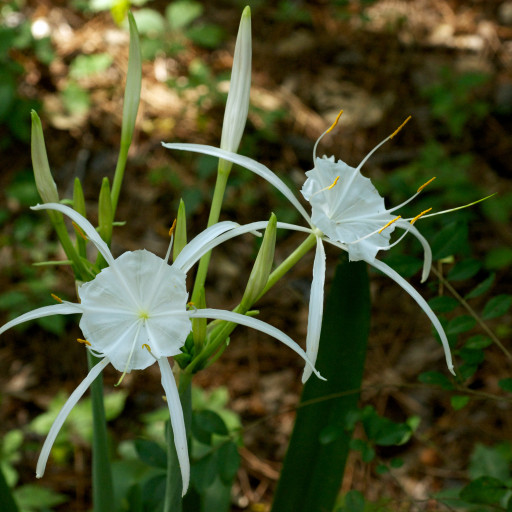
Often called the Woodland Spider Lily, this plant looks like a cluster of delicate, white ghosts floating in the summer shade. Its intricate, spindly flowers resemble slender spider legs radiating from a central crown, giving it a truly exotic, architectural flair. Native to the damp forests and riverbanks of the southeastern United States, it brings a touch of ethereal elegance to any shaded landscape.
🔍 How to Identify
- 🌸 The "Spider" Bloom: Features a central, paper-thin white cup (the staminal cup) from which six long, narrow petals extend outward like elegant, drooping legs.
- 🍃 Strap-Shaped Leaves: Deep green, glossy foliage that is long and flat, resembling large blades of grass or Amaryllis leaves.
- 📏 Flower Scape: The flowers emerge atop a tall, leafless, and sturdy green stalk that can reach up to 2 feet in height, holding a cluster of 3 to 9 fragrant blossoms.
🏡 In Your Garden
- 💧 Moisture Lover: Unlike many garden lilies, the Woodland Spider Lily thrives in "wet feet" conditions. It is a perfect choice for rain gardens, boggy areas, or the edges of a backyard pond.
- 🌑 Shade Preference: It is a natural understory inhabitant, meaning it craves dappled sunlight or partial shade. Harsh, direct afternoon sun can scorch its delicate white membranes and wilt the foliage.
- 🌱 Patience is Key: This plant grows from a bulb and is famously slow to settle in. It may take a season or two to bloom after planting, as it hates having its deep root system disturbed.
⚠️ Safety & Toxicity
- 🚫 Toxic Status: Highly toxic to both humans and pets if ingested.
- 🐶 The Risk: Like most members of the Amaryllis family, it contains the alkaloid lycorine. If nibbled by cats or dogs, it can cause severe stomach upset, drooling, and lethargy.
- 🧤 Skin Sensitivity: Some gardeners report mild skin irritation from the sap when dividing bulbs, so wearing gloves is a smart precaution.
✨ Fun Fact
The name Hymenocallis comes from the Greek words for "beautiful membrane," referring to the delicate, web-like center of the flower. These white blooms are specifically designed to glow in the moonlight to attract Sphinx moths, their primary nocturnal pollinators.

Detailed Care Instructions
Here are some steps to help you grow Hymenocallis Occidentalis (Spider Lily) successfully:
- Choose a suitable planting location: Spider lilies prefer full sun to partial shade. Select an area in your garden with well-draining soil that does not retain water for long periods.
- Prepare the soil: Before planting, amend the soil with organic matter, such as compost or well-rotted manure. This will improve drainage and provide some nutrients to the plant.
- Plant the bulb: Dig a hole deep enough to accommodate the bulb, usually about 6-8 inches deep. Place the bulb in the hole, with the pointed side up, and cover it with soil. Space multiple bulbs about 1-2 feet apart.
- Watering: Spider lilies like consistently moist soil, but they don't like to sit in soggy conditions. Water regularly to keep the soil moist but not waterlogged. During dry periods, you may need to water more frequently.
- Fertilizing: Apply a balanced, slow-release fertilizer or a liquid fertilizer formulated for bulbs during the growing season. Follow the manufacturer's instructions for application rates and timings.
- Mulching: Apply a layer of organic mulch, like wood chips or bark, around the plant to help retain moisture, suppress weed growth, and regulate soil temperature.
- Pruning: Spider lilies don't require extensive pruning, but you can remove spent flowers and yellowing foliage to maintain a tidy appearance. Be careful not to cut off healthy leaves as they provide energy for the bulb.
- Overwintering: In colder regions, where temperatures drop below freezing, you may need to lift the bulb in late fall before the first frost. Store it in a cool, dry location over winter and replant it in spring when the danger of frost has passed.
- Pest and disease control: Spider lilies are generally resistant to pests and diseases. However, watch out for snails and slugs, which can chew on the leaves. You can handpick them or use organic pest control methods if necessary.
Remember to research the specific care requirements and adapt them to your local climate conditions to ensure the best growth and blooming of your Hymenocallis Occidentalis plant.

Place in a window with dappled sun or a spot in the middle of a room. Or directly in a window facing west or east.

To water this type of plant, it is important to keep the soil consistently moist but not waterlogged. It is recommended to water deeply once per week and to allow the soil to dry out slightly between watering. You can test the soil moisture by sticking your finger approximately one inch into the soil - if it feels dry, it is time to water. When watering, aim for the soil around the plant's roots rather than watering the leaves or flowers. Avoid getting water on the foliage as this can lead to fungal growth and other issues. Depending on the climate and temperature, you may need to adjust your watering schedule to ensure the plant does not dry out.
To fertilize this plant, you should use a balanced fertilizer that contains equal amounts of nitrogen, phosphorus, and potassium. Apply the fertilizer every two weeks during the growing season, which is typically from spring to fall. Be careful not to apply too much fertilizer, as this can cause problems with the plant's growth and health. Instead, use a small amount of fertilizer and water it in well to ensure that it is absorbed by the roots. Finally, always follow the instructions on the fertilizer label carefully to avoid any potential problems or damage to the plant.
Hymenocallis Occidentalis plant prefers well-draining soil rich in organic matter. The soil should be a mixture of loam, sand, and peat moss, with a pH range of 6.5 to 7.5. It is essential to ensure that the soil is always moist, but not waterlogged, as this plant does not tolerate soil that is too wet or too dry. Adding perlite or coarse sand to the soil mixture can help improve drainage. Additionally, it is best to avoid heavy clay soils as they can retain too much water and cause root rot. Fertilizing the soil with a balanced fertilizer once or twice during the growing season can help promote healthy growth and flowering.
Hymenocallis Occidentalis can be propagated through division or by planting its bulbs. To divide the plant, carefully remove it from its pot or soil and separate the roots and bulbs into smaller clumps. Each clump should have at least one healthy bulb and a few roots. Replant the smaller clumps in fresh soil and water thoroughly. Alternatively, bulbs can be planted directly into soil in the spring or fall. Plant bulbs with their pointed ends facing up, about 6 inches deep and at least 6 inches apart. Water the bulbs thoroughly after planting and keep the soil moist but not waterlogged until the plants have established themselves.








