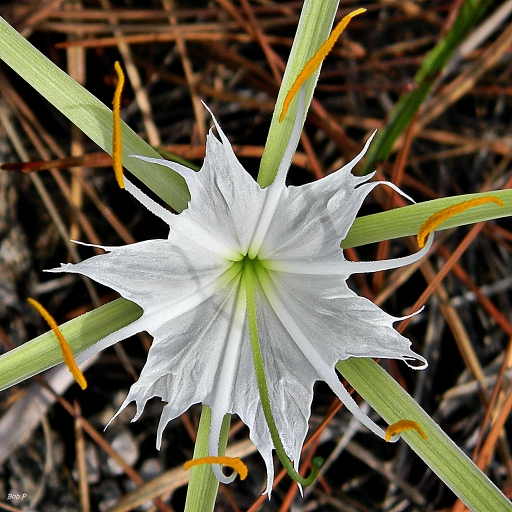
Plant Overview
Commonly known as the Alligator Lily or Florida Spider Lily, this delicate beauty is a true swamp dweller native to the grassy wetlands of Florida. Its ethereal, ghost-white flowers look like elegant lanterns floating above the marshy ground. Despite its fragile appearance, it is remarkably resilient, evolving to thrive in the fluctuating water levels of the Everglades and cypress domes.
🔍 How to Identify
- ❄️ The Staminal Cup: Unlike typical lilies, this plant features a central white "cup" (a corona) that resembles a delicate web or a piece of white lace connecting the stamens.
- 🕷️ Spider-like Petals: Six long, slender, greenish-white tepals extend outward from the center, giving the flower its distinctive arachnid or "spider" silhouette.
- leaves Strap-shaped Foliage: The leaves are dark green, narrow, and grass-like, often standing upright or arching slightly to create a lush, fountain-like base.
🏡 In Your Garden
- 💧 Thirsty Roots: This species is a "bog plant" at heart. While many garden plants fear root rot, the Alligator Lily thrives in soggy, poorly drained soil or at the edge of a garden pond.
- ☀️ Sun Versatility: It is surprisingly adaptable; it can handle the intense Florida sun if kept wet, but it actually prefers "dappled light" or partial shade, which mimics its natural home under the canopy of cypress trees.
- 🌱 Low Maintenance: Once established, it requires very little attention. Because it grows from a hardy bulb, it can survive periods of temporary drought by going dormant, though it won't bloom until the water returns.
⚠️ Safety & Toxicity
- 🚫 Toxic if Ingested: Like most members of the Amaryllis family, all parts of the Alligator Lily—especially the bulb—contain various alkaloids, including lycorine.
- 🐾 Pet Warning: Keep this plant away from curious cats and dogs. Ingestion can cause severe stomach upset, drooling, and vomiting.
- 🧤 Skin Sensitivity: Some gardeners find the sap can cause mild skin irritation, so it is best to wear gloves when dividing the bulbs.
✨ Fun Fact
The Alligator Lily is a "night-scented" specialist. Its flowers produce a heavy, sweet fragrance specifically after dusk to attract its primary pollinators: large, hovering hawkmoths that are guided by the flower's bright white glow in the moonlight.

Detailed Care Instructions
To grow Hymenocallis Palmeri plants, you can follow these steps:
- Choose a suitable location: Hymenocallis Palmeri prefers a location with full sun to partial shade. Ensure the area receives at least 6-8 hours of sunlight daily.
- Prepare the soil: The soil should be well-draining and rich in organic matter. Amend the soil with compost or well-rotted manure to improve its fertility and drainage.
- Plant the bulbs: Plant the Hymenocallis Palmeri bulbs in spring, after the danger of frost has passed. The planting hole should be deep enough to accommodate the bulb, with the tip facing upwards. Space the bulbs at least 1-2 feet apart to allow for their growth.
- Watering: Keep the soil consistently moist but not overly saturated. Hymenocallis Palmeri prefers consistently moist conditions, especially during the growing season. However, avoid waterlogging as it can lead to root rot.
- Fertilization: Apply a balanced slow-release fertilizer when planting the bulbs, and then feed them every 2-3 months during the growing season. Use a fertilizer specifically formulated for flowering plants, following the package instructions for the correct dosage.
- Mulching: Apply a layer of organic mulch around the plants to help conserve moisture, suppress weeds, and provide some insulation during extreme temperatures.
- Pest and disease control: Monitor the plants regularly for any signs of pests or diseases. Common pests affecting Hymenocallis Palmeri include aphids and spider mites. Use organic pest control methods or insecticidal soap, if necessary.
- Winter care: Hymenocallis Palmeri is native to warm climates and may not tolerate freezing temperatures. In colder regions, it is advisable to dig up the bulbs in fall before the first frost and store them in a cool and dry place until the following spring.
- Propagation: Hymenocallis Palmeri can be propagated through dividing its bulbs. After a few years of growth, carefully dig up the bulbs and divide them, ensuring that each division has enough roots to sustain itself. Replant the divisions in suitable soil.
- Enjoy the blooms: Hymenocallis Palmeri typically blooms in late spring or early summer, producing beautiful white flowers with a strong fragrance. Enjoy the stunning display of flowers in your garden and provide support if necessary to prevent any bending or breakage of the flower stalks.
Remember to adapt these steps to your specific climate and growing conditions. It's always best to consult with local gardening resources or experts for more specific advice based on your location.

Place in a window with dappled sun or a spot in the middle of a room. Or directly in a window facing west or east.

Hymenocallis Palmeri plant belongs to the family of plants that require a sufficient amount of water to thrive well. To water Hymenocallis Palmeri, you need to follow a few steps:
1. Identify the soil type: Before watering, make sure you identify the soil type in which the plant is growing. Hymenocallis Palmeri prefers well-drained, moist soil that is rich in nutrients.
2. Check the moisture level: To check the moisture level of the soil, insert your index finger one inch below the soil surface. If the soil feels dry, it's time to water the plant.
3. Watering frequency: Hymenocallis Palmeri requires a moderate amount of water to grow. Water the plant every two to three days during the growing season and reduce the frequency in winters to once a week.
4. Watering duration: The watering duration depends on several factors, such as the size of the pot and the humidity level in the air. On average, water the plant for 10-15 minutes.
5. Watering method: It's important to water the soil directly rather than the leaves of the Hymenocallis Palmeri plant. Use a watering can or a hose with a spray nozzle for the most effective watering method.
6. Drainage: Make sure the pot has enough drainage holes at the bottom to drain excess water, which helps prevent root rot.
7. Keep moisture consistent: Consistency is key when it comes to watering Hymenocallis Palmeri. Avoid over-flooding or under-watering the plant, as this can cause stress or damage to the plant.
Following these steps will help ensure your Hymenocallis Palmeri plant receives the ideal amount of water to grow healthy and strong.
To fertilize the Hymenocallis Palmeri plant, use a well-balanced fertilizer with equal parts nitrogen, phosphorus, and potassium. Apply the fertilizer once every three weeks during the growing season, which should start from early spring to late fall. Dilute the fertilizer in water according to the instructions given on the package, and apply it to the soil around the plant. Be careful not to wet the plant leaves as this can cause damage. Water the plant after applying the fertilizer to help absorb the nutrients. Avoid over-fertilization as it could lead to leaf burn or other plant problems.
In order to best care for Hymenocallis Palmeri, it is recommended to use a well-draining soil that allows for water to pass through easily. The soil should be slightly acidic with a pH between 6.0 and 7.0. It is also recommended to add organic matter, such as compost or peat moss, to the soil to promote healthy growth and provide nutrients. Avoid using soil that is heavy in clay or sand, as this may prevent adequate drainage or nutrient uptake. Additionally, it is important to ensure that the soil is consistently moist but not waterlogged, as this can lead to root rot.
Hymenocallis Palmeri can be propagated by division. In order to do this, carefully remove the plant from the soil and separate the bulbs by pulling them apart gently. Separate any offsets that have already formed and re-plant each bulb or offset in a pot or directly into the ground. It is best to propagate Hymenocallis Palmeri in the spring to ensure the bulbs have time to establish before the colder months.








