Plant Overview
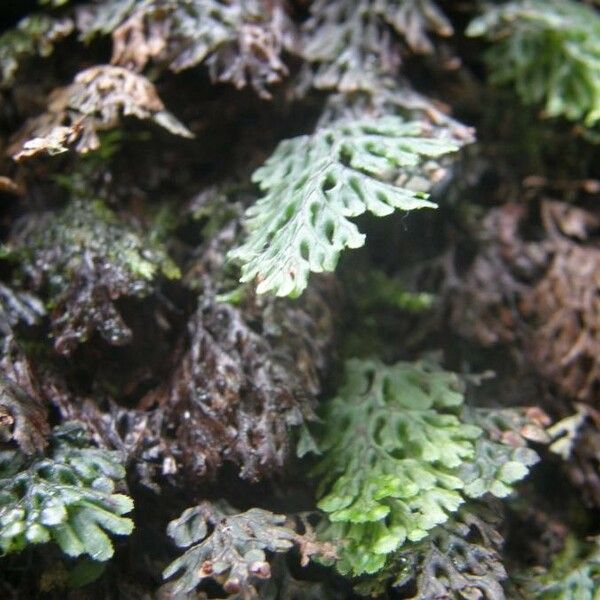
Known as the Bearded Filmy Fern, this delicate emerald treasure looks more like a patch of glowing lace than a typical plant. Found tucked away in the misty ravines of East Asia, it earns its "bearded" name from the fine, dark hairs that coat its creeping stems. It is a primitive botanical marvel that feels like a relic from a prehistoric, water-soaked world.
🔍 How to Identify
- 🌿 Translucent Fronds: The most striking feature is the foliage; the leaves are so thin (often just a single cell thick) that they appear semi-transparent and glow when backlit.
- 🧔 The "Beard": Look closely at the wiry, creeping rhizomes (stems). They are covered in dense, brownish-black hairs that give the plant a fuzzy, "bearded" texture.
- 📐 Mat-Forming Habit: It doesn't grow upright like a typical Boston fern; instead, it forms low, dense, moss-like carpets over damp surfaces.
🏡 In Your Garden
- 💧 The Humidity Requirement: This plant is an "extreme" fern. Because its leaves are so thin, they lack the waxy coating most plants use to hold in water. It must live in a high-humidity environment—like a closed terrarium or a Wardian case—or it will shrivel in minutes.
- 🪨 Soil-Free Living: In the wild, it is an epiphyte (growing on trees) or a lithophyte (growing on wet rocks). If keeping it at home, it hates traditional potting soil. It prefers to be tucked into a bed of live sphagnum moss or attached directly to a piece of damp lava rock.
⚠️ Safety & Toxicity
- ✅ Safe Status: Hymenophyllum barbatum is considered non-toxic to humans, cats, and dogs.
- 🚫 Fragility Warning: While not chemically dangerous, it is physically "toxic" to the plant to be touched. The oils from human skin can easily damage the ultra-thin cell walls of the fronds, so it is strictly a "look but don't touch" specimen.
✨ Fun Fact
Because their leaves are so thin, Filmy Ferns are one of the few land plants that completely lack stomata (the "breathing pores" found on most leaves). They are so efficient at absorbing moisture and gases directly through their cell walls that they don't need the complex plumbing systems of more evolved plants!

Detailed Care Instructions

Place in a dark room with little light, like a dark bedroom or a spot far away from a window or directly in a north-facing window.

Water-loving plants flourish in wet or sloppy soil and near ponds. The extensive root system enables these plants to absorb plenty of water. The surface of the soil should be kept moist at all times. Place your pot in a container filled with water to guarantee that plants get enough water. If the ground becomes dry, it is recommended that you water it well. Plants in smaller pots will need to be watered more frequently. Water the soil in which the plant is standing thoroughly using a watering can.








