Plant Overview
Commonly known as the Bottle Palm, Hyophorbe lagenicaulis is nature’s version of a living sculpture. Originating from the tiny Round Island in Mauritius, this palm looks like it stepped straight out of a high-end botanical garden. Despite its robust, swollen appearance, it is a slow and steady grower that adds architectural drama to any tropical landscape or bright indoor room.
🔍 How to Identify
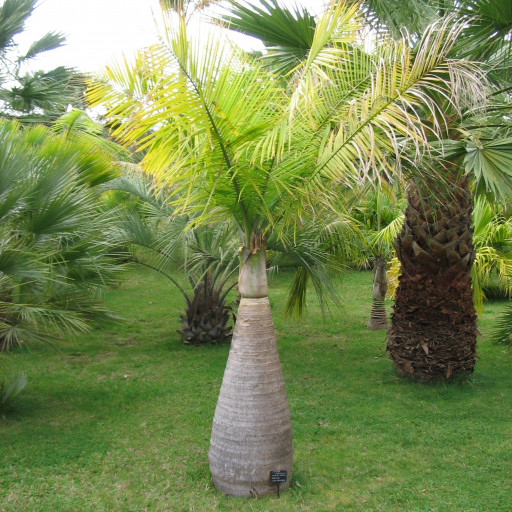
- 🍾 The Trunk: Its most iconic feature is the smooth, gray trunk that is significantly swollen at the base, tapering upward like an antique soda bottle.
- 🌿 The Fronds: It produces a small number (usually only 4 to 8) of upward-arching, feathery leaves that create a "crown" far smaller than most other palm species.
- 🟢 The Crownshaft: The top of the trunk features a smooth, bright green section from which the leaves emerge, providing a sharp color contrast to the bark.
🏡 In Your Garden
- 🏝️ Tropical Sensitivity: Because it originates from a warm, island environment, this palm is extremely sensitive to cold. It cannot handle frost; if you live in a cooler climate, it thrives best in a large pot that can be moved indoors for the winter.
- 💧 The "Water Bottle" Myth: Contrary to popular belief, the swollen trunk is not used for storing large amounts of water. It still needs regular, consistent watering, though it requires very well-draining soil to prevent the roots from "sitting in the wet."
- ☀️ Sun Lover: To maintain that unique bottle shape, it needs plenty of bright light. In low light, the trunk may grow thinner and lose its characteristic bulge.
⚠️ Safety & Toxicity
- ✅ Safe Status: The Bottle Palm is generally considered non-toxic to humans and is listed as non-toxic to dogs and cats by the ASPCA.
- 👐 Gentle Handling: Unlike the Saw Palmetto or other thorny palms, the Bottle Palm is smooth and "friendly" to touch, making it a great choice for walkways or pool areas where people might brush against it.
✨ Fun Fact
🏝️ A Conservation Hero: In the wild, the Bottle Palm was once pushed to the very brink of extinction, with only a handful of trees remaining on its home island. Thanks to its popularity as an ornamental plant, it is now thriving in millions of gardens worldwide, even as conservationists work to replant it in its native habitat.

Detailed Care Instructions
| Color | Deep Green Leaves, Cream To Green Blooms, And Green To Black Fruits |
| Soil Ph | 6.0-7.5 |
| Soil Type | Well-Draining, Sandy, Chalky, Clay, Loamy |
| Bloom Time | Spring To Summer |
| Plant Type | Perennial Palm |
| Mature Size | Up To 15 Feet Tall And Up To 8 Feet Spread |
| Native Area | Mauritius |
| Sun Exposure | Full Sun |
| Hardiness Zones | 10-11 |
To grow a Hyophorbe lagenicaulis plant, also known as the Bottle Palm, you can follow these steps:
- Choose a suitable location: The Bottle Palm thrives in full sun or partial shade. Select a spot with well-draining soil that is protected from strong winds.
- Obtain a healthy plant: Purchase a young Bottle Palm plant from a reputable nursery or garden center, or obtain seeds if you prefer to grow it from scratch.
- Planting: Dig a hole in the selected location that is slightly wider and deeper than the pot your plant is in. Gently remove the plant from its pot and place it in the hole, ensuring that the top of the root ball is level with the surrounding soil. Backfill the hole with soil, firming it gently around the plant. Water thoroughly after planting.
- Watering: Keep the soil consistently moist but not overly saturated. Water the plant deeply and allow the top inch or so of soil to dry out before watering again. Adjust the frequency of watering based on the weather conditions and the moisture needs of your specific plant.
- Fertilization: Apply a balanced palm fertilizer during the growing season, following the package instructions for the recommended dosage. This will help promote healthy growth and development.
- Pruning: Lightly prune away any dead or damaged fronds to maintain the plant's aesthetic appearance. Be careful not to remove too many healthy fronds, as this can potentially harm the plant.
- Protection: Shield the Bottle Palm from freezing temperatures, as it is not cold-hardy. In cooler climates, consider growing it in a container and bringing it indoors during winter or providing protection with frost cloth or other covering.
- Monitoring and care: Keep an eye out for common pests such as spider mites or scale insects. If you notice any signs of infestation, treat the plant with an appropriate insecticide following the instructions on the label.
Remember that growing a Hyophorbe lagenicaulis plant requires patience, as it is a slow-growing species. Provide it with the necessary care, and over time, it will develop into a striking and attractive palm tree.

Place in a window with dappled sun or a spot in the middle of a room. Or directly in a window facing west or east.

To water this particular plant, you should use a watering can that has a long spout, as the plant does not like water on its leaves. When watering the plant, you should aim for the soil at the base of the plant, rather than the center of the plant or the leaves. This will ensure that the roots are getting the water they need. It is important to not over-water the plant, as it can lead to root rot. Wait until the top inch of soil is dry before watering again. Additionally, make sure the pot has proper drainage, as waterlogged soil can also lead to root rot.
To fertilize this plant, first ensure that it has been watered thoroughly and the soil is moist. Use a balanced, slow-release fertilizer with equal ratios of nitrogen, phosphorus, and potassium. Apply the fertilizer around the base of the plant, taking care not to touch the leaves or stem. Mix the fertilizer into the top layer of soil and water again to help it penetrate deeper into the roots. Repeat this process every 2-3 months during the growing season.
Hyophorbe Lagenicaulis prefers well-draining soil with good aeration and moisture retention. The soil should be slightly acidic to neutral and rich in organic matter. A mix of sand, peat moss, and compost is ideal. Additionally, the soil should have good water-holding capacity without becoming waterlogged or prone to dryness. It is recommended to fertilize the soil with a balanced fertilizer at half strength every two to three months.
Propagation of this plant can be done through several methods including collecting seeds and using stem cuttings. Seeds should be collected from a mature plant and cleaned before planting. Cuttings should be taken from healthy plants and planted in well-draining soil with a rooting hormone applied. The new plants should be kept in a warm and humid environment until they have established roots.
Common pests of the bottle palm include Scale insect, mealybugs, spider mites. Make a habit of checking your bottle palm frequently for pests so that any infestations can be caught and managed early.








