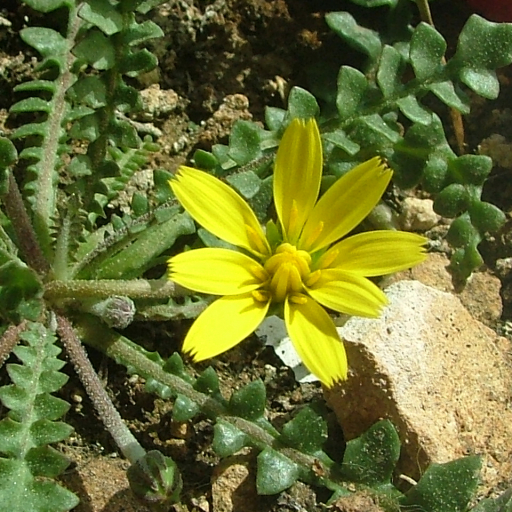
Plant Overview
Often called the Perennial Swine's Succory or the Star Dandelion, Hyoseris radiata is a Mediterranean native that brings a burst of wild sunshine to rocky terrains. While it may look like a common dandelion to the untrained eye, its geometric leaf structure and resilience make it a fascinating find for nature lovers exploring coastal cliffs or dry meadows. It has spent centuries adapting to the salt spray and heat of the Mediterranean basin, earning its reputation as a true survivor.
🔍 How to Identify
- ☀️ The Rosette: Leaves grow in a flat, radiating circle close to the ground, resembling a green star. Each leaf is deeply lobed with "teeth" that point backward toward the center.
- 🌼 The Bloom: Bright yellow, composite flower heads sit atop leafless, hollow stems. Unlike some of its cousins, the petals are densely packed, giving it a very "full" appearance.
- 📏 The Stem: The stalks are typically smooth and can become slightly swollen or thickened just beneath the flower head, a key feature that distinguishes it from basic dandelions.
🏡 In Your Garden
- 🏜️ Drought Specialist: This plant thrives on neglect. Because it evolved in rocky, sun-baked environments, it prefers poor, sandy, or gravelly soil. If your garden soil is too "rich" or wet, the plant may lose its compact, starry shape.
- ⚓ The Taproot Factor: Like many members of the Aster family, it develops a sturdy taproot. This makes it incredibly drought-tolerant, but it also means it hates being moved. If you want to grow it, plant the seeds exactly where you want them to stay forever.
⚠️ Safety & Toxicity
- ✅ Generally Safe: Hyoseris radiata is not known to be toxic to humans or common household pets. In some Mediterranean cultures, the young leaves have historically been used in wild salads.
- 🧪 Milky Sap: Like many wild lettuces and dandelions, the stems contain a white, milky latex. While not poisonous, this sap can be sticky and may cause mild skin irritation for people with very sensitive skin or those with specific allergies to the Asteraceae family.
✨ Fun Fact
- 🐷 The Hog's Salad: The genus name Hyoseris comes from the Greek words "hyos" (pig) and "seris" (succory or endive). This literally translates to "Hog’s Endive," a cheeky nod to the fact that wild boars in the Mediterranean are known to feast on these nutritious rosettes!

Detailed Care Instructions
Growing Hyoseris radiata, commonly known as the common hawkweed, can be both a delightful and rewarding experience. Here are some essential steps and tips to ensure that you grow this plant successfully:
1. Selecting the Right Location
- Sunlight: Hyoseris radiata thrives in full sun to partial shade. Ensure the plant receives at least 6 hours of sunlight daily.
- Soil: This plant prefers well-drained soil. It can tolerate a range of soil types but performs best in sandy or loamy soils.
2. Planting
- Seeds: You can start Hyoseris radiata from seeds. Sow the seeds in late winter or early spring indoors or directly into the garden after the last frost.
- Indoor Sowing: Fill a seed tray with a seed-starting mix, sprinkle the seeds on the surface, and lightly press them into the soil. Keep the soil moist but not waterlogged. Place the tray in a sunny location or under grow lights.
- Outdoor Sowing: If sowing directly outdoors, prepare the soil by tilling it lightly and removing any weeds. Scatter the seeds on the surface and gently press them into the soil. Water lightly.
3. Watering
- Indoor Sowing: Fill a seed tray with a seed-starting mix, sprinkle the seeds on the surface, and lightly press them into the soil. Keep the soil moist but not waterlogged. Place the tray in a sunny location or under grow lights.
- Hyoseris radiata is relatively drought-tolerant once established, but it requires regular watering during its initial growth phase. Keep the soil moist but avoid overwatering. Allow the top inch of soil to dry out between watering sessions.
4. Fertilization
- Hyoseris radiata does not require heavy fertilization. An application of a balanced, slow-release fertilizer at the beginning of the growing season can be beneficial. Organic compost or a general-purpose garden fertilizer will suffice.
5. Care and Maintenance
- Weeding: Keep the area around the plant free of weeds, which can compete for nutrients and moisture.
- Pruning: Deadhead the spent flowers to encourage further blooming and to maintain a tidy appearance.
- Pests and Diseases: Hyoseris radiata is generally pest-resistant, but keep an eye out for common garden pests such as aphids or slugs. Use appropriate organic or chemical treatments if necessary.
6. Winter Care
- In colder climates, Hyoseris radiata may die back in winter. Mulch the base of the plant to protect the roots from extreme cold, or consider growing it as an annual if it's not cold-hardy in your region.
7. Propagation
- Besides growing from seeds, Hyoseris radiata can also be propagated via division. In the spring or fall, dig up the plant and divide the root clump into smaller sections, each with its roots and shoots. Replant immediately.
By following these guidelines, you can successfully grow Hyoseris radiata and enjoy its beautiful foliage and flowers. Happy gardening!

Place in a bright room that is sun drenched almost all day. Or directly in a south-facing window.

Hyoseris Radiata plant requires regular watering to maintain its health and growth. It needs to be watered deeply but less frequently to avoid waterlogging the soil, which can lead to root rot. Before watering, it is recommended to check the soil's moisture level by sticking a finger 2-3 inches deep into the soil. If the soil feels dry, then it's time to water.
The best time to water Hyoseris Radiata plant is early in the morning or late in the afternoon. Avoid watering during the hottest part of the day, as this can cause the water to evaporate quickly before the plant has a chance to absorb it. It is important to water the soil directly around the base of the plant, rather than overhead, as this can cause the foliage to get wet and may lead to fungal diseases.
When watering, use a watering can or hose attachment with a gentle spray. Water until the soil is moistened but not waterlogged. Allow the soil to dry out slightly before watering again.
In addition to regular watering, Hyoseris Radiata plant also benefits from occasional fertilization. A balanced fertilizer can be applied during the growing season to help the plant maintain its vigor and health.
Here are the fertilizing instructions for Hyoseris Radiata:
- Soil Preparation: Ensure the soil is well-draining and rich in organic matter before planting. You can add compost or well-rotted manure to enhance fertility.
- Initial Feeding: At the time of planting, mix a balanced, slow-release granular fertilizer into the soil. A formula such as 10-10-10 (Nitrogen-Phosphorus-Potassium) is a good choice. Follow the package instructions for application rates based on the area you are planting.
- Regular Feeding: During the growing season, which is typically from spring to early summer, you can apply a liquid fertilizer every 4-6 weeks. Use a balanced fertilizer or one with a slightly higher potassium content to promote flowering and overall plant health.
- Application Method: When using liquid fertilizers, dilute them according to the manufacturer's instructions and apply directly to the base of the plant, avoiding leaves and flowers to prevent burn.
- Organic Options: If you prefer organic fertilizers, you can use compost tea, fish emulsion, or seaweed extract as a liquid feed, which should be applied in the same frequency as synthetic liquid fertilizers.
- Mulching: Apply a layer of organic mulch around the base of the plant to help retain moisture, suppress weeds, and slowly provide nutrients as it breaks down.
- Avoid Over-Fertilizing: Excess fertilizer can lead to weak, leggy growth and reduced flowering. It's crucial to follow recommended rates and not over-apply.
- Monitoring: Pay attention to your plant’s response to fertilization. Yellowing leaves, poor growth, or excessive foliage with few flowers can be indicators that you need to adjust your fertilizing regimen.
By following these guidelines, you can ensure that Hyoseris Radiata remains healthy and thrives in your garden.
Hyoseris Radiata plants prefer to grow in well-draining soil that is rich in nutrients. The ideal soil should have a pH between 6.0 and 7.0. A sandy loam soil with organic matter is ideal for this plant as it allows for ample drainage and aeration while retaining essential moisture and nutrients. The soil should be moist but not waterlogged, as excess moisture can lead to root rot. Fertilizers rich in nitrogen and phosphorus can be added to soil to enhance plant growth and development. It's important to avoid using heavy clay soils as they retain water and can cause root rot in Hyoseris Radiata plants. Overall, the soil requirements of Hyoseris Radiata plants should be assessed to ensure the plant can thrive and grow healthily.
Hyoseris radiata, a plant species within the Asteraceae family, can be propagated through seeds or by division. Here's a detailed guide on both methods:
Seed Propagation
- Seed Collection: Allow the flowers to mature and develop seeds. Once the seed heads are dry and brown, carefully collect the seeds.
- Seed Storage: If you're not sowing immediately, store seeds in a cool, dry place in an airtight container.
- Sowing Seeds:
- Timing: The best time to sow the seeds is in the spring or early autumn.
- Soil Preparation: Prepare a well-draining soil mix. You can use a mix of potting soil and sand or perlite to ensure good drainage.
- Planting: Sow the seeds on the surface of the soil and lightly press them down without burying them too deep. A light dusting of soil over them is usually sufficient.
- Watering: Water gently to moisten the soil. It's essential to keep the soil evenly moist but not waterlogged.
- Timing: The best time to sow the seeds is in the spring or early autumn.
- Germination: Place the seed tray or pots in a location with indirect sunlight. The seeds typically take a few weeks to germinate. Ensure the soil stays consistently moist during this period.
- Transplanting: Once seedlings have developed a few true leaves and are strong enough to handle, they can be transplanted to their final location. Ensure your planting site has well-drained soil and receives adequate sunlight.
Division
- Timing: Division is best done in the spring or early autumn when the plant is not in its peak flowering stage.
- Preparation: Carefully dig up the mature plant, ensuring you don't damage the roots. Shake off excess soil to expose the root system.
- Division Process:
- Using a sharp, clean knife or your hands, divide the plant into smaller sections. Each section should have a healthy portion of roots and shoots.
- Check each divided section for any signs of disease or damage and prune them if necessary.
- Using a sharp, clean knife or your hands, divide the plant into smaller sections. Each section should have a healthy portion of roots and shoots.
- Replanting:
- Soil Preparation: Prepare the planting area or pots with well-draining soil.
- Planting: Plant each divided section at the same depth it was growing before. Ensure the roots are spread out well in the hole.
- Watering: Water thoroughly after planting to help settle the soil around the roots. Maintain consistent moisture but avoid overwatering.
- Soil Preparation: Prepare the planting area or pots with well-draining soil.
- Aftercare: Mulch around the base of the plants to retain moisture and prevent weed growth. Regularly check for pests and diseases and handle them promptly.
By following these detailed steps, you can successfully propagate Hyoseris radiata through either seed or division, ensuring the healthy growth of new plants.








