Plant Overview
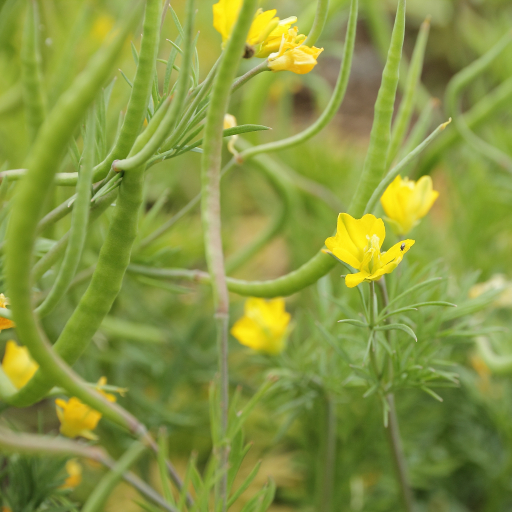
Often called the Sickle-fruited Hypecoum or the Prostrate Horned Poppy, this charming Mediterranean native is a master of low-profile living. Instead of reaching for the sky, it spreads its feathery, blue-green foliage across the ground like a delicate lace collar. It is a member of the poppy family, though you wouldn’t guess it until you see its uniquely structured, bright yellow blooms that follow the sun.
🔍 How to Identify
- 🌼 The Flowers: Small, bright yellow blossoms with four petals. The two inner petals are uniquely shaped—three-lobed and often tipped with dark spots or fringes, looking a bit like tiny insects landing on the flower.
- 🌿 The Foliage: The leaves are "glaucous" (a waxy, blue-gray coating) and deeply divided into fine, thread-like segments, giving the plant a soft, fern-like appearance.
- 🌙 The Seed Pods: Its most defining feature is the fruit—a long, slender, curved capsule that looks like a miniature sickle or a horn, which gives the plant its common name.
🏡 In Your Garden
- 🏖️ Soil Specialist: This plant thrives in sandy, well-drained, or even rocky soils. In the wild, it loves coastal dunes and disturbed fields, meaning it hates "wet feet." If your garden soil is heavy clay, it likely won't survive the winter dampness.
- ☀️ Sun Seeker: As a Mediterranean native, it requires full, unadulterated sunlight to open its petals. It is an annual plant, meaning it completes its entire life cycle in one season, but it is an excellent self-seeder if the soil is kept relatively bare.
⚠️ Safety & Toxicity
- 🚫 Status: Mildly Toxic.
- 🐾 Details: Like many members of the Poppy family (Papaveraceae), Hypecoum procumbens contains alkaloids that can cause stomach upset or lethargy if ingested in significant quantities. It is best kept away from curious pets and toddlers who might be tempted by its bright yellow flowers.
✨ Fun Fact
The species name procumbens is Latin for "falling forward" or "prostrate," referring to the plant's habit of sprawling across the ground rather than growing upright. Ancient herbalists once looked at its "horned" seed pods and believed they held secrets for treating ailments of the eyes!

Detailed Care Instructions
Growing Hypecoum procumbens, commonly known as prostrate fumitory, can be a rewarding endeavor if you follow the appropriate steps. Here’s how you can successfully grow this unique plant:
1. Understanding the Plant:
Before you start, it's important to know that Hypecoum procumbens is a member of the Poppy family (Papaveraceae). It has delicate, finely divided leaves and produces small yellow flowers. It typically grows in Mediterranean climates.
2. Climate and Soil Requirements:
- Climate: It favors mild climates with plenty of sunlight.
- Soil: Prefers well-drained, sandy or loamy soil. It can tolerate slightly alkaline soils, but avoid heavy clay.
3. Planting:
- Seeds or Transplants: You can start growing Hypecoum procumbens from seeds. Transplants can be difficult since they have delicate roots.
- When to Plant: The best time to plant seeds is in the late fall or early spring, depending on your climate. They require a chilling period to germinate, so fall planting can be beneficial.
4. Planting Process:
- Prepare the soil: Till the soil to loosen it, and ensure it drains well.
- Sow the seeds: Scatter the seeds on the soil surface and lightly press them into the soil. Do not bury them deeply since light exposure helps with germination.
- Watering: Water gently after planting. Keep the soil moist but not waterlogged until the seeds germinate.
5. Care and Maintenance:
- Watering: Once established, Hypecoum procumbens is relatively drought-tolerant. Water moderately, ensuring the soil dries out between watering sessions.
- Weeding: Keep the area around the plants free of weeds to reduce competition for nutrients and water.
- Fertilizing: Generally, these plants do not require much fertilization. If your soil is poor, you may use a balanced, slow-release fertilizer in the spring.
6. Growth and Blooming:
- Expect seedlings to appear in a few weeks to a few months, depending on the temperature and light conditions.
- The plant will produce its characteristic yellow flowers in the growing season, usually in the spring to early summer.
7. Pest and Disease Control:
- Hypecoum procumbens is relatively resistant to pests and diseases. However, keep an eye out for common garden pests and manage them with appropriate organic or chemical controls if necessary.
8. Special Considerations:
- Mulching: You may mulch around the plants to retain soil moisture and control weeds.
- Pruning: No significant pruning is required. Simply remove any dead or damaged parts to encourage healthy growth.
9. Propagation:
- Seed Collection: Collect seeds from mature pods for future planting. Let the pods dry on the plant, then harvest and store seeds in a cool, dry place.
By following these guidelines, you can successfully grow Hypecoum procumbens and enjoy its unique beauty in your garden.

Place in a bright room that is sun drenched almost all day. Or directly in a south-facing window.

Hypecoum Procumbens plant should be watered regularly but not excessively. The soil should be kept moist but not waterlogged, and the plant should be allowed to dry out slightly between waterings. Watering from the base of the plant is more beneficial than overhead watering, as it helps prevent fungal growth and keeps the leaves dry. It is important to avoid getting water on the leaves as it may cause damage or encourage disease. During the growing season, it may require more frequent watering, but during the dormant period, watering should be reduced. The plant should be monitored regularly for signs of dehydration or overwatering, such as wilting or yellowing leaves.
Hypecoum procumbens is a relatively low-maintenance plant, but some basic fertilizing instructions can help ensure its health and vigor. Here are some guidelines:
- Soil Preparation: Before planting, enrich the soil with organic matter such as compost or well-rotted manure. This improves soil structure and provides a slow-release source of nutrients.
- Initial Fertilizing: At the time of planting, you can mix a balanced, slow-release granular fertilizer into the soil. Look for a formula such as 10-10-10 (Nitrogen-Phosphorus-Potassium) or similar.
- Growing Season Fertilizing:
- Frequency: Fertilize once in early spring when new growth begins.
- Type of Fertilizer: Use a balanced, all-purpose fertilizer or one specifically formulated for flowering plants.
- Application: Follow the manufacturer’s instructions regarding the quantity. Generally, you can apply a water-soluble fertilizer every 4-6 weeks during the growing season to encourage strong growth and blooming.
- Frequency: Fertilize once in early spring when new growth begins.
- Watering with Fertilizer: When using liquid fertilizers, dilute according to the label, and apply during watering. Avoid over-fertilizing as this can lead to excessive foliage growth at the expense of flowers.
- Maintenance Fertilizing: If the plant shows signs of nutrient deficiency (such as yellowing leaves or poor growth), you can perform a light side-dressing with compost or a balanced granular fertilizer during the growing season.
- Avoid Over-Fertilizing: Too much fertilizer can harm the plant. Signs of over-fertilizing include leaf burn and reduced flowering. If this happens, reduce the amount and frequency of fertilizer, and ensure the plant has adequate water to help flush out excess salts.
By following these guidelines, you should be able to maintain a healthy Hypecoum procumbens and encourage it to thrive.
Hypecoum Procumbens plant requires a well-draining soil that is rich in organic matter. The ideal pH range for the soil should be between 6.0 to 7.0. The soil should be sandy loam or loam. Adding compost or well-rotted manure to the soil can help improve the texture and fertility of the soil. It is important to avoid using heavy or clay soils for this plant as it can be detrimental to its growth and overall health. Additionally, it is recommended to mulch around the plant to help retain soil moisture and suppress weeds.
To propagate Hypecoum procumbens, you can follow these general steps to ensure successful growth:
Seed Collection:
- Harvesting Seeds:
- Wait until the seed pods turn brown and dry out on the plant.
- Carefully collect the pods before they split open to avoid losing seeds.
- Place the collected pods in a paper bag and let them dry out completely, allowing the seeds to be extracted easily.
Sowing Seeds:
- Wait until the seed pods turn brown and dry out on the plant.
- Seed Preparation:
- Gently clean the seeds by separating them from any pod debris.
- Store seeds in a cool, dry place until you are ready to sow them.
- Gently clean the seeds by separating them from any pod debris.
- Timing:
- Sow the seeds in early spring or autumn, as these times mimic the plant's natural germination cycle.
- Sow the seeds in early spring or autumn, as these times mimic the plant's natural germination cycle.
- Soil Preparation:
- Prepare a well-draining soil mix, ideally sandy loam with good aeration.
- Ensure the soil is slightly moist but not waterlogged.
- Prepare a well-draining soil mix, ideally sandy loam with good aeration.
- Sowing Seeds:
- Sow the seeds on the soil surface, as they require light to germinate.
- Lightly press the seeds into the soil without burying them deeply.
- Keep the soil surface consistently moist until germination occurs.
Care for Seedlings:
- Sow the seeds on the soil surface, as they require light to germinate.
- Watering:
- Water gently and regularly to maintain moisture levels without causing waterlogging.
- Use a fine mist to avoid displacing seeds.
- Water gently and regularly to maintain moisture levels without causing waterlogging.
- Light and Temperature:
- Place the seed trays or pots in a location that receives plenty of light.
- Maintain a consistent temperature range of 15-20°C (59-68°F) for optimal germination.
- Place the seed trays or pots in a location that receives plenty of light.
- Thinning:
- Once the seedlings develop a few true leaves, thin them out if necessary to avoid overcrowding.
- Transplant the stronger seedlings into individual pots if needed.
Transplanting:
- Once the seedlings develop a few true leaves, thin them out if necessary to avoid overcrowding.
- Preparing the Planting Site:
- Choose a sunny location with well-drained soil in your garden or desired area.
- Amend the soil with compost if necessary to improve fertility.
- Choose a sunny location with well-drained soil in your garden or desired area.
- Transplanting Seedlings:
- When the seedlings are large enough to handle and have developed a solid root system, transplant them to their final location.
- Space the plants appropriately to ensure good air circulation and growth potential.
- When the seedlings are large enough to handle and have developed a solid root system, transplant them to their final location.
- Post-Transplant Care:
- Water the transplanted seedlings well to help establish their roots.
- Mulch around the base to retain soil moisture and suppress weeds.
General Maintenance:
- Water the transplanted seedlings well to help establish their roots.
- Watering:
- Continue to water regularly, especially during dry spells, to ensure healthy growth.
- Continue to water regularly, especially during dry spells, to ensure healthy growth.
- Weeding and Mulching:
- Keep the area around the plants free from weeds.
- Apply mulch to conserve moisture and reduce competition.
- Keep the area around the plants free from weeds.
- Monitoring:
- Monitor for any signs of pests or diseases and manage them promptly.
Additional Tips:
- Monitor for any signs of pests or diseases and manage them promptly.
- Consider using cold stratification if germination rates are low. This involves placing seeds in a moist medium and refrigerating them for a few weeks to simulate winter conditions.
The key to successful propagation is providing the right environmental conditions that mimic the plant's natural habitat. With proper care and attention, you can enjoy the beauty and resilience of Hypecoum procumbens in your garden.








