Plant Overview
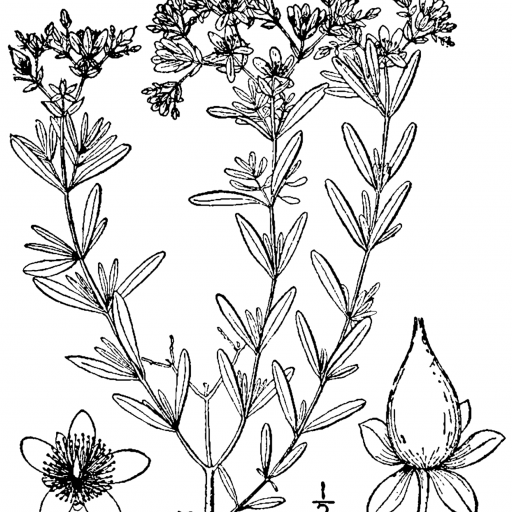
Known as the "Bushy St. John’s Wort," this native North American shrub is a golden powerhouse for the summer garden. It earns its name from the sheer abundance of tiny, star-shaped blossoms that can practically hide the foliage during peak bloom. While its cousins are often low-growing herbs, this variety creates a sturdy, woody presence that looks like a miniature, sun-drenched cloud.
🔍 How to Identify
- 🌼 The Flowers: Dozens of small, bright yellow flowers appear in dense, flat-topped clusters. Each flower features a prominent "explosion" of yellow stamens in the center, giving it a fuzzy appearance.
- 🌿 The Foliage: Leaves are narrow, linear, and arranged oppositely along the stems. They have a slightly leathery texture and a cool, bluish-green hue that contrasts beautifully with the yellow blooms.
- 🪵 The Bark: As the plant matures, the older stems develop a distinctive "exfoliating" or peeling bark that adds visual interest even during the winter months when the leaves have fallen.
🏡 In Your Garden
- 💧 Wet Feet Welcome: Unlike many garden shrubs that rot in soggy soil, this plant is a champion of rain gardens and meadow borders. It naturally thrives in damp, acidic soils and can handle occasional flooding with ease.
- 🐝 Pollinator Party: Because the flowers are so numerous and rich in pollen, it is a high-traffic zone for bumblebees and specialized native bees. It provides a critical mid-to-late summer food source when other spring flowers have faded.
- ✂️ Low Maintenance Structure: It has a naturally rounded, "tight" growth habit. You won’t need to prune it constantly to keep it looking tidy, though a light shaping in early spring can encourage even more flower heads.
⚠️ Safety & Toxicity
- 🐾 Mildly Toxic: Like most members of the Hypericum family, this plant contains hypericin. If ingested in large quantities, it can cause photosensitivity (skin sensitivity to sunlight) in grazing animals like horses or sheep.
- 👶 Keep an Eye Out: While not considered deadly to humans or common household pets, ingestion can cause stomach upset. It is best treated as an ornamental rather than a medicinal herb unless guided by a professional.
✨ Fun Fact
The genus name Hypericum comes from the Greek words hyper (above) and eikon (picture). In ancient times, the flowers were hung above portraits or doorways on St. John’s Day to ward off evil spirits and bad luck!

Detailed Care Instructions
To grow Hypericum densiflorum, also known as denseflower St. John's wort, follow these steps:
- Planting: Choose a sunny location in your garden with well-draining soil. If your soil is heavy or clay-like, amend it with organic matter or sand to improve drainage.
- Seeding: You can sow seeds directly into the garden bed in the early spring or start them indoors in late winter. If starting indoors, sow the seeds in seed trays and lightly cover them with soil. Keep the soil consistently moist until the seeds germinate.
- Transplanting: Once the seedlings are about 2 inches tall, transplant them into individual pots or directly into the garden bed if the risk of frost has passed. Space the plants about 12 to 18 inches apart.
- Watering: Water the plants regularly, keeping the soil moist but not soggy. Avoid overwatering, as this can lead to root rot. During hot, dry spells, increase the frequency of watering.
- Mulching: Apply a layer of organic mulch around the plants to help conserve moisture, suppress weeds, and regulate soil temperature.
- Fertilizing: Hypericum densiflorum generally doesn't require heavy fertilization. However, you can apply a balanced, slow-release fertilizer in spring if desired.
- Pruning: After the plant has finished flowering, you can prune it back to maintain its shape and encourage bushier growth. Pruning can be done in late summer or early spring.
- Pests and diseases: Hypericum densiflorum is generally resistant to most pests and diseases. However, keep an eye out for aphids, mealybugs, and leaf spot. Treat any infestations promptly using organic insecticides or treatments suitable for the specific pest or disease.
- Winter care: In colder regions, provide a layer of mulch around the base of the plant during winter to protect it from freezing temperatures.
- Propagation: Hypericum densiflorum can also be propagated by taking stem cuttings in late spring or early summer. Remove a 4- to 6-inch section of healthy stem, remove the lower leaves, dip the cut end in rooting hormone, and plant the cutting in a container filled with moist potting soil. Place the container in a warm, bright location, and keep the soil evenly moist. The cutting should root within a few weeks.
By following these steps, you should be able to successfully grow a Hypericum densiflorum plant.

Place in a bright room that is sun drenched almost all day. Or directly in a south-facing window.

To properly water Hypericum Densiflorum, you should first check the soil moisture level by sticking your finger into the soil about an inch deep. If the soil feels dry, it is time to water the plant. Use a watering can or hose with a gentle flow to water the soil around the base of the plant until the water begins to drain out of the bottom of the pot or container. Do not overwater the plant as it can lead to root rot. Frequency of watering will depend on various factors such as temperature, humidity and container size. In general, it is recommended to water Hypericum Densiflorum once per week.
To fertilize this plant, it is recommended to use a balanced fertilizer with equal amounts of nitrogen, phosphorus, and potassium. The fertilizer should be applied every two to three weeks during the growing season, starting in early spring. It is important to water the plant well before and after applying fertilizer to prevent burning the roots. Be sure to follow the manufacturer's instructions on the fertilizer package for recommended amount and frequency of application.
Hypericum Densiflorum plants thrive in soil that is rich in organic matter and well-draining. It is recommended to use a soil mix that consists of equal parts of peat moss, perlite, and a high-quality potting soil. This will ensure that the plant has the proper nutrients it needs to grow and will help prevent waterlogging, which can lead to root rot. Additionally, it is important to ensure that the soil has a slightly acidic pH level, with a range between 5.5 and 6.5. It is also recommended to add slow-release fertilizer to the soil mix, to provide ongoing nutrition for the plant. When planting Hypericum Densiflorum, it is crucial to ensure that the plant's root system is not disturbed too much. It is best to gently loosen the root ball and then plant it at the same level as it was in its previous container. Finally, it is essential to water the plant thoroughly after planting, and then keep the soil moist, but not waterlogged, in the weeks following.
To propagate this plant, first, find a healthy mature plant. Take a cutting that is about 4-6 inches long, making sure to use clean, sharp scissors. Remove any leaves from the bottom one-third of the stem, and dip the cut end into rooting hormone. Then, plant the cutting into a well-draining potting mix, making sure to keep it moist but not waterlogged. Place the pot in a warm, bright location but avoid direct sunlight. Within a few weeks, you should see new growth and roots developing. Once the plant has established roots, it can be transferred to a larger pot or outdoors into the garden.








