Plant Overview
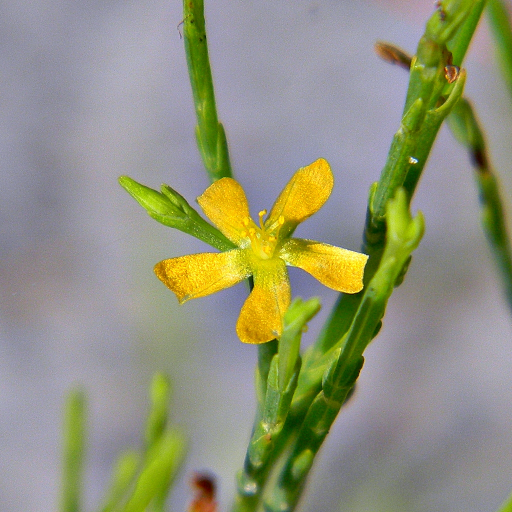
Often called "Orangegrass" or "Pineweed," this wiry little rebel is a unique member of the St. John’s Wort family. At first glance, you might mistake it for a clump of grass or tiny pine seedlings, but a quick crush of its stems reveals a surprising, zesty citrus fragrance. It is a hardy pioneer plant that thrives in the sandy, sun-baked spots where other plants struggle to survive.
🔍 How to Identify
- 🌿 Scale-like Leaves: The leaves are so tiny they look like minute scales pressed against the stem, making the plant appear almost leafless.
- 🎋 Wire-like Stems: It grows in an upright, bushy fashion with thin, stiff, green-to-reddish stems that resemble copper wiring.
- ☀️ Sun-Kissed Blooms: In late summer, it produces microscopic yellow flowers at the tips of its branches that typically only open during the brightest daylight hours.
🏡 In Your Garden
- 🏜️ The Sand Lover: This plant is an indicator of poor, sandy, or rocky soil. It refuses to grow in rich, "good" garden soil, as it hates having "wet feet" and needs maximum drainage.
- 🌱 Disturbance Specialist: You’ll often find it popping up along gravel paths, abandoned fields, or spots where the earth has been recently scuffed. It is an annual, meaning it completes its life cycle in one year but will happily drop seeds for next spring.
⚠️ Safety & Toxicity
- 🐾 Mild Concern: Like its cousin, St. John’s Wort, it contains hypericin. If ingested in large quantities by livestock or pets, it can cause photosensitivity, leading to skin irritation or sunburns upon exposure to light.
- 👶 General Safety: It is generally safe for humans to touch, though it is not considered an edible herb. The "orange" name refers only to its scent, not its flavor!
✨ Fun Fact
The name "Orangegrass" comes from the tiny, translucent glands dotting the plant. These glands are filled with essential oils that, when stepped on or bruised, release a scent strikingly similar to orange peel.

Detailed Care Instructions
To grow Hypericum gentianoides, also known as Alpine St. John's Wort, follow these steps:
- Choosing a suitable location: Select a well-draining area with full to partial sun exposure. This plant prefers loamy or sandy soil that is nutrient-rich.
- Propagation: Hypericum gentianoides can be propagated by seeds or stem cuttings. Seeds need to be sown in late winter or early spring, while stem cuttings can be taken in late summer or early fall.
- Soil preparation: Prepare the soil before planting by removing weeds and loosening it. Amend the soil with organic matter, like compost or well-rotted manure, to improve its fertility and drainage.
- Planting: If you're using seeds, sow them at a shallow depth and cover lightly with soil. If using stem cuttings, plant them in a prepared hole, ensuring that the soil is firmly packed around the cutting to help with rooting.
- Watering: Water the newly planted Hypericum gentianoides regularly, keeping the soil moist but not waterlogged. Allow the soil to dry out slightly between waterings.
- Mulching and maintenance: Apply a layer of organic mulch around the plants to help retain moisture and suppress weeds. Mulching also helps moderate soil temperatures. Remove any weeds that emerge.
- Fertilization: Fertilize the plant annually in early spring with a balanced, slow-release fertilizer to promote healthy growth. Follow the manufacturer's instructions for application rates.
- Pruning: Prune the plant in early spring to remove any damaged or dead branches. This will also help maintain its shape and encourage fresh growth.
- Protecting from pests and diseases: Hypericum gentianoides is generally resistant to pests and diseases. However, regular inspection is recommended to identify and address any issues promptly.
- Winter care: In colder climates, protect the plant by applying a layer of mulch around the base to insulate the roots and prevent frost damage.

Place in a window with dappled sun or a spot in the middle of a room. Or directly in a window facing west or east.

To water this plant, it is important to check the moisture level of the soil first. One can do this by inserting their finger into the soil or using a moisture meter. The plant requires moderate watering, so it should not be allowed to completely dry out or become waterlogged. When watering, it is recommended to use room temperature water and to avoid getting water on the leaves. It is also important to allow the water to fully drain out of the pot to prevent root rot. The frequency of watering will depend on factors such as humidity, temperature, and amount of sunlight the plant receives.
To fertilize this plant, apply a balanced, slow-release fertilizer in the early spring before new growth begins. Follow the application instructions on the fertilizer package, making sure not to apply too much as this can burn the roots. Water the plant thoroughly after fertilizing. During the growing season, you can also use a liquid fertilizer every 4-6 weeks to provide additional nutrients.
The Hypericum Gentianoides plant requires well-draining and aerated soil for optimal growth. It prefers a slightly acidic to neutral soil pH level of 5.5 to 7.0.
The ideal soil mixture for this plant should be a combination of loamy soil, organic matter such as compost or peat moss, and sand. This mixture will provide good drainage, adequate moisture retention, and sufficient nutrients for the plant.
It is important to avoid using heavy or compacted soils as they can restrict root growth and lead to waterlogging. Additionally, soil that's prone to drying out quickly should be avoided as the plant requires consistent moisture.
Regular applications of organic fertilizers can help maintain soil fertility and promote healthy growth of the plant. Adding a layer of mulch around the base of the plant can also help to retain moisture and regulate soil temperature.
Hypericum Gentianoides is a perennial plant that can be propagated through several methods. One way to propagate this plant is through division. To do this, you first need to locate the roots of the plant. Then, gently dig up the root system, taking care not to damage any roots. You can then carefully divide the root ball into smaller sections, each with its own stems and roots. Replant each division in a new location, making sure to water it thoroughly.
Another way to propagate Hypericum Gentianoides is through stem cuttings. Choose a healthy, vigorous stem from the parent plant and use a sharp, clean pair of scissors to cut a six-inch section of the stem. Make sure that the cutting has at least three nodes or leaf junctions. Remove the leaves from the bottom third of the stem, leaving only a few leaves at the top. Dip the cut end of the stem in rooting hormone powder and plant it in a pot filled with moist potting soil. Water well, and keep the soil moist but not waterlogged. Place the pot in a bright, warm spot, but away from direct sunlight. In a few weeks, the cutting should develop roots and can be transplanted to its permanent location.
A third way to propagate Hypericum Gentianoides is through seed. Wait for the plant to produce seed pods and then harvest the seeds as they mature. Plant the seeds in a seed-starting tray or pot filled with moist potting soil. Cover the seeds with a light layer of soil and water lightly. Keep the soil moist and warm until the seeds sprout, which can take anywhere from a week to several months, depending on the seed variety. Once the seedlings have grown large enough to handle, transplant them to a larger pot or directly into the ground. Keep the soil moist but not waterlogged, and protect seedlings from strong sun and winds until they are well established.








