Plant Overview
Often called Kalm’s St. John’s Wort, this North American native looks like a burst of captured sunshine in a shrub. Named after the Finnish botanist Peter Kalm, a student of Linnaeus, it is a hardy survivor that thrives in the rocky soils of the Great Lakes region. Its metallic, blue-green foliage provides a sophisticated backdrop for the "explosive" golden-yellow blooms that arrive just when the midsummer garden needs a pick-me-up.
🔍 How to Identify
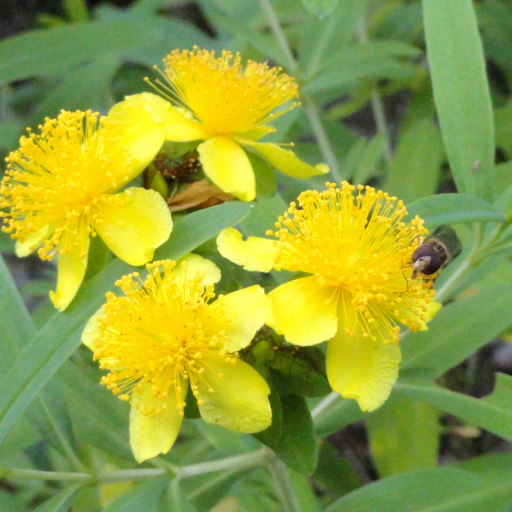
- ☀️ The Flowers: Small, bright yellow blossoms with five petals, distinguished by a massive, fuzzy pom-pom of golden stamens in the center.
- 🌿 The Foliage: Narrow, willow-like leaves that have a distinct glaucous (bluish-silver) tint, making the plant attractive even when not in bloom.
- 🪵 The Bark: As the plant matures, the older stems develop a beautiful, papery exfoliating bark that provides subtle texture to the winter landscape.
🏡 In Your Garden
- 🪨 Rugged Resilience: This plant is a "tough-love" enthusiast; it actually prefers sandy or rocky soils where other plants might wither, making it perfect for stabilizing slopes or filling dry spots.
- 🐝 Bumblebee Magnet: It is a high-traffic "airport" for native bees. Watch closely and you may see "buzz pollination," where bees vibrate their bodies at a specific frequency to shake the pollen loose from the dense stamens.
⚠️ Safety & Toxicity
- 🐾 Mild Caution: While Kalm’s St. John’s Wort is generally considered safe for casual handling, it is best kept away from curious pets and livestock.
- ☀️ Photosensitivity: Like many members of the Hypericum genus, it contains hypericin. If ingested in large quantities, it can cause "light sensitivity," making skin more prone to severe sunburn, though this is rare with this specific ornamental variety.
✨ Fun Fact
- 📜 Historical Roots: Peter Kalm, the plant’s namesake, was sent to North America in 1747 specifically to find hardy plants that could survive the harsh winters of Northern Europe—he was one of the first scientists to document the unique flora of the Niagara Falls area!

Detailed Care Instructions
To grow Hypericum Kalmianum (Kalm St. John's Wort) plant, you can follow these steps:
- Select a suitable location: Choose a spot that receives full sun or partial shade. Ensure the soil is well-draining and rich in organic matter.
- Prepare the soil: Prior to planting, loosen the soil using a garden fork or tiller. Remove any weeds, rocks, or debris. Mix in compost or well-rotted manure to improve the soil fertility and drainage.
- Planting: Dig a hole slightly larger than the root ball of the plant. Place the plant in the hole and backfill with soil, making sure the crown of the plant is level with the soil surface. Gently firm the soil around the plant.
- Watering: Water the plant thoroughly after planting to help settle the soil and ensure good root-to-soil contact. Thereafter, provide regular watering, especially during dry spells. Avoid overwatering, as that can cause root rot.
- Mulching: Apply a layer of organic mulch, such as wood chips or straw, around the base of the plant. Mulching helps conserve soil moisture, suppress weeds, and regulate soil temperature.
- Pruning: Prune Hypericum Kalmianum in late winter or early spring before new growth begins. Trim back any dead, damaged, or overgrown branches to maintain its desired shape.
- Fertilizing: Hypericum Kalmianum usually doesn't require heavy feeding. However, if the plant seems weak or shows signs of nutrient deficiency, you can apply a balanced slow-release fertilizer in early spring.
- Pests and diseases: Monitor the plant for common pests and diseases, such as aphids or powdery mildew. Treat any infestations promptly using organic or chemical methods, depending on your preference.
- Propagation: Hypericum Kalmianum can be propagated through seeds, cuttings, or division. Seeds should be sown in early spring, while cuttings can be taken in summer. Additionally, mature plants can be divided in early spring or fall.
By following these guidelines, you should be able to successfully grow and maintain Hypericum Kalmianum in your garden or landscape.

Place in a bright room that is sun drenched almost all day. Or directly in a south-facing window.

To properly water this plant, first ensure that the soil is not already moist. You can do this by sticking your finger about an inch into the soil and checking for moisture. If the soil is dry, you can water the plant.
When watering, be sure to avoid getting water on the leaves and flowers. This is because excess moisture on these parts of the plant can lead to disease development. Instead, water the soil at the base of the plant until the soil is moist but not waterlogged.
During periods of high heat or drought, it may be necessary to water this plant more frequently. However, be careful not to overwater as this can lead to root rot. Always allow the soil to dry out slightly before watering again.
It is also important to note that water quality can affect the health of this plant. If the water in your area is high in salts or minerals, it may be best to use filtered or distilled water when watering.
To promote healthy growth of this plant, you should provide it with well-draining soil that is rich in organic matter. Apply a balanced fertilizer in the spring, after the last expected frost, and again in early summer. Use a fertilizer with equal parts nitrogen, phosphorus, and potassium, such as a 10-10-10 fertilizer. Apply according to the fertilizer's instructions for the plant's size and age, being careful not to over-fertilize, which can damage the plant. Water the plant well after fertilizing.
Hypericum Kalmianum prefers well-draining soils that are rich in organic matter with a pH range of 6.0-7.5. The soil should be moist but not soggy, as it can lead to root rot. A mix of peat moss, vermiculite or perlite, and coarse sand can be used as a potting mix. Adding compost to the soil can also improve its fertility. In areas with heavy clay soils, it is advisable to add sand or coarse grit to improve the soil's drainage. Additionally, mulching with organic matter can help retain moisture in the soil and regulate its temperature.
Hypericum kalmianum can be propagated through stem cuttings. First, choose healthy stems from the plant, making sure they are at least 4-6 inches long and have several leaves. Remove the bottom leaves and dip the cut end in rooting hormone powder. Place the cutting in a pot filled with moist potting soil and cover with a plastic bag to create a greenhouse effect. Keep the soil moist and the cutting in indirect light. After a few weeks, you should notice new growth, which indicates that root development has begun. Once the roots are established, the new plant can be transplanted into a larger pot or directly into the garden.








