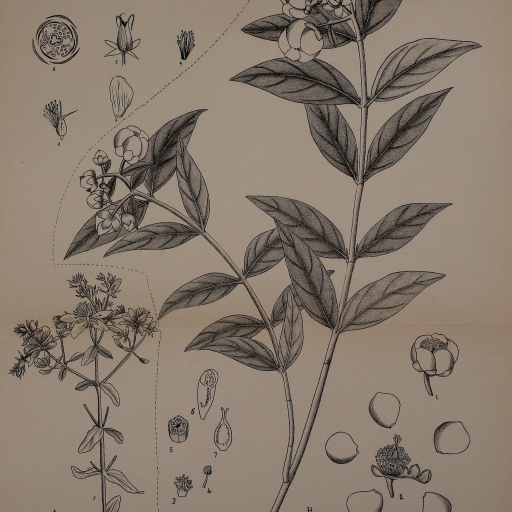
Plant Overview
Often referred to as the Goldencup St. John's Wort, this semi-evergreen shrub is like a captured ray of sunshine for your garden. Originating from the mountain slopes of China, it is beloved for its resilient nature and waxy, butter-yellow blooms that appear when many other plants begin to fade in the summer heat. It’s a "tough-as-nails" ornamental that bridges the gap between a wild woodland aesthetic and a manicured landscape.
🔍 How to Identify
- 🌼 The Flowers: Large, five-petaled, bowl-shaped blooms in a deep, waxy yellow. They feature a prominent "pom-pom" of long, delicate stamens in the center.
- 🍃 The Foliage: Opposite, oval-shaped leaves that are a rich, dark green. In milder climates, they stay on the branch all winter, often turning a slight purplish-bronze in the cold.
- Branch The Stems: Young stems often have a distinct reddish tint and an arching habit, giving the shrub a graceful, fountain-like silhouette as it matures.
🏡 In Your Garden
- 🌱 Root Resilience: This plant is prized for its ability to stabilize soil. Because it develops a dense, fibrous root system, it is frequently used on slopes or embankments to prevent erosion where other plants might struggle.
- ✂️ The "New Wood" Rule: To keep it from looking "leggy," it’s best to prune it back hard in late winter. Since it produces flowers on the current season's growth, a heavy haircut actually rewards you with a more explosive floral display in July.
⚠️ Safety & Toxicity
- 🐾 Pet Warning: While generally safe for humans to touch, it contains hypericin. If ingested in large quantities, it can cause "photosensitization" in pets and livestock, making their skin painfully sensitive to sunlight.
- 👶 Child Safety: The berries that follow the flowers are not edible. While not typically life-threatening, they can cause stomach upset if swallowed by curious toddlers.
✨ Fun Fact
The genus name Hypericum comes from the Greek words hyper (above) and eikon (picture). In ancient times, these flowers were gathered and hung above icons or doorways on Midsummer's Eve to ward off evil spirits and bad luck!

Detailed Care Instructions
To grow Hypericum Patulum, also known as Rose of Sharon, follow these steps:
- Location: Choose a sunny spot in your garden for planting the Hypericum Patulum plant. It prefers full sun to partial shade.
- Soil: The plant thrives in well-draining soil. Prepare the soil by loosening it with a garden fork or tiller and adding organic matter like compost or well-rotted manure.
- Planting: Dig a hole that is slightly larger than the pot in which the plant is currently growing. Gently remove the plant from its pot and place it in the hole, making sure the top of the root ball is level with or slightly above the soil surface. Backfill the hole with soil and pat it down gently.
- Watering: Water the plant thoroughly after planting to help settle the soil. Hypericum Patulum plants need regular watering, especially during dry spells. Keep the soil moist but not soggy.
- Mulching: Apply a layer of organic mulch, such as wood chips or bark, around the base of the plant to help retain moisture and suppress weed growth.
- Fertilizing: Feed the plant with a balanced, slow-release fertilizer in early spring. Follow the package instructions for the appropriate amount and application method.
- Pruning: Prune the plant in early spring before new growth appears to maintain its shape and promote healthy growth. Remove any dead, damaged, or overgrown branches. Light pruning throughout the growing season can also help encourage more flowers.
- Pests and Diseases: Hypericum Patulum is generally resistant to pests and diseases, but it may occasionally be affected by aphids or fungal diseases. If necessary, treat pest infestations with insecticidal soap or neem oil, and fungicides can be used according to the instructions if fungal diseases occur.
- Winter Care: In colder climates, Hypericum Patulum may require protection during winter. Apply a layer of mulch around the base of the plant to insulate the root system. You can also consider using a frost cover or burlap to protect the plant from extreme cold.
By following these steps, you can successfully grow Hypericum Patulum and enjoy its beautiful flowers throughout the growing season.

Place in a window with dappled sun or a spot in the middle of a room. Or directly in a window facing west or east.

Hypericum Patulum is a plant that requires regular watering to thrive. It is important to ensure that the soil remains moist, but not waterlogged, as excess water can lead to root rot. You can check the soil moisture by inserting your finger into the soil up to the second knuckle. If the soil feels dry, it is time to water.
When watering, use a watering can or a hose with a gentle stream to water the soil directly around the plant. Avoid getting water on the leaves, as this can lead to fungal diseases. Water the plant deeply, ensuring that the water reaches the roots.
In hot and dry weather, Hypericum Patulum may require more frequent watering. During periods of heavy rainfall, you may need to reduce your watering schedule to prevent overwatering.
Finally, it is important to note that Hypericum Patulum may benefit from the addition of a slow-release fertilizer to the soil during the growing season. This will provide the plant with the nutrients it needs to grow strong and healthy.
For optimal growth of this plant, it is recommended to fertilize it once every two weeks during the growing season, using a balanced fertilizer with equal amounts of nitrogen, phosphorus, and potassium. Avoid overfertilizing, as this can cause leaf burn and damage to the roots. Be sure to water the plant thoroughly after fertilizing, and keep the soil moist but not waterlogged. Additionally, it is recommended to prune the plant regularly to promote bushier growth and encourage flowering.
The optimal soil for Hypericum Patulum plants is a well-draining soil with a pH range of 5.5 to 7.5. It is recommended to use a mix of peat moss, perlite, and organic matter to create a loose and aerated soil that promotes healthy root growth. The soil should also be rich in nutrients such as nitrogen, phosphorus, and potassium to support leaf and flower development. Avoid soils that retain too much water, as it can lead to root rot and other fungal diseases.
Hypericum Patulum can be propagated through stem cuttings. Select a healthy stem that is about 4-6 inches long and has a few leaves. Make a clean cut just below a node (where the leaf meets the stem) using a sharp knife or scissors. Remove the leaves from the lower half of the stem.
Dip the cut end of the stem into rooting hormone powder and tap off any excess. Plant the stem in a pot filled with well-draining soil. Water the plant and cover the pot with a plastic bag to create a mini greenhouse.
Place the pot in a bright, indirect light area but avoid direct sunlight. Keep the soil moist but not waterlogged. After a few weeks, new roots should start to grow and new leaves will emerge.
After a few more weeks, when the new plant is well-established, remove the plastic bag and move the plant to a larger pot with fresh soil. Continue to care for the plant until it is large enough to be transplanted into its permanent location.








