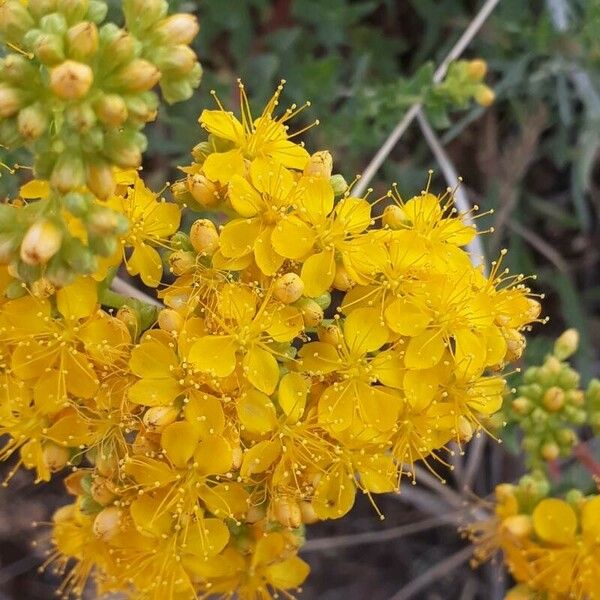
Plant Overview
Known as the Rough St. John’s Wort, this golden-bloomed perennial is a rugged survivor of the sun-drenched, rocky slopes of the Middle East and Central Asia. It is often found clinging to limestone cliffs or tucked into dry mountain crevices where other plants struggle. Its scientific name, scabrum, refers to its unique "scabrous" or sandpaper-like texture, a clever adaptation for its harsh, arid home.
🔍 How to Identify
- 🌼 Golden Blooms: It features clusters of bright yellow, five-petaled flowers, often decorated with tiny, dark glandular dots along the petal edges.
- 🌵 Rough Stems: The most distinctive feature is the stem, which feels rough or "scruffy" to the touch due to tiny, raised bumps.
- 🍃 Narrow Foliage: The leaves are small, linear, and often hug the stem closely to minimize water loss in the intense mountain sun.
🏡 In Your Garden
- 🪨 The Rock Specialist: This is a "set it and forget it" plant for rock gardens or xeric (dry) landscapes. It hates "wet feet" and will quickly rot if planted in heavy, water-retaining clay soil.
- ☀️ Sun Sensitivity: While it loves the sun, its woody base makes it difficult to move once established. It develops a deep taproot to find water, so choose its permanent home carefully to avoid transplant shock.
⚠️ Safety & Toxicity
- 🐾 Photosensitivity: Like most members of the Hypericum genus, it contains hypericin. If eaten in large quantities, it can cause "Hypericism"—a condition that makes the skin of animals (and occasionally humans) dangerously sensitive to UV light.
- 🧴 Skin Irritation: While not deadly to the touch, the rough texture of the stems and the oils in the leaves may cause mild irritation to those with sensitive skin.
✨ Fun Fact
The tiny black and translucent dots on the flowers and leaves aren't just markings; they are microscopic glands. In ancient folklore, these were sometimes called "St. John's blood," but in reality, they are chemical defense systems that protect the plant from being eaten by hungry insects!

Detailed Care Instructions
Growing Hypericum scabrum, commonly known as rough St. John's wort, is relatively straightforward, as it is a hardy plant that can thrive in various conditions. Here’s a comprehensive guide to help you grow this plant successfully:
1. Choosing the Right Location
- Sunlight: Hypericum scabrum prefers full sun to partial shade. Ensure the plant gets at least 6 hours of direct sunlight daily.
- Soil: It adapts to various soil types but thrives best in well-drained, sandy, or loamy soils. The pH can range from slightly acidic to alkaline.
2. Planting
- Seeds: Start by sowing seeds indoors 6-8 weeks before the last frost if you're in a cooler climate. Sow the seeds on the soil surface and press them lightly, as they need light to germinate.
- Transplanting: If you started seeds indoors, transplant seedlings outdoors after the danger of frost has passed. Space the plants about 12-18 inches apart.
- Direct Sowing: In warmer regions, you can direct sow the seeds after the last frost.
3. Watering
- Moisture: Keep the soil consistently moist but not waterlogged. Once established, Hypericum scabrum is quite drought-tolerant but will perform best with regular watering.
- Frequency: Water the plants when the top inch of soil feels dry.
4. Fertilization
- Initial Feeding: Mix in a balanced, slow-release fertilizer or organic compost into the soil at planting time.
- Ongoing Feeding: Fertilize sparingly. Excessive fertilizer can promote foliage at the expense of flowers. A light feeding in early spring should suffice.
5. Pruning and Maintenance
- Pruning: Prune back the plant in early spring to encourage fresh growth. Remove any dead or weak stems.
- Deadheading: Remove spent flowers to promote continuous blooming throughout the growing season.
- Pest and Disease Management: Hypericum scabrum is generally pest-resistant but can occasionally be affected by rust or leaf spots. Ensure good air circulation around the plants and water at the base to minimize fungal issues.
6. Winter Care
- Hardiness: Hypericum scabrum is hardy in USDA zones 5-9. In colder zones, mulch around the base of the plant in late fall to protect the roots from freezing temperatures.
- Cutting Back: In areas with severe winters, cut back the plant to a few inches above ground level after the first frost.
7. Propagation
- From Seeds: Collect seeds from mature seed capsules in the fall. Dry them thoroughly and store them in a cool, dry place until spring.
- By Division: Divide mature plants in early spring or fall.
- From Cuttings: Take semi-hardwood cuttings in summer and root them in a mix of sand and peat.
By following these guidelines, you should be able to successfully grow and enjoy the beauty of Hypericum scabrum in your garden. Its bright yellow flowers can add a cheerful touch to your landscape, and its adaptability makes it a relatively low-maintenance plant.
Watering Hypericum Scabrum requires careful attention to its specific needs, ensuring the plant remains healthy and vibrant. Here’s a detailed guide on how to do it:
Frequency
- Young Plants: Newly planted specimens need more frequent watering to establish strong roots. Water them every few days, keeping the soil consistently moist but not waterlogged.
- Mature Plants: Once established, reduce frequency. Water once a week, allowing the soil to dry out slightly between watering sessions.
Soil Moisture
- Check Moisture Levels: Insert your finger about an inch into the soil. If it feels dry at this depth, it’s time to water.
- Avoid Waterlogging: Ensure the soil is well-draining to prevent root rot. Water should seep through the soil and exit via drainage holes, not sit at the bottom of the container or planting area.
Watering Method
- Slow and Deep: Water deeply and slowly, allowing the water to penetrate the root zone. This encourages roots to grow deeper, enhancing drought resistance.
- Morning or Evening: Water in the early morning or late evening when temperatures are cooler to reduce evaporation and allow the plant to absorb more moisture.
Seasonal Considerations
- Spring and Summer: Increase watering frequency during hotter months, as higher temperatures and increased growth rates demand more moisture.
- Fall and Winter: Reduce watering during cooler months when the plant’s growth slows down. Ensure occasional watering during dry winter spells to prevent dehydration.
Containers vs. Ground
- In Containers: Plants in pots generally need more frequent watering than those planted in the ground because containers dry out faster. Ensure pots have adequate drainage holes.
- In Ground: When planted directly in the ground, they might need less frequent watering due to better moisture retention in soil.
Mulching
- Use Mulch: Applying a layer of mulch around the base helps retain soil moisture, regulate soil temperature, and reduce water evaporation. Organic mulches like bark or compost work well.
Water Quality
- Use Clean Water: Avoid using highly chlorinated or salty water, as it may affect the plant’s health. Rainwater or distilled water is ideal if available.
By following these guidelines, you can maintain the health and growth of your Hypericum Scabrum, ensuring it thrives in its environment.
Here are the fertilizing instructions for Hypericum Scabrum:
- Soil Preparation: Before planting, enrich the soil with organic matter such as well-rotted compost or aged manure to improve soil fertility and structure.
- Initial Feeding: When planting, mix in a balanced, slow-release granular fertilizer into the planting hole according to the manufacturer’s instructions. This will provide essential nutrients as the plant establishes itself.
- Seasonal Feeding:
- Spring: Once new growth begins in early spring, apply a balanced, slow-release granular fertilizer around the base of the plant. Follow the dosage instructions on the fertilizer package.
- Mid-Summer: A second feeding in mid-summer can help support blooming and overall vigor. Use a balanced, water-soluble fertilizer or another dose of the granular type.
- Spring: Once new growth begins in early spring, apply a balanced, slow-release granular fertilizer around the base of the plant. Follow the dosage instructions on the fertilizer package.
- Method:
- For granular fertilizers, lightly scratch the fertilizer into the soil surface around the base of the plant. Be careful not to disturb the roots.
- For water-soluble fertilizers, mix according to package directions and apply with a watering can or hose-end sprayer directly to the soil around the plant.
- For granular fertilizers, lightly scratch the fertilizer into the soil surface around the base of the plant. Be careful not to disturb the roots.
- Watering: Ensure the plant is watered regularly, especially during dry periods, to help the roots absorb the nutrients effectively. Avoid over-watering as it can lead to root rot.
- Mulching: Apply a layer of organic mulch such as pine straw or shredded bark around the base of the plant. This helps to retain soil moisture, regulate soil temperature, and slowly adds organic matter to the soil as it decomposes.
- Monitoring: Keep an eye on the plant’s growth and overall health. Yellowing leaves or poor growth can indicate nutrient deficiencies, which might require additional targeted feeding.
By following these instructions, you should be able to maintain a healthy and thriving Hypericum Scabrum plant.
Hypericum Scabrum plants thrive in well-draining soil with a neutral to slightly alkaline pH. These plants adapt well to a variety of soil types, including sandy, loamy, and clay soils, as long as proper drainage is ensured. It's important to avoid waterlogged conditions, which can lead to root rot and other issues. Incorporating organic matter, such as compost, can enhance soil fertility and structure, providing beneficial nutrients and improving moisture retention. When preparing the soil, ensure that it is loose and aerated to facilitate healthy root growth. Mulching around the plant can help retain moisture and suppress weeds, although it’s crucial not to cover the base of the plant directly, as this can promote fungal diseases. Regular soil testing can be beneficial to monitor and adjust pH levels and nutrient content as needed.
Hypericum scabrum, a perennial herbaceous plant, can be propagated through seeds, cuttings, or division. Here’s a detailed guide on each method:
1. Propagation by Seeds:
Step-by-Step Process:
- Seed Collection:
- Collect seeds from mature, dry capsules typically found in late summer or early autumn.
- Ensure seeds are fully matured and dry them in a cool, dark place.
- Collect seeds from mature, dry capsules typically found in late summer or early autumn.
- Seed Stratification:
- To enhance germination rates, stratify seeds by placing them in a moistened medium (like sand or peat) inside a plastic bag.
- Keep the bag in the refrigerator at about 39°F (4°C) for 2 to 4 weeks.
- To enhance germination rates, stratify seeds by placing them in a moistened medium (like sand or peat) inside a plastic bag.
- Sowing Seeds:
- After stratification, sow seeds on the surface of a well-draining potting mix.
- Lightly press the seeds into the soil without covering them too deeply as they need light to germinate.
- Water gently to avoid displacing the seeds.
- After stratification, sow seeds on the surface of a well-draining potting mix.
- Germination Conditions:
- Place the seed trays in a location with bright, indirect sunlight.
- Maintain a consistent temperature of around 65-70°F (18-21°C).
- Keep the soil moist but not waterlogged.
- Place the seed trays in a location with bright, indirect sunlight.
- Transplanting:
- Once seedlings have developed a few sets of true leaves, they can be carefully transplanted into individual pots or directly into the garden.
- Space them about 12-18 inches (30-45 cm) apart in well-drained soil.
2. Propagation by Cuttings:
Step-by-Step Process:
- Once seedlings have developed a few sets of true leaves, they can be carefully transplanted into individual pots or directly into the garden.
- Selection of Cuttings:
- Take softwood cuttings in spring or semi-hardwood cuttings in late summer.
- Cut a healthy, non-flowering stem about 4-6 inches (10-15 cm) long just below a node.
- Take softwood cuttings in spring or semi-hardwood cuttings in late summer.
- Preparation of Cuttings:
- Remove the lower leaves, leaving only a few at the top.
- Optionally dip the cut end in rooting hormone to enhance root development.
- Remove the lower leaves, leaving only a few at the top.
- Planting Cuttings:
- Insert the cuttings into a pot filled with a mix of peat and perlite or coarse sand for good drainage.
- Ensure at least one node is buried in the medium.
- Insert the cuttings into a pot filled with a mix of peat and perlite or coarse sand for good drainage.
- Rooting Conditions:
- Place the pot in a warm, bright location but out of direct sunlight.
- Maintain high humidity around the cuttings by covering them with a plastic bag or placing them in a propagator.
- Water sparingly to keep the medium slightly moist.
- Place the pot in a warm, bright location but out of direct sunlight.
- Transplanting:
- Roots should develop in a few weeks.
- Once roots are established, transplant the new plants into larger pots or directly into the garden.
3. Propagation by Division:
Step-by-Step Process:
- Roots should develop in a few weeks.
- Choosing the Right Time:
- Divide the plant in early spring or late autumn when it is not actively blooming.
- Divide the plant in early spring or late autumn when it is not actively blooming.
- Preparing the Plant:
- Carefully dig up the entire plant, taking care not to damage the roots.
- Gently shake off excess soil to expose the roots.
- Carefully dig up the entire plant, taking care not to damage the roots.
- Division Process:
- Use a sharp knife or pruners to divide the root clump into smaller sections, ensuring each section has shoots and a healthy portion of roots.
- Remove any dead or damaged roots.
- Use a sharp knife or pruners to divide the root clump into smaller sections, ensuring each section has shoots and a healthy portion of roots.
- Planting Divisions:
- Replant the divisions immediately into prepared holes in the garden or pots with well-draining soil.
- Water thoroughly to help the plants establish.
- Replant the divisions immediately into prepared holes in the garden or pots with well-draining soil.
- Aftercare:
- Keep the soil consistently moist until the plants are well established.
- Mulch around the plants to retain moisture and suppress weeds.
General Care Tips:
- Keep the soil consistently moist until the plants are well established.
- Light: Prefers full sun to partial shade.
- Soil: Thrives in well-drained, slightly acidic to neutral soil.
- Water: Water moderately, allowing the soil to dry out between watering.
- Fertilizer: Apply a balanced fertilizer in spring to promote healthy growth.
By following these propagation methods and care tips, you can successfully grow Hypericum scabrum and enjoy its vibrant appearance in your garden.








