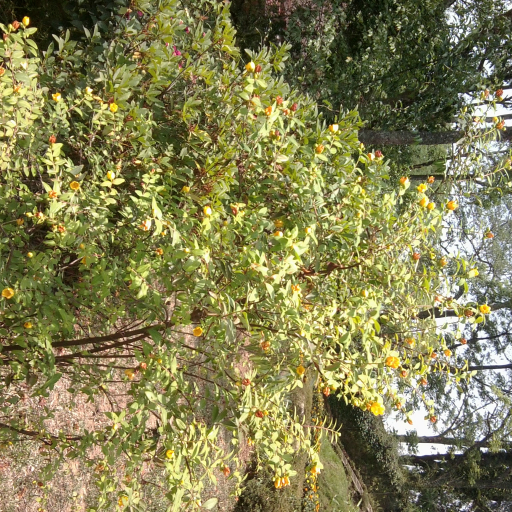
Plant Overview
Often called the Himalayan St. John's Wort, Hypericum uralum is a graceful, arching shrub that brings a burst of liquid gold to the landscape. Originating from the high-altitude slopes of the Himalayas, this plant is beloved for its "fountain-like" silhouette and its ability to thrive where more delicate species might struggle. It is a resilient beauty that perfectly bridges the gap between wild mountain flora and refined garden shrubbery.
🔍 How to Identify
- 🌼 Golden Blossoms: It produces cup-shaped, buttery yellow flowers featuring five rounded petals and a dramatic central "puff" of long, hair-like stamens.
- 🍃 Opposite Foliage: The small, ovate leaves grow in neat pairs along the stems, emitting a faint, pleasant herbal scent when bruised or crushed.
- 🎋 Pendulous Stems: Look for a distinctive arching habit; the slender, reddish-brown branches weep gracefully toward the ground, giving the shrub a soft, rounded shape.
🏡 In Your Garden
- 🏔️ Mountain Resilience: Because it hails from rocky Himalayan terrains, this plant is incredibly hardy. It excels in well-draining soil and is a fantastic choice for stabilizing slopes or filling gaps in woodland borders.
- ✂️ The "New Wood" Rule: This shrub blooms on the current season's growth. To keep it from looking "leggy," give it a firm pruning in late winter; this encourages a fresh explosion of golden flowers by mid-summer.
- ⛅ Sun vs. Shade: While it thrives in full sun, it is surprisingly tolerant of partial shade, making it a versatile "filler" for those tricky spots in the garden that don't get consistent light.
⚠️ Safety & Toxicity
- 🐾 Mildly Toxic: Like most members of the Hypericum family, it contains hypericin. This compound can cause photosensitivity (extreme skin sensitivity to sunlight) if ingested in large quantities.
- 👶 General Caution: While not considered deadly, it can cause stomach upset or skin irritation in curious pets or small children. It is best treated as an ornamental plant rather than a medicinal one.
✨ Fun Fact
The genus name Hypericum translates from Greek to "above a picture." In ancient times, these flowers were traditionally gathered and hung above icons and pictures in the home to ward off evil spirits during the midsummer solstice!

Detailed Care Instructions

Place in a bright room that is sun drenched almost all day. Or directly in a south-facing window.

When the top few inches of soil dry out, water your plants. If the top few inches of soil are still moist, do not water your plant. Wait a few days, then poke your finger into the soil to see if anything has changed. Overwatering poses a disease risk, such as the development of fungal diseases in the roots. These plants have adaptations in there leaves that allow them to survive in low water supply.








