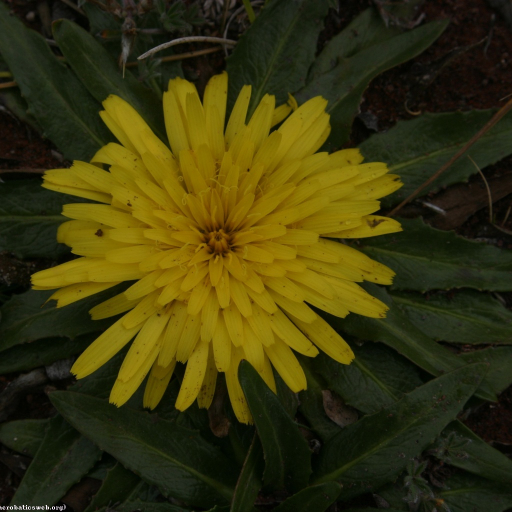
Plant Overview
Known as the "High Altitude False Dandelion" or Achicoria de Monte, this resilient survivor thrives where few other plants dare to grow—the freezing, wind-swept heights of the Andean Paramo. It looks like a common dandelion that has decided to hug the ground for warmth, creating a beautiful golden star against the rocky soil. In traditional Andean culture, it is often respected as a rugged symbol of endurance.
🔍 How to Identify
- 🌼 The "Sessile" Bloom: Unlike typical dandelions, the bright yellow flower head sits directly in the center of the leaf rosette without a long stalk. This "sitting" (sessile) habit protects the delicate petals from mountain gales.
- 🍃 Prostrate Rosette: The leaves grow in a flat, circular pattern tight against the earth. They are usually elongated with jagged, tooth-like edges that give the genus its "Cat's-ear" nickname.
- 🧤 Hairy Texture: The foliage is often covered in fine, bristly hairs. These act like a tiny fur coat, trapping a thin layer of air to insulate the plant against overnight frosts and intense UV radiation.
🏡 In Your Garden
- 🏔️ Rock Garden Specialist: Because it originates from high-altitude scree slopes, it requires "lean" soil with exceptional drainage. If planted in rich, loamy potting soil, the plant will often become leggy or succumb to root rot.
- ☀️ Light Demand: It is a sun-worshiper. In its natural habitat, there are no trees to provide shade, so it has evolved to thrive under direct, intense light. If kept indoors or in a shady spot, it will fail to produce its signature ground-hugging flowers.
⚠️ Safety & Toxicity
- 🟢 Generally Safe: Most members of the Hypochaeris genus are considered non-toxic to humans and pets. In some regions, related species are even used in traditional salads or herbal teas.
- 🚫 The "Lookalike" Risk: The primary safety concern is misidentification. Many "Little Yellow Composites" (LYCs) look identical to the untrained eye, and some wild lookalikes can cause stomach upset or skin irritation. Always consult a local expert before considering any wild plant for consumption.
✨ Fun Fact
The name Sessiliflora literally translates to "sitting flower." By evolving to lose its stem, this plant successfully avoided the "wind-chill factor" of the Andes, allowing it to survive at altitudes of up to 15,000 feet!

Detailed Care Instructions

Place in a bright room that is sun drenched almost all day. Or directly in a south-facing window.

Some plants require more regular watering than others, which should be done every few days. It's critical to maintain the soil moist all of the time. The water requirements of the same plant placed in pots with varying sizes will differ. Because the water in the smaller pot evaporates faster than the water in the larger pot, it will require more watering. Regardless of pot size, the surface should constantly be maintained moist.








