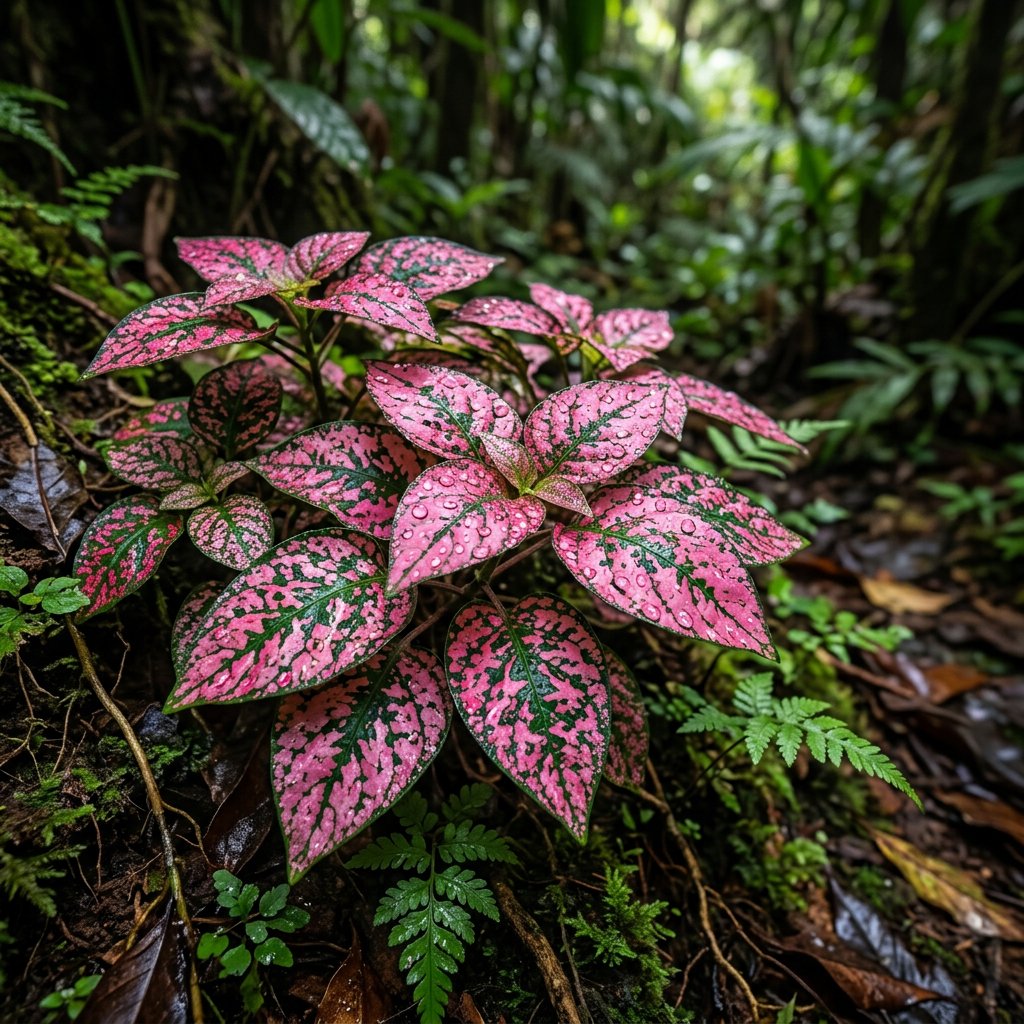
Plant Overview
Often called the "Polka Dot Plant" or the charming "Freckle Face," this Madagascar native is a darling of the indoor gardening world. It looks as though an artist took a paintbrush and splattered vibrant shades of pink, white, or crimson across its deep green foliage. While it stays relatively small, its loud personality makes it a favorite for terrariums and colorful windowsills.
🔍 How to Identify
- 🍃 Splashed Foliage: The most striking feature is the egg-shaped leaves heavily mottled with contrasting spots. Depending on the variety, these "freckles" can be light pink, snowy white, or deep rose-red.
- 🌱 Bushy Habit: It typically grows in low, dense mounds. If left unpruned, it can reach about a foot in height before it begins to look "leggy" or stretched.
- 🌸 Hidden Blooms: In late summer or under stress, it may produce small, tubular lilac flowers, though most growers pinch these off to keep the plant's energy focused on its colorful leaves.
🏡 In Your Garden
- ☀️ The Light Balance: The "dots" are actually a survival mechanism. To keep its vibrant colors, the plant needs bright, indirect light. If kept in too much shade, the leaves will revert to solid green to maximize photosynthesis; if the light is too harsh, the delicate leaves will crisp at the edges.
- ✂️ Frequent Haircuts: This plant is a fast grower and can become thin and spindly quite quickly. To maintain that "carpet" look, you should regularly pinch off the top two leaves of each stem to encourage the plant to branch out and stay full.
⚠️ Safety & Toxicity
- 🐾 Pet Safe: Good news for animal lovers! The Polka Dot Plant is generally considered non-toxic to cats, dogs, and horses by the ASPCA.
- 👶 Mild Sensitivity: While not poisonous, the sap can occasionally cause mild skin irritation for people with very sensitive skin, and ingestion might lead to a minor tummy ache in small children. It is best enjoyed as a visual treat rather than a snack.
✨ Fun Fact
In its native Madagascar, the Polka Dot Plant isn't just a tiny houseplant—it can grow into a substantial woody shrub! However, in the home, it is often treated as a "short-lived" perennial because it tends to lose its beauty and become woody after it finishes its flowering cycle.

Detailed Care Instructions
To successfully grow a Hypoestes plant, also known as a polka dot plant, here are some steps to follow:
- Choose a suitable growing environment: Hypoestes plants prefer bright but indirect light, so place them in a well-lit area that receives morning or evening sun. Avoid exposing them to direct sunlight, as this can scorch the leaves.
- Provide the right temperature and humidity: Hypoestes plants thrive in temperatures ranging from 60-75°F (15-24°C). They also prefer high humidity levels, so misting the leaves or placing a humidifier nearby can help create the ideal environment.
- Water regularly: Keep the soil consistently moist but not waterlogged. Allow the top inch of soil to dry between watering sessions. Reduce watering during winter as the plant's growth slows down.
- Fertilize monthly: During the active growing season, apply a balanced, water-soluble fertilizer once a month. Follow the package instructions for the proper concentration and frequency.
- Prune regularly: To encourage bushier growth, pinch off the tips of the stems. This will also prevent the plant from becoming too leggy.
- Repot when necessary: If the plant outgrows its current container, gently lift it and repot it into a slightly larger pot with well-draining soil.
- Propagate through stem cuttings: To propagate Hypoestes, take 3-4 inch stem cuttings from a healthy plant. Remove the lower leaves and place the stem in a glass of water or potting soil until roots develop.
Remember, Hypoestes plants are mainly grown as indoor plants in most regions, but they can be transitioned outdoors during warmer months in areas with suitable climates. With proper care, these colorful and unique plants can thrive and bring beauty to your home or garden.

Place in a window with dappled sun or a spot in the middle of a room. Or directly in a window facing west or east.

Hypoestes is a popular indoor houseplant that requires a specific watering regime to thrive. To water this plant, you should allow the top soil layer to dry out before watering again. Overwatering or underwatering can both harm the plant, so it's important to maintain a consistent schedule and stick to it. You can test the moisture level of the soil by sticking your finger into the soil up to your knuckle. If the soil feels dry, it's time to water the plant. When you water Hypoestes, make sure to water thoroughly, allowing the water to drain out of the bottom of the pot. Avoid letting the plant sit in standing water, as this can cause root rot. It's also important to use room temperature or lukewarm water to prevent shocking the plant's roots.
To fertilize this plant, use a balanced water-soluble fertilizer with a 20-20-20 NPK ratio. Dilute the fertilizer to half strength and apply it every two weeks during the plant's active growth period. Avoid over-fertilizing, as this can lead to root burn and other problems. Water the plant thoroughly after fertilizing to help distribute the nutrients throughout the soil.
Hypoestes is a plant that prefers acidic, well-draining soil. A good choice for this plant would be a mixture of peat moss, perlite, and vermiculite, which create a light, airy blend that drains well and provides good aeration. The soil should be kept moist but not waterlogged, with regular watering to prevent the leaves from wilting. It is important to avoid using heavy or dense soils, which can suffocate the plant's roots and lead to poor growth and development. Additionally, the soil should be rich in organic matter, with regularly supplemented fertilizer to provide essential nutrients.
Hypoestes plant can be propagated through stem cuttings. To do this, select a healthy stem that has no signs of disease or damage and take a cutting that is at least 4-6 inches long. Remove the leaves from the bottom 2-3 inches of the stem and dip the cut end into rooting hormone powder. Plant the cutting in a pot filled with moist potting soil and keep it in a warm, bright location. Water the cutting regularly and mist it occasionally to keep the humidity level high. Roots should start to form within a few weeks, and once they have developed, the new plant can be transplanted into a larger pot or outside in a garden bed.







