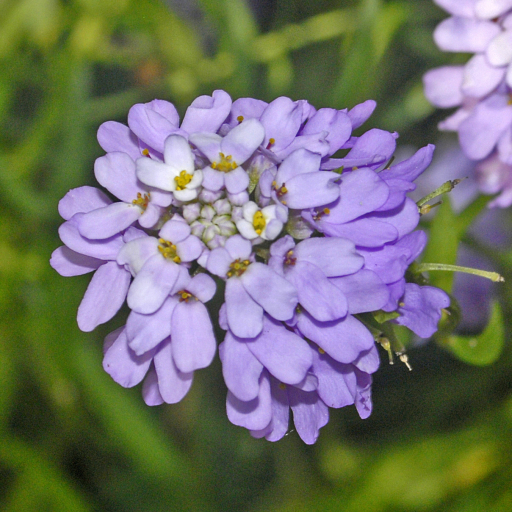
Plant Overview
Often referred to as the Flax-leaved Candytuft, Iberis linifolia is a delicate Mediterranean beauty that brings a touch of the rocky European coastlines to your backyard. Its name "Candytuft" isn't actually about sweets; it's derived from Candia, the ancient name for the island of Crete where many species in this genus were first discovered. This plant is a favorite for those who love "set-it-and-forget-it" perennials that offer a romantic, airy aesthetic.
🔍 How to Identify
- 🌿 Slender Foliage: True to its name (linifolia means "flax-like leaves"), it features very narrow, linear green leaves that look soft and grass-like from a distance.
- 🌸 Flat-Topped Blooms: It produces "corymbs"—clusters of tiny flowers that form a flat, umbrella-like surface. These are typically white, though some varieties blush into a pale lilac or pink.
- 📏 Growth Habit: This is a low-growing subshrub that often develops a woody base over time, forming a neat, mounded shape that spills beautifully over edges.
🏡 In Your Garden
- ☀️ Sun-Drenched Roots: Hailing from the sunny Mediterranean, this plant thrives in full sun. If it gets too much shade, it tends to become "leggy" as it stretches toward the light, losing its compact charm.
- 🪨 The Drainage King: This plant absolutely hates "wet feet." It is perfectly adapted to rocky, poor, or sandy soils where water moves quickly. It is a superstar for rock gardens, stone walls, or gravel paths where other plants might struggle with the heat and dry soil.
- ✂️ Post-Bloom Refresh: To keep it looking tidy, it’s best to give it a light "haircut" after the first flush of flowers fades. This prevents the center from becoming too woody and encourages a second, smaller bloom.
⚠️ Safety & Toxicity
- 🟢 General Safety: Iberis linifolia is generally considered non-toxic to humans and is not listed as a high-risk plant for cats or dogs.
- 🧤 Skin Sensitivity: While not poisonous, some gardeners with very sensitive skin may experience mild irritation from the sap or the fine hairs on the stems. Wearing gloves during heavy pruning is a simple way to stay comfortable.
✨ Fun Fact
The genus name Iberis is a direct nod to the Iberian Peninsula (modern-day Spain and Portugal), where a vast majority of these hardy, sun-loving species originated and still grow wild among the cliffs today!

Detailed Care Instructions
To grow Iberis Linifolia (also known as Candytuft or Flax-leaved Iberis), you can follow these steps:
- Choose the right location: Select a sunny spot in your garden. Iberis Linifolia thrives in full sun but can tolerate partial shade as well.
- Prepare the soil: Ensure that the soil is well-drained, fertile, and slightly acidic. If your soil is heavy, mix in organic matter like compost to improve drainage.
- Sow the seeds: You can start Iberis Linifolia from seeds indoors, about 6-8 weeks before the last frost date, or directly in the garden after the danger of frost has passed. Sow the seeds on the soil surface without covering them, as they require light for germination.
- Watering and maintenance: Keep the soil moist until the seeds sprout. After that, water your plants regularly, making sure to keep the soil evenly moist but not soggy. Water at the base of the plant to avoid wetting the leaves and causing diseases. Remove any weeds that may compete with the young plants for nutrients and space.
- Thinning: Once the seedlings have developed their first true leaves, thin them to about 8-10 inches apart to allow ample space for each plant to grow.
- Fertilization: Apply a balanced, slow-release fertilizer to the soil around the plants once or twice during the growing season to promote healthy growth.
- Pruning: Iberis Linifolia plants benefit from regular pruning. After the first flush of flowers has faded, shear the plants back by about one-third of their height to encourage reblooming and maintain a compact shape.
- Pests and diseases: Iberis Linifolia is generally resistant to pests and diseases. However, keep an eye out for aphids, caterpillars, and fungal diseases. Treat any issues promptly to prevent them from spreading.
- Mulching: Apply a layer of organic mulch around the plants to help retain soil moisture, suppress weeds, and keep the root zone cool.
- Winter care: Iberis Linifolia is typically hardy in USDA zones 3-8. However, in colder regions, it may benefit from a layer of mulch or straw to provide some protection during the winter months.
By following these steps and providing the right care, your Iberis Linifolia plants should grow and bloom beautifully in your garden.

Place in a bright room that is sun drenched almost all day. Or directly in a south-facing window.

Iberis linifolia is a plant that requires regular watering. It's important to keep the soil moist but not waterlogged. One way to ensure that the plant gets adequate water is to water deeply once a week. This allows the roots to absorb water from deeper in the soil, which promotes healthy growth.
When watering, avoid getting water on the leaves or flowers as this can lead to fungal diseases. Instead, water the base of the plant, aiming for the soil and the roots. If the plant is grown in a container, make sure that the pot has drainage holes to prevent water from accumulating.
The frequency of watering will depend on several factors, including the climate, soil type, and location of the plant. In hot and dry weather, the plant may require more frequent watering, while in cooler or humid conditions, it may need less water.
It's important to monitor the soil moisture level regularly, especially during the growing season. Check the soil using a moisture meter or by sticking your finger about an inch into the soil. If it feels dry, it's time to water.
Overall, proper watering is crucial for the health and vitality of Iberis linifolia. With a consistent watering schedule, this plant can thrive and produce beautiful blooms.
To fertilize this plant, apply a balanced fertilizer with equal amounts of nitrogen, phosphorus, and potassium. Use a slow-release fertilizer at the beginning of the growing season and again in mid-summer. Follow the manufacturer's instructions for application rates. Avoid over-fertilizing, as excess nutrients can damage the plant. Water the plant thoroughly after applying the fertilizer to help distribute it evenly and to avoid burning the roots.
For optimal growth and health of this plant, it is recommended to use a well-draining soil mixture that is rich in nutrients. The soil should be slightly acidic with a pH between 5.5 and 6.5. It is important to ensure that the soil is not too heavy and compacted, as this can inhibit root growth and lead to waterlogged conditions. A mixture of loam, sand, and compost is ideal for this plant's needs. Additionally, adding some perlite or vermiculite to the soil mixture can help improve drainage and aeration. Overall, the key is to provide a balanced soil mixture that can retain moisture while also allowing for proper air circulation and drainage.
Iberis Linifolia can be propagated through seed and cuttings.
To propagate through seed, collect ripe seeds from the plant and sow them into a pot filled with well-draining soil. Keep the soil moist and in a warm, brightly lit area. The seeds should germinate in 10-14 days. Once the seedlings have grown to a good size, they can be transplanted into their permanent location.
To propagate through cuttings, take stem cuttings from the plant in the spring or fall. Cut a stem that is about 4-6 inches long and remove the lower leaves. Dip the cut end in rooting hormone and plant in a pot filled with well-draining soil. Keep the soil moist and in a warm, brightly lit area. The cutting should root in 4-6 weeks. Once rooted, the cutting can be transplanted into its permanent location.








