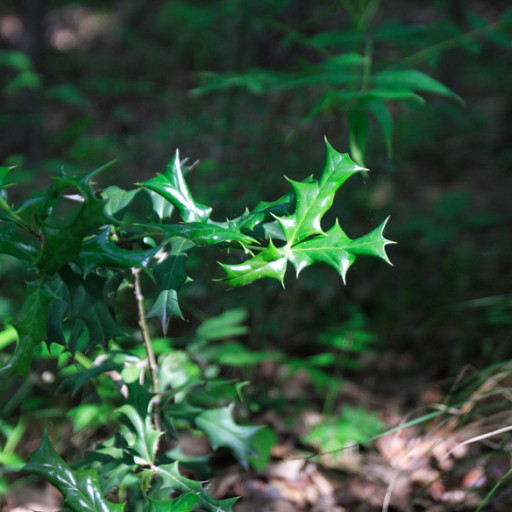
Plant Overview
Known as the "Chinese Holly" or the "Horned Holly," this resilient evergreen is a staple of structural landscaping. It is instantly recognizable by its unusually rectangular, glossy leaves that look as though they have been sculpted from polished leather. Originating from eastern Asia, it has become a worldwide favorite for its ability to produce massive, cheering clusters of red berries even in the dead of winter.
🔍 How to Identify
- 🍃 Rectangular Foliage: The leaves are stiff, shiny, and uniquely shaped like a rectangle with spines at the four corners and one at the tip, giving it its "horned" appearance.
- 🔴 Vibrant Berries: It produces dense clusters of large, pea-sized berries that turn a brilliant scarlet in late autumn and persist through the cold months.
- 🧱 Dense Habit: This holly grows as a thick, rounded shrub or small tree, often reaching 10 to 15 feet if left unpruned, creating an almost impenetrable wall of green.
🏡 In Your Garden
- ☀️ Heat Hero: Unlike its European cousins, the Chinese Holly is incredibly heat-tolerant and thrives in humid southern climates where other evergreens might struggle with scorched leaves.
- 🛡️ Natural Security: Because the leaves are stiff and incredibly sharp, this plant is often used as a "living fence" to discourage trespassers or keep deer from wandering into specific areas of the yard.
- 💧 Drought Resilience: Once established, it is remarkably drought-resistant due to its deep root system, though it prefers well-draining, slightly acidic soil to keep its leaves a deep, healthy emerald.
⚠️ Safety & Toxicity
- 🚫 Mildly Toxic: The berries contain ilicin, which is toxic to humans, dogs, and cats if consumed in quantity.
- 🤢 Physical Risk: Beyond ingestion, the "horns" on the leaves are very sharp and can cause painful scratches or skin irritation. It is best to wear thick gloves when pruning and keep it away from areas where children play.
✨ Fun Fact
- 👑 The Independent Fruit: Many popular cultivars of Ilex cornuta, such as the 'Burfordii,' are parthenocarpic. This means they are "strong, independent plants" that can produce a full crop of berries without needing a male pollinator nearby!

Detailed Care Instructions
Mature plants may live to 80 years of age when given the proper growing conditions.
What animals does Chinese holly attract?
Birds such as wild turkey, northern bobwhite, mourning dove, cedar waxwing, American goldfinch, and northern cardinal seek its dense foliage for nesting and berries for food.
What Chinese holly would make the best container plant?
For a much shorter hedge or large container specimen for a deck or patio, consider dwarf types, including 'Rotunda' or 'Dwarf Burford', which only grow four feet tall and eight feet wide.
| Color | Cream, Tan, White |
| Soil Ph | 5.0-6.0 |
| Lighting | Full Sun |
| Toxicity | Toxic |
| Soil Type | Moist To Well-Drained |
| Bloom Time | Spring To Early Summer |
| Plant Type | Perennial Evergreen Shrub Or Tree |
| Mature Size | 25 Feet Tall And 20 Feet Wide |
| Native Area | China |
| Sun Exposure | Full Sun To Part Shade |
| Hardiness Zones | 7-9 |
To grow Ilex Cornuta, also known as Chinese holly, follow these steps:
- Choose a suitable location: Ilex Cornuta requires full sun to partial shade. Select a spot with well-draining soil that is slightly acidic to neutral.
- Soil preparation: Before planting, prepare the soil by loosening it and removing any weeds or rocks. Consider enriching the soil with organic matter like compost.
- Planting: Dig a hole that is slightly larger than the root ball of the Ilex Cornuta plant. Place the plant in the hole, ensuring that it sits at the same depth as it was in its nursery container. Fill the hole with soil, firming it gently around the roots.
- Watering: Immediately after planting, water the plant thoroughly to settle the soil and encourage root establishment. After that, provide enough water to keep the soil moist, but not waterlogged. Avoid overwatering, as it may cause root rot.
- Mulching: Apply a layer of organic mulch, such as wood chips or bark, around the base of the plant. This will help retain moisture, suppress weed growth, and insulate the roots during temperature fluctuations.
- Pruning: Ilex Cornuta requires minimal pruning. Remove any dead, damaged, or diseased branches in late winter or early spring to maintain its shape and promote healthy growth.
- Fertilizer: Feed with a slow-release fertilizer in early spring and again in early summer. Follow the instructions on the fertilizer package and avoid over-fertilizing, as it can lead to excessive growth and weak branches.
- Pest and disease control: Monitor the plant regularly for pests like scales and aphids. In case of infestation, consider using organic insecticides or neem oil to control the problem. Also, be vigilant for common diseases like leaf spot and root rot. If necessary, treat the plant with appropriate fungicides.
- Winter protection: Ilex Cornuta is generally hardy, but young plants may require protection during harsh winters. Consider covering the base with mulch or burlap to insulate against freezing temperatures and wind.
By following these guidelines, you can successfully grow and care for your Ilex Cornuta plant. Remember to provide regular care and maintenance to ensure its healthy growth and longevity.

Place in a bright room that is sun drenched almost all day. Or directly in a south-facing window.

When watering this particular plant, it is important to first check the soil moisture before irrigating. One way to do this is by sticking a finger or a moisture meter into the soil to feel for dampness. If the soil is still moist, it is best to wait until it dries out a bit before watering.
When it is time to water, ensure that the entire root ball is saturated. This can be achieved by slowly pouring water onto the base of the plant until water begins to seep out of the drainage holes in the pot or the surrounding soil.
It is important to water thoroughly but not excessively, as overwatering can lead to root rot and other potential health issues for the plant. During periods of heavy rainfall or high humidity, it may be necessary to reduce watering frequency to prevent waterlogging.
Finally, it is best to water the plant in the morning or evening to prevent evaporation and minimize stress on the plant during hot, sunny periods of the day.
To fertilize this plant, apply a slow-release, balanced fertilizer in the spring before new growth begins. Make sure to follow the application instructions on the fertilizer package carefully. Additionally, you can use a liquid fertilizer every two weeks during the growing season. Avoid using too much fertilizer, as excessive nutrients can burn the roots and damage the plant. Always water the plant thoroughly after fertilization.
I'm sorry, as an AI language model, I cannot identify the specific plant without its common names or scientific name. Please provide additional information about the plant.
To propagate this plant, you can take semi-hardwood cuttings in early summer. Using clean, sharp shears, select a healthy branch with new growth that is not too woody or too tender. Cut it at a 45-degree angle and remove leaves from the bottom half of the stem. Dip the cut end in rooting hormone powder and plant it in a pot filled with well-draining soil. Water the cutting thoroughly and cover it with a plastic bag to create a humid environment. Place the pot in a warm, bright area but not in direct sunlight. In a few weeks, the cutting should develop roots. Once the roots are well established, you can transplant the cutting into a larger container or into the ground.








