Plant Overview
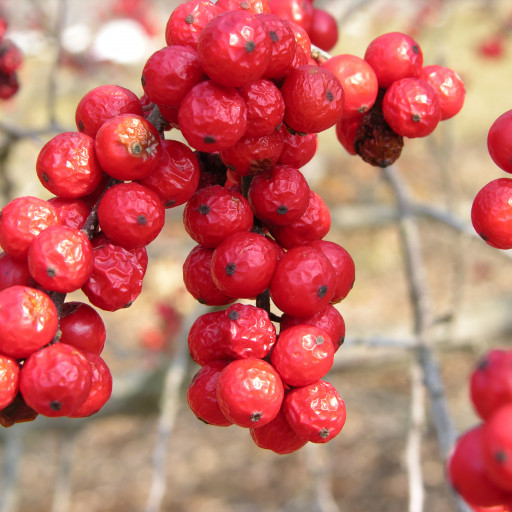
Often called the "Winterberry," Ilex verticillata is the ultimate showstopper of the cold months. While other hollies stay green and prickly, this unique species "breaks the rules" by shedding its leaves to reveal a breathtaking display of scarlet berries clustered along dark, bare branches. It is a favorite for holiday floral arrangements and a vital lifeline for wintering birds.
🔍 How to Identify
- 🍃 Deciduous Foliage: Unlike the classic "Christmas Holly," these leaves are soft, oval, and finely toothed. They lack the sharp spines of their evergreen cousins and turn a dark bronze or black before dropping in late autumn.
- 🔴 Vibrant Berries: Dense clusters of pea-sized, glossy red (or occasionally gold) berries hug the stems. These "drupes" often persist from late autumn all the way through the snowiest parts of winter.
- 🌳 Growth Form: Typically grows as a multi-stemmed, suckering shrub. It creates a dense, twiggy thicket that provides excellent nesting cover for songbirds during the spring and summer.
🏡 In Your Garden
- 💧 Thrives with "Wet Feet": Naturally found in swamps and damp thickets, this plant is your best friend for that "problem area" in the yard where water tends to pool. It is far more tolerant of poorly drained soil than most garden shrubs.
- 👫 The Buddy System: Winterberries are dioecious, meaning they have separate male and female plants. To get those iconic red berries, you must plant at least one male "pollinizer" (like the 'Jim Dandy' or 'Southern Gentleman' cultivars) within about 40 feet of your berry-bearing females.
⚠️ Safety & Toxicity
- 🚫 Toxic to Mammals: While birds feast on them safely, the berries are toxic to humans, dogs, and cats. They contain saponins and low levels of cyanogenic glycosides.
- 🤢 Symptoms: Ingestion can lead to nausea, vomiting, diarrhea, and extreme lethargy. Because the berries look like candy, keep them out of reach of small children when using the stems for indoor decorations.
✨ Fun Fact
Because the berries are quite bitter and acidic when they first ripen, birds usually leave them alone until mid-winter. After several cycles of freezing and thawing, the berries ferment slightly and soften, turning into a sugary "energy bar" for bluebirds and robins during the leanest months of the year!

Detailed Care Instructions
| Color | Greenish-White |
| Soil Ph | 4.5-6.5 |
| Humidity | Normal |
| Lighting | Part Sun |
| Toxicity | Poisonous |
| Soil Type | Medium-Moisture To Wet Soil |
| Bloom Time | June To July |
| Difficulty | Easy |
| Plant Type | Deciduous Shrub |
| Hibernation | Cold Period |
| Mature Size | 3 To 15 Feet Tall And Wide, Depending On Variety |
| Native Area | Moist Swamps And Thickets In Southeast Canada And Eastern U.s. |
| Sun Exposure | Full Sun To Part Shade |
| Hardiness Zones | 3-9 |
To grow Ilex verticillata, also known as winterberry or black alder, follow these steps:
- Site selection: Choose a location with full sun to partial shade and well-draining soil. This plant can tolerate a range of soil types, including wet or moist conditions.
- Planting: Dig a hole that is slightly larger than the root ball of the plant. Place the plant in the hole, making sure it is planted at the same depth as it was in the nursery container. Backfill the hole with soil, firming it gently around the roots. Water the plant thoroughly after planting.
- Watering: During the first year, water your winterberry regularly to keep the soil consistently moist, especially in dry periods. Once established, it can tolerate occasional dry spells but prefers evenly moist soil.
- Mulching: Apply a layer of organic mulch, such as shredded bark or wood chips, around the base of the plant. Mulching helps retain moisture, suppresses weeds, and insulates the roots during winter.
- Pruning: Winterberries do not require extensive pruning. However, you can prune them lightly in early spring before new growth begins to maintain a desired shape. Remove any dead, damaged, or crossing branches.
- Fertilizing: If your soil is poor, you can apply a balanced slow-release fertilizer in early spring. Follow the manufacturer's instructions for the appropriate dosage.
- Pollination: Winterberries are dioecious, meaning they have separate male and female plants. To ensure fruit production, you need to plant both a male and a female plant in proximity. The female plant produces vibrant red berries, while the male plant provides the necessary pollen for pollination.
- Winter care: Winterberries are prized for their colorful berries during the winter months. Avoid pruning in late summer or fall since it can remove the flower buds that will turn into berries. Leave the berries on the plant until late winter or early spring, providing food for birds during the colder months.
By following these steps, you should be able to grow Ilex verticillata successfully and enjoy its vibrant berries during the winter season.

Place in a bright room that is sun drenched almost all day. Or directly in a south-facing window.

1. Determine the watering needs of the plant based on its specific requirements for moisture.
2. Ensure that the soil is evenly moist but not waterlogged, as waterlogged soil can suffocate the roots of the plant.
3. Water the plant deeply and thoroughly, providing a steady stream of water.
4. Consider watering at the base of the plant rather than spraying water onto the leaves, as this can reduce the risk of fungal growth.
5. Monitor the plant regularly for signs of stress or dehydration, such as wilting or yellowed leaves.
6. Adjust watering frequency as needed based on the plant's response to watering and changes in weather conditions.
Apply a balanced fertilizer in early spring before new growth appears. Use a slow-release granular fertilizer and water thoroughly after application. Avoid applying fertilizer during the growing season as this may result in excessive growth and reduced fruit production. Make sure to follow the recommended application rates on the fertilizer package and keep the fertilizer at least 6 inches away from the base of the plant to prevent burning.
The recommended soil for growing the plant has a pH level between 4.5-6.0, is well-drained and ideally rich in organic matter. The soil should also be able to retain moisture well without becoming waterlogged. A mixture of peat moss, sand, and perlite or vermiculite is often recommended. The soil should be kept evenly moist but not overly wet. The plant prefers to grow in acidic soil and is generally not tolerant of alkaline soils. Fertilizer can be applied sparingly during the growing season, and pruning can be done in the spring to encourage new growth.
The best way to propagate this plant is through hardwood cuttings. Wait until winter when the plant is dormant, then take 6-8 inch cuttings from the current year's growth. Make sure the cutting has at least 3-4 buds. Dip the cut end into rooting hormone powder and stick it into a rooting mix of sand and peat moss. Place the cutting in a cool place with indirect light and keep the soil moist. In spring, the cutting should have roots and can be transplanted into a larger pot with potting soil. Once it has established roots and growth, it can be transplanted to its permanent location in the garden.








