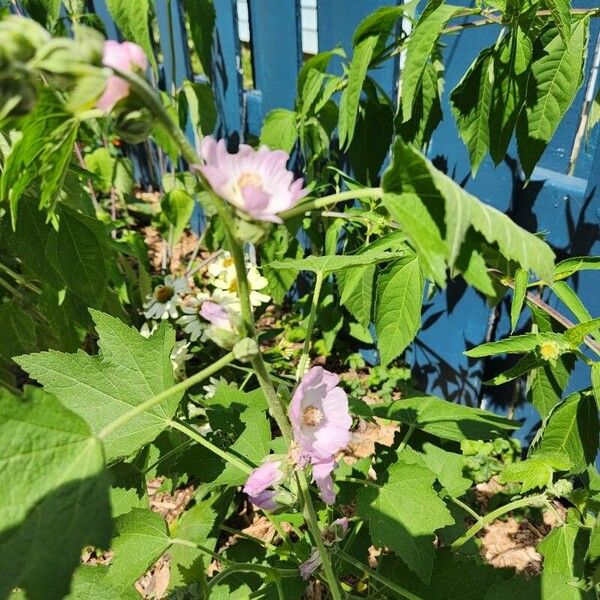
Plant Overview
Known as the Kankakee Mallow, the Iliamna remota is one of North America’s rarest botanical treasures. Originally discovered on a single rocky island in the Kankakee River in Illinois, this plant is a "phoenix" of the prairie. It has a fascinating, ancient relationship with fire, often remaining dormant in the soil for decades until a blaze clears the path for its resurgence.
🔍 How to Identify
- 🌸 The Bloom: Look for delicate, five-petaled flowers in shades of soft pink to pale lavender. They resemble small hibiscus blooms and cluster elegantly along the upper stems.
- 🍁 Leaf Structure: The foliage is striking and "maple-like," featuring 5 to 7 pointed lobes. The leaves are covered in fine, soft hairs that give the plant a slightly dusty, grayish-green appearance.
- 📏 Stature: This is a tall, bushy perennial that can reach heights of 3 to 6 feet. It grows in upright clumps, giving it a stately, architectural presence in a landscape.
🏡 In Your Garden
- 🔥 Heat to Life: This plant is famous for its "hard" seeds. In the wild, they require the intense heat of a prairie fire to crack their outer shells. If you are planting them at home, you’ll often need to use boiling water or sandpaper (scarification) to wake the seeds up!
- ☀️ Sun & Soil: To thrive, it needs "tough love." It prefers full sun and rocky or gravelly soil that drains quickly. It is an excellent choice for restoration projects or "wild" garden corners where other pampered plants might struggle.
⚠️ Safety & Toxicity
- 🛡️ Non-Toxic: The Kankakee Mallow is generally considered safe and non-toxic for humans and common household pets.
- 🐾 Wildlife Friendly: Because it lacks aggressive toxins, it is often a favorite snack for local deer. If you are trying to preserve this rare beauty, you may need to provide some physical protection from hungry visitors.
✨ Fun Fact
For nearly a century, scientists believed the Kankakee Mallow grew naturally in only one location on Earth: Langham Island in Illinois. It is considered a "relict" species, a survivor from a time when the Midwest’s climate and landscape were very different than they are today.

Detailed Care Instructions

Place in a bright room that is sun drenched almost all day. Or directly in a south-facing window.

Some plants require more regular watering than others, which should be done every few days. It's critical to maintain the soil moist all of the time. The water requirements of the same plant placed in pots with varying sizes will differ. Because the water in the smaller pot evaporates faster than the water in the larger pot, it will require more watering. Regardless of pot size, the surface should constantly be maintained moist.







