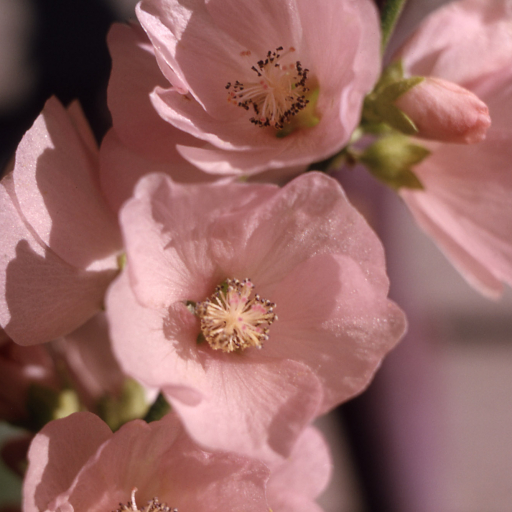
Plant Overview
Often called the Mountain Hollyhock or Streambank Wild Hollyhock, this native beauty of the American West looks like a runaway garden flower that decided to move to the wilderness. With its towering spikes of soft lavender-pink blooms, it creates a romantic, cottage-core aesthetic in rugged mountain meadows and forest clearings. It is a resilient survivor, famously known for appearing in massive, breathtaking displays immediately following forest fires.
🔍 How to Identify
- 🌸 The Blooms: Large, five-petaled flowers ranging from pale rose to delicate lavender, which bloom in clusters along the upper half of the stems.
- 🍁 The Foliage: Distinctive, star-shaped leaves with 5 to 7 pointed lobes, bearing a striking resemblance to a maple leaf or a giant geranium leaf.
- 📏 The Stature: A robust perennial that can tower between 3 to 6 feet tall, held upright by sturdy, slightly fuzzy stems.
🏡 In Your Garden
- ⛰️ Natural Ruggedness: Unlike pampered nursery hollyhocks, Iliamna rivularis thrives in rocky, gravelly soil. It is the perfect candidate for a "wild" corner of your yard, a rain garden, or a slopeside planting where other plants struggle.
- 🚫 Deep Roots: This plant develops a long, sturdy taproot to survive harsh mountain winters and droughts. Because of this, it hates being transplanted; once you find its home, it’s best to let it stay there forever.
- 🐝 Pollinator Magnet: It is a primary destination for native bumblebees and butterflies. If you want to support your local ecosystem, this plant is a high-value nectar source that blooms throughout the mid-to-late summer.
⚠️ Safety & Toxicity
- ✅ Safe Profile: This plant is generally considered non-toxic to humans, dogs, and cats. It is a safe choice for families and pet owners.
- 🧤 Leaf Texture: While not poisonous, the stems and leaves are covered in fine, bristly hairs. These aren't stinging hairs, but they can feel a bit "scratchy" or irritating to people with very sensitive skin if handled frequently without gloves.
✨ Fun Fact
🔥 The Fire Follower: The seeds of the Mountain Hollyhock are incredibly tough and can lie dormant in the soil for over 50 years. They often require the intense heat of a wildfire to crack their outer shells, allowing them to germinate and carpet a burned forest in pink flowers just months after a fire.

Detailed Care Instructions
To grow Iliamna Rivularis plant, also known as streambank wild hollyhock, follow these steps:
- Obtain Seeds or Seedlings: Purchase Iliamna Rivularis seeds or seedlings from a reputable nursery or online retailer. Alternatively, you can gather seeds from mature plants in the wild, if permitted.
- Choose Suitable Growing Conditions: Iliamna Rivularis thrives in moist, rich soil and can tolerate both partial shade and full sun. Select a suitable location in your garden that receives adequate sunlight, but also offers some protection from strong, drying winds.
- Prepare the Soil: Ensure the soil is well-draining, loose, and rich in organic matter. Add compost or well-rotted manure to improve the soil's fertility, drainage, and moisture retention.
- Sow or Transplant: If starting from seeds, sow them directly into the soil after the last frost. Gently press the seeds into the soil's surface and cover them with a thin layer of fine soil. Space the seeds at least 12 inches apart. Water gently after sowing. If using seedlings, dig a hole slightly larger than the root ball and plant them at the same depth as they were in their nursery pots. Space the seedlings according to the plant's eventual size, usually around 12-18 inches apart.
- Watering and Mulching: Iliamna Rivularis requires regular watering, especially during dry periods. Keep the soil consistently moist but not waterlogged. Apply a layer of organic mulch, such as wood chips or straw, around the plants to retain moisture and suppress weed growth.
- Fertilization: Apply a balanced, slow-release fertilizer in spring to promote healthy growth. Follow the instructions on the fertilizer packaging for application rates.
- Pruning and Maintenance: Iliamna Rivularis generally requires minimal pruning. However, removing any dead or damaged branches can improve the plant's appearance. In late fall or early spring, cut back the plant to encourage fresh growth.
- Pest and Disease Management: Iliamna Rivularis is relatively resistant to pests and diseases. However, regular monitoring is recommended, and any issues can be addressed with appropriate insecticidal or fungicidal treatments.
- Winter Protection: In colder climates, provide protection by applying a layer of mulch over the plant's base in late fall to insulate against frost and freezing temperatures.
- Enjoy and Observe: Once your Iliamna Rivularis plant is established, enjoy its beautiful flowers and attractive foliage. Take note of any observations or changes, as this can help you care for the plant more effectively in the future.

Place in a bright room that is sun drenched almost all day. Or directly in a south-facing window.

The best way to water this particular plant is to provide it with consistent moisture, but also ensure that the soil has proper drainage to prevent waterlogging. Avoid watering the plant too frequently, as it can lead to root rot, but also don't let the soil dry out completely. A good rule of thumb is to water the plant deeply until water runs through the drainage holes and then wait until the top inch of the soil is dry before watering again. Use room temperature water and avoid getting water on the leaves to prevent fungal growth. Consider using a well-draining potting mix and a container with drainage holes to ensure proper moisture retention and drainage.
To fertilize this plant, use a balanced all-purpose fertilizer during its growing season. Apply the fertilizer to the soil, making sure to distribute it evenly around the base of the plant. Avoid getting the fertilizer on the foliage, as it may cause burning. Water the plant well after fertilizing to ensure the nutrients are absorbed properly. Fertilize every three to four weeks during the growing season, and reduce or stop fertilization during the dormant period in the winter.
Iliamna Rivularis plant needs a well-draining and nutrient-rich soil mix to thrive. The soil should be loamy, with a pH level ranging between 5.5 and 7.0. The plant prefers moist soil, so it is advisable to choose a potting soil that retains moisture well. Adding peat moss to the soil mix can help increase water retention capacity and improve soil structure. Additionally, mixing compost or well-decomposed manure can provide required nutrients to the plant. It is essential to avoid using soils that contain sphagnum moss or perlite, as they can hold too much water and cause root rot.
Iliamna rivularis can be propagated using two methods: seed propagation and vegetative propagation.
Seed Propagation:
- First, collect mature seeds from the plant. Look for pods that have turned brown and dry.
- Before sowing the seeds, treat them with a fungicide to prevent fungal diseases.
- Fill seed trays with a well-draining soil mix and sow the seeds thinly on the surface.
- Cover the seeds with a thin layer of sand and water gently.
- Place the tray in indirect sunlight and keep the soil moist. Germination should occur within 1-2 weeks.
- Once the seedlings have at least two true leaves, transplant them to individual pots or a nursery bed.
Vegetative Propagation: - Take a 6-8 inch long stem cutting from a healthy Iliamna rivularis plant during the growing season. Choose a stem with no flowers or buds, as they would reduce the energy needed for rooting.
- Remove the lower leaves from the cutting and make a clean cut at the base of the stem, just below the last node.
- Optionally, dip the cut end of the stem in rooting hormone powder to improve the chances of root growth.
- Fill a pot with well-draining soil mix, and make a hole in the center using a stick or finger.
- Insert the stem cutting into the hole and press the soil around the stem to secure it.
- Water the cutting and place the pot in a cool and shaded area. Keep the soil moist.
- Monitor the cutting for root growth. It may take a few weeks to several months for roots to appear. You can gently tug at the cutting to check if it has rooted.
- Once the cutting has developed sufficient roots, transplant it into a larger pot or the garden bed.








