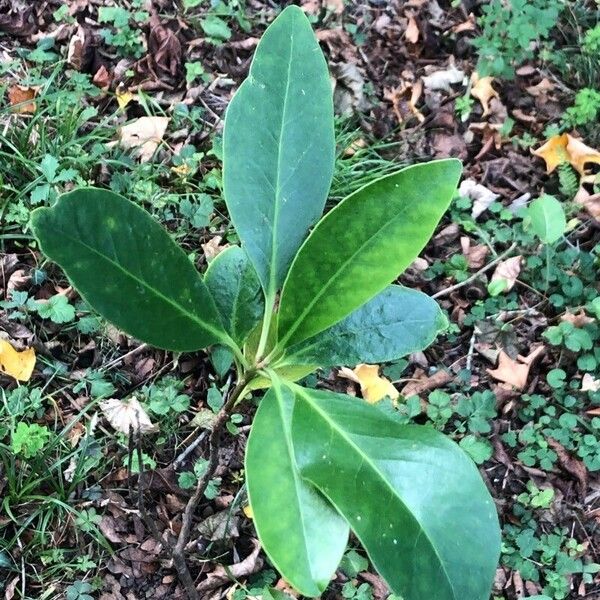
Plant Overview
Often called the Yellow Anise Tree or Small-leaf Anise, this charming evergreen shrub is a hidden gem of the Southeastern United States. While it belongs to the same family as the famous culinary star anise, this variety is prized more for its aromatic foliage and "bulletproof" nature in the landscape than for the kitchen. It is a favorite among gardeners looking for a lush, deer-resistant screen that releases a spicy, licorice-like scent whenever you brush against it.
🔍 How to Identify
- 🍃 Aromatic Foliage: The leaves are smooth, leathery, and an attractive olive-green. When crushed, they emit a distinct and powerful aroma of anise or licorice.
- 🌼 Star-Shaped Blooms: In late spring, it produces small, penny-sized flowers that are a subtle yellow-green color, tucked shyly beneath the foliage.
- 🌳 Growth Habit: It typically grows as an upright, multi-stemmed shrub. If left unpruned, it can reach heights of 10–15 feet, creating a dense, pyramid-like shape.
🏡 In Your Garden
- 💧 Moisture Lover: While it is surprisingly drought-tolerant once established, this plant naturally thrives in swampy, damp areas. It’s the perfect choice for those "soggy spots" in your yard where other plants might suffer from root rot.
- 🌑 Shade Specialist: This is one of the few evergreen shrubs that stays thick and lush even in heavy shade. In fact, in hotter climates, the leaves may turn a yellowish-sickly hue if exposed to too much direct afternoon sun.
- ✂️ Natural Privacy: Because it has a tendency to "sucker" (send up new shoots from the base), it fills in quickly to form a living wall, making it an excellent alternative to boring privet hedges.
⚠️ Safety & Toxicity
- 🚫 Non-Edible Warning: Although it smells delicious, Illicium parvifolium is not the edible Star Anise (Illicium verum). It contains toxins that can cause severe gastrointestinal distress.
- 🐾 Pet Safety: Keep this plant away from curious chewers. If ingested by dogs, cats, or horses, it can cause vomiting and discomfort. It is best used as a background landscape plant rather than a centerpiece in a pet-accessible garden.
✨ Fun Fact
The Yellow Anise Tree is considered a "living fossil." The Illicium genus belongs to one of the most ancient lineages of flowering plants, dating back millions of years, and retains primitive botanical features that link it to the very first flowers on Earth.

Detailed Care Instructions

Place in a window with dappled sun or a spot in the middle of a room. Or directly in a window facing west or east.

The presence of a dry surface layer of soil does not indicate that the plant requires water. Instead, stick your finger 1-2" (3-5 cm) deep in the soil to feel dampness or moisture content. If the soil seems dry, it's time to water your greens. If the soil is still moist, however, it is better not to water your plant and instead wait a day or two. Overwatering or waterlogging raises the risk of root rot. So if the soil takes longer than a week to dry, check the light conditions because it's likely that the plant isn't getting enough light. It's fine if the upper layer of soil is dry between waterings, but the deeper soil layer should always have some moisture.
Without the need of fertilizer, these plants can thrive and bloom. If a plant requires fertilization, it will display indicators of nutrient insufficiency, such as yellowing leaves. It is safe to apply slightly diluted fertilizers in these circumstances. Over fertilizing, on the other hand, should be avoided because excess nutrients might cause plant mortality. Slow-release fertilizers are therefore advised for these plants.
You may use All Purpose Plant Food for your Illicium Parvifolium
Common pests of the illicium parvifolium include Scale insect, mealybugs, aphids, thrips, whiteflies. Make a habit of checking your illicium parvifolium frequently for pests so that any infestations can be caught and managed early.








