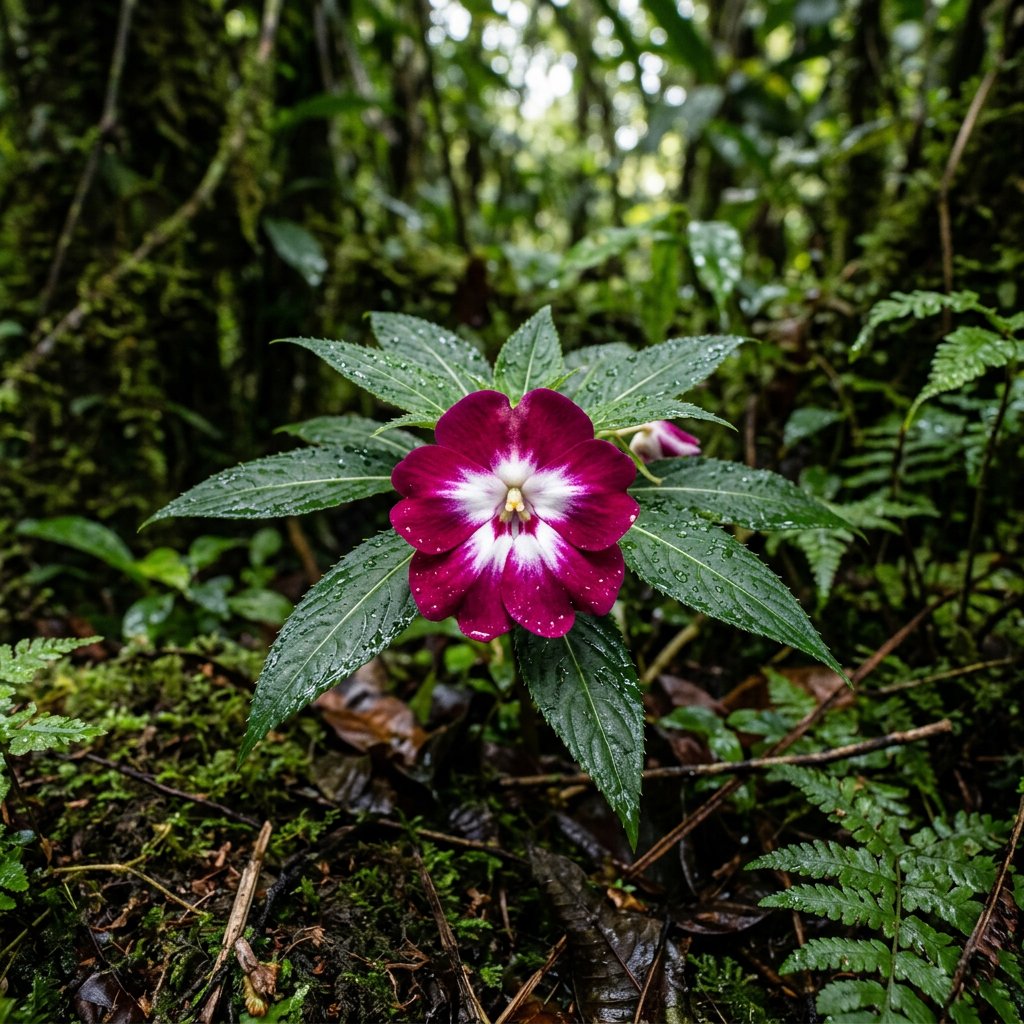
Plant Overview
Known for its vibrant, almost glowing petals and striking foliage, the New Guinea Impatiens is a tropical superstar that brings a "neon" pop to any garden. Unlike its shade-loving cousins, this plant was discovered in the highlands of Papua New Guinea and introduced to the wider world in the 1970s. It is a favorite for gardeners who want high-impact color without the fragility of more delicate annuals.
🔍 How to Identify
- 🌸 The Blooms: Features large, five-petaled flowers that can reach up to 3 inches across, appearing in vivid shades of orange, purple, pink, and bicolor.
- 🍃 The Foliage: Long, lance-shaped leaves with serrated edges; the colors are often dramatic, ranging from deep forest green to bronze or variegated with creamy yellow centers.
- 🌿 The Stems: Thick, succulent-like stems that are sturdier than the common Impatiens, allowing the plant to grow into a neat, upright mound.
🏡 In Your Garden
- 💧 The "Fainting" Habit: These plants are incredibly thirsty; if the soil dries out, they will wilt dramatically (or "faint") to protect themselves, though they usually bounce back within an hour of watering.
- ☀️ Sun Tolerance: While they can handle more sunlight than traditional Impatiens, they still prefer a "siesta" in the afternoon shade to prevent their succulent leaves from scorching.
- 🍴 Heavy Feeders: Because they spend so much energy producing constant blooms, they appreciate regular liquid fertilization to keep the flower production high throughout the season.
⚠️ Safety & Toxicity
- ✅ Status: Non-toxic and safe.
- 🐾 Details: Impatiens hawkeri is listed by the ASPCA as non-toxic to dogs, cats, and horses, making it an excellent choice for households with curious pets.
✨ Fun Fact
The name Impatiens comes from the Latin word for "impatient." This refers to the plant's unique seed pods which, when ripe, will explode at the slightest touch, launching seeds several feet away to ensure the next generation finds a new place to grow!

Detailed Care Instructions
Annual impatiens last for one full growing season in most U.S. zones. Perennial impatiens (in Zones 10 through 12) will come back every year when properly cut back and cared for.
Why are New Guinea impatiens considered a "hybrid" varietal ?
Sun-loving New Guinea impatiens have been cultivated by crossing several closely-related species selected specifically for certain traits. New Guinea impatiens were developed particularly to withstand more sun than the common varieties, however, they still prefer afternoon shade.
How do you encourage New Guinea impatiens to spread?
Plant your starts about 18 inches apart in a mixture of soil and compost. Maintain proper conditions, like light and soil, and then prune plants once they begin to look leggy. Clipping back spindly stems, in addition to perfect growing conditions, will encourage fuller growth.
| Color | Orange, Pink, Red, White, Purple |
| Soil Ph | 6.0 To 6.5 |
| Humidity | Normal |
| Lighting | Part Sun |
| Soil Type | Loose, Rich Soil |
| Bloom Time | Continuous |
| Difficulty | Hard |
| Plant Type | Annual Flower |
| Mature Size | 12 To 18 Inches Tall, Spread 6 To 9 Inches Wide |
| Native Area | New Guinea |
| Temperature | 5°C - 25°C |
| Sun Exposure | Full Sun To Part Shade |
| Hardiness Zones | 10, 11, 12 |
To grow Impatiens hawkeri (also known as New Guinea impatiens), follow these steps:
- Choose a suitable location: Select a spot that receives partial shade to full shade. Too much direct sunlight can scorch the plant.
- Soil preparation: Prepare the soil by adding organic matter like compost or well-rotted manure. This will improve drainage and provide nutrients.
- Planting: Dig a hole slightly larger than the root ball of the plant. Place the plant in the hole at the same depth it was previously grown. Space multiple plants about 8-12 inches apart.
- Watering: Keep the soil consistently moist but not waterlogged. Water the plant regularly, especially during dry spells. Avoid letting the soil dry out completely, as it can cause stress to the plant.
- Fertilizer: Apply a balanced, slow-release fertilizer once a month during the growing season. Follow the instructions on the fertilizer package for the recommended amount.
- Mulching: Mulch the soil around the plant to retain moisture and suppress weed growth. Apply a layer of organic mulch, such as wood chips or straw, around the base of the plant.
- Pruning: Pinch or trim the tips of the plant regularly to encourage bushy growth and prevent legginess.
- Deadheading: Remove faded flowers by pinching them off or using pruning shears. This will encourage the plant to produce new blooms.
- Pests and diseases: Monitor the plant for signs of pests or diseases, such as aphids or powdery mildew. Treat these issues promptly with appropriate organic or chemical controls.
- Winter care: In areas with frost, Impatiens hawkeri is typically grown as an annual. If you want to overwinter the plant, you can take cuttings in late summer or early autumn and grow them indoors during the winter months.
By following these steps, you should be able to successfully grow Impatiens hawkeri and enjoy its vibrant flowers throughout the growing season.

Place in a window with dappled sun or a spot in the middle of a room. Or directly in a window facing west or east.

1. Location: Impatiens Hawkeri plants need a location that offers partial shade. Avoid direct sun as it can scorch the leaves and flowers.
2. Soil type: The soil should be well-draining and rich in organic matter. This will help the roots absorb water and nutrients more efficiently.
3. Watering frequency: Watering frequency depends on the climate and the level of humidity. Generally, Impatiens Hawkeri plants need to be watered once or twice a week.
4. Watering amount: Water thoroughly until the soil is moist, but not waterlogged. Avoid over-watering as this can cause root rot and other diseases.
5. Watering methods: Use a watering can with a narrow spout or a hose with a gentle mist setting. Avoid getting water on the leaves as this can encourage disease.
6. Mulching: Mulching around the base of the plant can help retain moisture in the soil and prevent evaporation.
7. Signs of over/under-watering: If the leaves begin to turn yellow, wilt, or droop, it may indicate over or under-watering. Adjust watering frequency and amount accordingly.
8. Other considerations: During hot, dry weather or in containers, Impatiens Hawkeri plants may require more frequent watering. Also, avoid watering during the hottest part of the day as this can cause water to evaporate quickly.
To fertilize the Impatiens Hawkeri plant, you should apply a balanced fertilizer with equal parts of nitrogen, phosphorous, and potassium. Use a granular fertilizer with a slow-release formula and apply it once a month during the growing season. You can also use a water-soluble fertilizer and apply it every two weeks. Avoid applying too much fertilizer, as this can burn the roots and damage the plant. Water the plant well after fertilizing to ensure the nutrients reach the roots.
For Impatiens Hawkeri, an acidic soil with a pH range of 5.5 to 6.5 is ideal. The soil should be well-draining and rich in organic matter. A mixture of peat moss, perlite, and vermiculite is an excellent soil choice for this particular plant. It is also recommended to add some slow-release fertilizer to the soil to feed the plant throughout the growing season. The plant is sensitive to drought, so it's essential to maintain adequate soil moisture by watering consistently and regularly. However, care should be taken not to overwater and avoid waterlogging the soil.
To propagate this plant, choose a healthy parent plant with several stems. Using a clean and sharp pair of scissors or pruning shears, cut a stem that is at least 10 cm long and has several leaves. Remove the lower leaves from the stem, leaving only a few at the top.
Next, prepare a container with well-draining soil. Insert the stem into the soil, making sure that the bottom two-thirds of the stem is under the soil. Water the soil until it is damp, but not soaking wet.
Cover the container with a plastic bag or wrap to create a humid environment. Place the container in a bright, indirect light spot and keep the soil moist by watering it regularly.
After a few weeks, the cutting should begin to root. You can test this by gently tugging on the stem; if you feel resistance, it means roots have formed. Remove the plastic covering and continue to care for the cutting as you would a mature plant.
Once the new plant has grown to a reasonable size, you can transplant it into a larger container or outdoor garden.
Common pests of the impatiens include Mealybugs, spider mites, aphids, thrips. Make a habit of checking your impatiens frequently for pests so that any infestations can be caught and managed early.








