Plant Overview
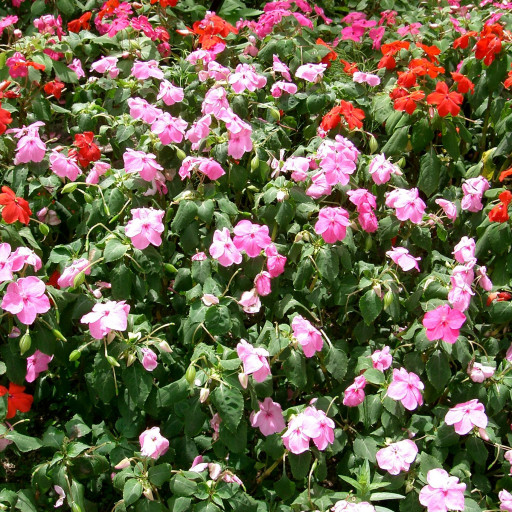
Known affectionately as the "Busy Lizzie" or the "Patience Plant," Impatiens walleriana has been a staple of shady garden beds and hanging baskets for decades. Its botanical name refers to the "impatient" way its seed pods burst at the slightest touch, scattering life across the forest floors of its native East Africa. It is the quintessential "instant color" plant for those dark corners of the garden where most flowers refuse to grow.
🔍 How to Identify
- 🌸 The "Spurred" Bloom: Flat, five-petaled flowers that come in nearly every color except blue. If you look at the back of the flower, you’ll see a tiny, curved "spur" filled with nectar.
- 🍃 Succulent Foliage: The leaves are typically oval or lance-shaped with lightly toothed edges and a glossy, juicy texture. They can range from bright green to a deep, bronzy burgundy.
- 🌿 Translucent Stems: The stems are thick, brittle, and somewhat translucent, resembling a succulent. They snap easily, revealing a high water content inside.
🏡 In Your Garden
- ☁️ The Shade Specialist: These beauties are famous for their ability to thrive in full shade. Direct afternoon sun will quickly bleach the flowers and scorch the leaves, so keep them tucked under tree canopies or on north-facing porches.
- 💧 The Drama Queen: Impatiens are excellent communicators. If they are thirsty, they will collapse completely in a dramatic "faint." Don't panic—give them a deep drink, and they will usually stand back up within an hour as if nothing happened.
- 🍄 Mildew Mindfulness: They are susceptible to Impatiens Downy Mildew. To keep them healthy, avoid overhead watering (aim for the soil) and ensure there is enough space between plants for air to circulate.
⚠️ Safety & Toxicity
- ✅ Pet & Child Friendly: Impatiens walleriana is considered non-toxic to humans, dogs, and cats. They are one of the safest choices for landscaping around curious pets.
- 👅 Mild Tummy Troubles: While not poisonous, the plant contains high amounts of calcium oxalate. If a pet grazes on them heavily, they might experience a bit of drooling or a mild upset stomach, but it is rarely a cause for medical alarm.
✨ Fun Fact
- 💥 Organic Artillery: The plant uses a method called "explosive dehiscence" to spread its seeds. When the seed pods are ripe, the tension is so high that the slightest touch from a passing animal (or a human finger) causes them to snap open violently, launching seeds several feet away!

Detailed Care Instructions
| Color | Pastels And Vibrant Colors Including White, Red, Pink, Violet, Coral, Purple, And Yellow |
| Soil Ph | 6.0 To 6.5 |
| Humidity | High |
| Lighting | Full Sun |
| Soil Type | Rich, Well-Draining Soil |
| Bloom Time | Spring Through Summer |
| Difficulty | Medium |
| Plant Type | Annual Flowers |
| Mature Size | 1 To 3 Feet High; 1 To 3 Feet Wide |
| Native Area | Native To Africa, Eurasia, And North America |
| Temperature | 10°C - 21°C |
| Sun Exposure | Full Shade |
| Hardiness Zones | In Hardiness Zones 10 And 11, Impatiens Can Be Planted In The Fall For Winter And Spring Color. In Shaded Landscapes In Zones 9 Through 11, The Plants Can Reseed Themselves, Maintaining Year-Round Flowers In Shaded Areas. |
To grow Impatiens Walleriana (also known as busy Lizzie or balsam), follow these steps:
- Choose a suitable location: Impatiens Walleriana thrives in partial shade to full shade conditions. Find a spot in your garden or balcony that receives a few hours of morning sunlight and provides shade during the hotter parts of the day.
- Prepare the soil: The soil should be loose, well-draining, and rich in organic matter. Add compost or well-rotted manure to improve the soil's fertility and drainage.
- Start from seeds or buy seedlings: You can start Impatiens Walleriana from seeds or purchase seedlings from a nursery. If starting from seeds, sow them in small pots filled with seed starting mix. Keep the soil slightly moist and place the pots in a warm location until germination occurs.
- Transplant seedlings: Once the seedlings have developed a few sets of true leaves, they are ready to be transplanted. Choose a cloudy day or evening to avoid transplant shock. Dig a hole in the prepared soil, place the seedling into the hole, and gently firm the soil around it. Space the seedlings about 6-8 inches apart to allow them to spread and fill in.
- Water regularly: Impatiens Walleriana requires consistently moist soil, so water the plants regularly. However, make sure not to overwater and create waterlogged conditions that could lead to root rot.
- Mulching: Apply a layer of organic mulch around the plants to retain moisture, suppress weed growth, and provide insulation to the roots.
- Fertilize: Feed the plants with a balanced water-soluble fertilizer every 2-3 weeks or use a slow-release granular fertilizer at the time of planting.
- Deadheading and pruning: Regularly remove spent flowers to promote continuous blooming. Prune the plants to encourage bushier growth and remove any leggy or straggly stems.
- Watch out for pests and diseases: Keep an eye out for common issues like aphids, spider mites, or whiteflies. If detected, treat them promptly with insecticidal soap or organic pest control methods. Ensure good air circulation and avoid overhead watering to prevent fungal diseases like powdery mildew.
- Enjoy the blooms: Impatiens Walleriana will reward you with abundant blooms throughout the growing season. Be sure to take some time to appreciate and enjoy the colorful flowers.

Place in a window with dappled sun or a spot in the middle of a room. Or directly in a window facing west or east.

The best way to water this type of plant is to carefully pour water at the base of the stem, taking care not to get any water on the leaves. It is important to not let the soil dry out completely between waterings but also to not overwater, as it can lead to root rot. The plant prefers to be kept consistently moist, but not waterlogged. One way to check if it needs watering is to stick your finger into the soil up to your knuckle – if it feels dry, it’s time to water. When watering, use room temperature water that has been allowed to sit for a few hours or overnight to remove any chlorine or other chemicals. Finally, avoid wetting the foliage when watering, as this can promote the development of diseases and fungi.
To fertilize this plant, use a water-soluble fertilizer with a balanced N-P-K ratio. Apply the fertilizer every two weeks during the growing season, but reduce the frequency to once a month during the dormant season. Follow the package instructions for the recommended dosage and application method. Avoid over-fertilizing, as this can damage the plant and lead to nutrient deficiencies.
The optimal soil for this plant is a well-draining, nutrient-rich soil that is slightly acidic. It should be a mixture of loam, sand, and either peat moss or compost. The pH of the soil should be between 5.5 and 6.5. The soil should be kept moist but not waterlogged, as impatiens do not tolerate standing water. It is also important to ensure that the soil is free of pests and diseases before planting, as impatiens are susceptible to a variety of fungal and bacterial infections.
To propagate this plant, you will need to take stem cuttings from a healthy adult plant. First, select a stem that is a few inches long, with at least two nodes (where leaves grow from). Then, remove the lower leaves from the stem, leaving only the top few leaves. Make a clean cut just below the bottom node of the stem.
Next, dip the cut end of the stem into rooting hormone powder. This will encourage the stem to develop roots. Then, insert the stem into a pot filled with moist potting soil. Make sure to keep the soil moist and in bright, indirect sunlight. Be patient, as it may take several weeks for new roots to develop.
Once the plant has established roots and is growing well, it can be transplanted into a larger pot or into the garden. This method of propagation is a cost-effective way to expand your collection of these lovely plants.
Common pests of the busy lizzy include Mealybugs, spider mites, aphids, thrips. Make a habit of checking your busy lizzy frequently for pests so that any infestations can be caught and managed early.








