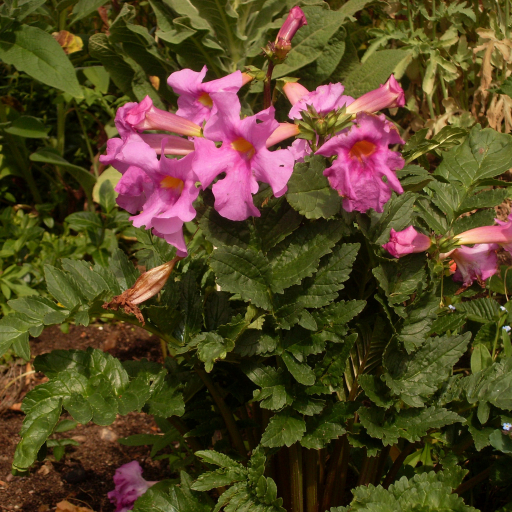
Plant Overview
Known as the Hardy Gloxinia or Chinese Trumpet Flower, Incarvillea delavayi brings a touch of tropical drama to temperate gardens. Despite its delicate, orchid-like appearance, this native of western China is remarkably resilient, surviving chilly winters that would wither a true Gloxinia. It is a favorite for gardeners who want exotic, magenta blooms and lush, fern-like textures without the need for a greenhouse.
🔍 How to Identify
- 🌸 The Bloom: Showy, 3-inch wide trumpet-shaped flowers in shades of deep rose or magenta, featuring a high-contrast yellow throat.
- 🌿 The Foliage: Rich green, "pinnate" leaves that look like oversized fern fronds, providing a textured, bushy base for the flower stalks.
- 📏 Growth Habit: It forms a neat rosette of basal leaves, with leafless flower stems emerging from the center to stand proudly above the foliage.
🏡 In Your Garden
- 🏜️ The Drainage Secret: This plant stores energy in a thick, fleshy taproot similar to a carrot. Because of this, it demands "sharp" drainage; if the soil stays soggy during the winter, the root will likely rot.
- 💤 The Late Sleeper: Don't panic in early spring! This species is one of the last to emerge from dormancy, often waiting until the ground is thoroughly warm. Mark its spot carefully so you don't accidentally dig it up or plant over it.
- 🚫 Stay Put: Once established, it deeply dislikes being moved. The taproot is brittle and deep, making transplanting a risky endeavor that can lead to the plant failing to bloom for a season or two.
⚠️ Safety & Toxicity
- ✅ Low Risk: Incarvillea delavayi is generally considered non-toxic to humans and common household pets like cats and dogs.
- 🧤 Sensitive Skin: While it isn't poisonous, the sap can occasionally cause mild skin irritation for those with highly sensitive skin. Wearing gloves while dividing the plant is a helpful precaution.
✨ Fun Fact
Despite its name and look, this plant isn't related to the common Gloxinia houseplant at all! It is actually a close botanical relative of the giant Catalpa (Cigar Tree) and the climbing Trumpet Creeper vine.

Detailed Care Instructions
To grow Incarvillea Delavayi (also known as Hardy Gloxinia), follow these steps:
- Choose a suitable location: Select a spot that receives full sun to partial shade. The soil should be well-draining and rich in organic matter.
- Prepare the soil: Amend the soil with compost or well-rotted manure to enrich it. The pH level of the soil should be slightly acidic to neutral.
- Sow seeds or plant divisions: You can either sow seeds in early spring or plant divisions in fall or spring. Plant seeds or divisions about 2 inches deep in the prepared soil. If planting divisions, keep them at least 12 inches apart.
- Watering: Keep the soil consistently moist but not waterlogged. Provide regular watering, especially during dry periods. Avoid overhead watering as it can lead to fungal diseases.
- Mulching: Apply a layer of organic mulch around the base of the plants to retain moisture, suppress weed growth, and provide insulation during winter.
- Fertilization: Fertilize the plants once or twice during the growing season with a balanced, slow-release fertilizer. Follow the instructions on the fertilizer packaging for application rates.
- Support: Incarvillea Delavayi has tall flowering stems that may require support. You can stake the stems or provide a supporting structure, such as a trellis or stake.
- Deadheading: After the flowers fade, remove the spent blooms (deadhead) to encourage further flowering and maintain a neat appearance.
- Winter care: In colder regions, provide some winter protection by applying a thick layer of mulch around the plant base. This will help insulate the roots from freezing temperatures.
- Pest and disease control: Monitor the plants for any signs of pests or diseases and take appropriate action if necessary. Common issues include aphids, slugs, snails, and powdery mildew.
By following these guidelines, you should be able to successfully grow Incarvillea Delavayi and enjoy its beautiful flowers throughout the growing season.

Place in a window with dappled sun or a spot in the middle of a room. Or directly in a window facing west or east.

Incarvillea Delavayi is a plant that requires proper watering to thrive. Here are some guidelines on how to water this plant:
1. Determine the watering needs: Incarvillea Delavayi prefers evenly moist soil but does not tolerate waterlogged conditions. It is important to strike a balance between keeping the soil consistently moist and not overwatering the plant.
2. Soil moisture check: Before watering, check the soil moisture level by inserting your finger about an inch deep into the soil around the plant. If the soil feels dry at this depth, it is time to water the plant.
3. Watering frequency: Develop a watering schedule that takes into account factors like the climate, temperature, and humidity levels. In general, Incarvillea Delavayi should be watered every 3-4 days during the growing season, while reducing the frequency during winter or colder months.
4. Watering technique: When watering, aim to provide a deep and thorough soak to the plant's root zone. This encourages the roots to grow downwards in search of moisture, resulting in a stronger and healthier plant. Avoid shallow watering or just wetting the surface as this can lead to shallow root development.
5. Water quantity: The amount of water required may vary depending on factors like pot size, soil type, and environmental conditions. As a general rule, water the plant until you see water escaping through the drainage holes. This ensures that the entire root zone is adequately moistened.
6. Watering time: Watering in the early morning or late evening is ideal as it allows the plant to absorb the moisture before the sun's heat causes evaporation. Avoid watering during the hottest part of the day as this can lead to excessive moisture loss.
7. Monitor signs of overwatering or underwatering: Keep a close eye on your Incarvillea Delavayi plant for signs of overwatering (wilting, yellowing leaves, root rot) or underwatering (wilting, dry and crispy leaves). Adjust the watering routine accordingly to maintain an optimal moisture level for the plant's health.
Remember, these watering guidelines serve as general recommendations, and it is important to consider specific environmental conditions and the individual needs of your Incarvillea Delavayi plant for best results.
Fertilizing instructions for Incarvillea Delavayi:
- Choose a balanced, water-soluble fertilizer with an N-P-K ratio of approximately 10-10-10 or 20-20-20.
- Dilute the fertilizer according to the manufacturer's instructions, typically using 1 teaspoon of fertilizer per 1 gallon of water.
- Water the Incarvillea Delavayi plant thoroughly before applying fertilizer to ensure the soil is moist.
- Apply the diluted fertilizer around the base of the plant, avoiding direct contact with the foliage.
- Use a watering can or a garden hose with a gentle spray nozzle to apply the fertilizer evenly.
- Repeat the fertilization process every 4-6 weeks during the growing season, which is usually from spring to early fall.
- Adjust the frequency and strength of fertilization based on the plant's response and growth. Avoid over-fertilizing as it may lead to nutrient burn or damage the plant.
- Make sure to read and follow the specific instructions provided with your chosen fertilizer for best results.
When cultivating Incarvillea Delavayi, it is important to select a suitable soil type that mimics its natural growing conditions. This plant thrives in well-draining soil that retains moisture without becoming waterlogged. A suggested soil formula for Incarvillea Delavayi includes a combination of loam, sand, and organic matter.
Loam, which is a balanced mixture of sand, silt, and clay, provides essential nutrients, good drainage, and sufficient moisture retention. It ensures that excess water drains away quickly, preventing the risk of root rot.
Sand helps to improve drainage further by preventing the soil from becoming compacted. This is especially important as overly compacted soil can restrict root growth and lead to waterlogged conditions.
Organic matter, such as compost or well-rotted manure, enhances the soil's fertility and structure. It promotes the growth of beneficial microorganisms and provides essential nutrients for the plant's overall health and vigor.
It is important to note that Incarvillea Delavayi prefers slightly acidic to slightly alkaline soil conditions, with a pH level ranging between 6.0 and 7.5. Therefore, it's recommended to test the soil's pH and adjust it if necessary using amendments like sulfur or lime.
To ensure optimal growth, the soil mixture should be well-prepared before planting Incarvillea Delavayi. It is recommended to mix equal parts of loam, sand, and organic matter thoroughly. Additionally, incorporating perlite or vermiculite can further improve soil drainage, especially in heavy clay soils.
Overall, selecting the right soil composition and maintaining adequate moisture levels is crucial for nurturing healthy Incarvillea Delavayi plants.
Propagation of Incarvillea delavayi can be done through several methods such as division, seeds, or stem cuttings. Below are the details on how to propagate this plant:
- Division: This method is best done during early spring or fall. Here's how to do it:
- Carefully dig up the mature plant, ensuring that the roots are intact.
- Gently separate the plant clumps into smaller sections using a sharp, sterilized knife or garden spade.
- Each divided section should have both roots and foliage.
- Replant the divisions in well-draining soil enriched with organic matter, ensuring that the crown of the plant is level with the soil surface.
- Water the divisions thoroughly and continue to care for them as you would with established plants.
- Carefully dig up the mature plant, ensuring that the roots are intact.
- Seeds: Incarvillea delavayi produces small seeds that can be collected for propagation. Here's what you need to do:
- Collect the ripened seeds from the plant by letting the seed pods dry and split open naturally.
- Gently remove the seeds from the pods and separate any debris.
- Fill small seed trays or pots with a well-draining seed-starting mix.
- Sow the seeds on the surface of the soil and lightly press them down.
- Mist the soil with water to moisten it without oversaturating.
- Place the trays or pots in a warm location with bright, indirect light.
- Ensure the soil remains consistently moist but not waterlogged.
- Germination typically takes about 2-4 weeks.
- Once the seedlings have developed a few true leaves, they can be transplanted into individual pots.
- Collect the ripened seeds from the plant by letting the seed pods dry and split open naturally.
- Stem cuttings: This method is more challenging compared to division or seeds, but it can still be successful. Here's what you can do:
- Take stem cuttings of approximately 4-6 inches in length from healthy, non-flowering shoots.
- Remove the leaves from the lower half of the cutting.
- Dip the cut end of the stem into a rooting hormone powder or gel to encourage root development.
- Insert the cuttings into a well-draining potting mix, burying 1-2 inches of the stem.
- Place the pot in a warm location with bright, indirect light.
- Mist the soil regularly to maintain moisture levels.
- It may take several weeks to months for roots to develop.
- Once roots are established and the cuttings have begun to grow, they can be transplanted into individual pots or the garden.
Remember to provide the propagated plants with proper care, including regular watering, adequate sunlight, well-draining soil, and protection from extreme weather conditions.
- Take stem cuttings of approximately 4-6 inches in length from healthy, non-flowering shoots.
Common pests of the chinese trumpet-flower include Scale insect, mealybugs, spider mites, aphids. Make a habit of checking your chinese trumpet-flower frequently for pests so that any infestations can be caught and managed early.








