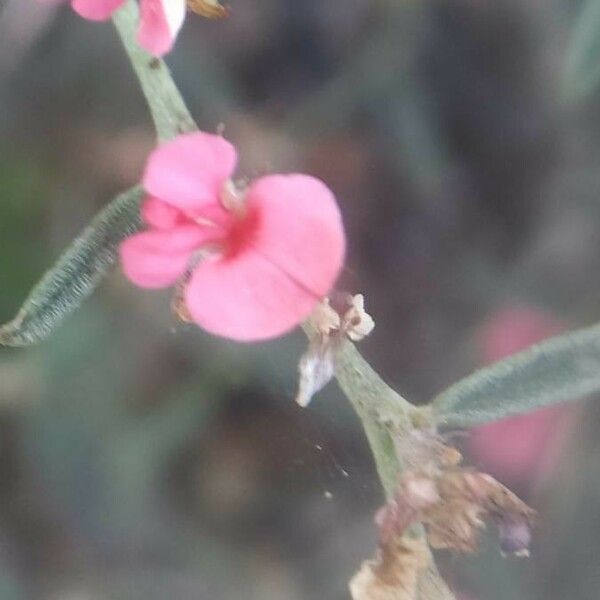
Plant Overview
Often called the Scarlet Pea or Pink Indigo, this resilient wildflower paints the southern prairies and coastal plains with splashes of salmon and rose. While it belongs to the same family as the famous blue dye plant, this "mini" version is a rugged survivor, prized by enthusiasts for its ability to thrive in harsh, sandy soils where other plants might wither. It is a low-profile beauty that adds a delicate texture to wilder landscapes.
🔍 How to Identify
- 🌸 The Flowers: Look for classic pea-shaped blooms in shades ranging from soft pink to a fiery scarlet-orange. They typically grow in short, upright clusters (racemes) that emerge from the leaf axils.
- 🌿 The Foliage: The leaves are small, grey-green, and usually divided into 5 to 9 leaflets. They are covered in fine, silvery hairs that give the plant a soft, dusty appearance and help it reflect intense sunlight.
- 🌱 Growth Habit: This is a sprawling perennial. Instead of growing tall, it hugs the ground, forming a dense, crawling mat that rarely rises more than 10 inches high.
🏡 In Your Garden
- 🏜️ Drought Warrior: This plant is an expert at water conservation. It utilizes a deep, sturdy taproot to find moisture deep underground. Because of this taproot, it "hates" being moved—transplanting an established Scarlet Pea usually results in failure, so plant it where you want it to stay.
- 🧪 The Soil Builder: As a member of the legume family, it has a symbiotic relationship with soil bacteria to "fix" nitrogen. It essentially creates its own fertilizer, improving the soil quality for neighboring plants over time.
⚠️ Safety & Toxicity
- 🐾 Livestock & Pets: While many wild peas are harmless, certain species in the Indigofera genus contain amino acids like indospicine, which can be toxic to horses and dogs if grazed in large quantities. It is best kept away from high-traffic pet areas.
- 👶 Human Safety: It is generally considered non-toxic to touch, though the fine hairs on the stems can occasionally cause very mild skin irritation for those with highly sensitive skin.
✨ Fun Fact
🎨 The "Almost" Dye: Although its famous cousin, Indigofera tinctoria, is the primary source of the world's blue indigo dye, Indigofera miniata was historically used by some indigenous groups to create subtle reddish or yellowish tints for basketry and weaving!

Detailed Care Instructions
To grow Indigofera Miniata plant, you can follow these steps:
- Obtain seeds or cuttings: You can purchase seeds or obtain cuttings from an existing plant. If using cuttings, make sure they are taken from a healthy source.
- Prepare a suitable pot or container: Choose a pot or container with drainage holes to prevent water logging. Fill it with a well-draining potting mix.
- Plant the seeds or cuttings: If using seeds, sow them about 1/4 inch deep in the potting mix. If using cuttings, make a small hole in the potting mix and gently insert the cutting, ensuring that a few nodes are beneath the soil.
- Watering: Keep the soil consistently moist but not overly wet. Water the plant whenever the top inch of the soil feels dry. Avoid overwatering as it can lead to root rot.
- Provide sunlight: Indigofera Miniata plants thrive in bright sunlight. Place the pot in a location that receives at least 6-8 hours of direct sunlight per day. If growing indoors, place the plant near a south-facing window.
- Pruning: To encourage bushier growth, pinch out the growing tips of the young plant when it reaches about 6 inches tall. Regularly remove any dead or yellowing leaves.
- Fertilization: Feed the plant with a balanced liquid fertilizer every 4-6 weeks during the growing season (spring and summer). Follow the instructions on the fertilizer packaging for dosage and application.
- Provide support (optional): If the Indigofera Miniata plant starts to grow taller and becomes more vining, you can provide a trellis or support structure for it to climb on.
- Monitor for pests and diseases: Check the plant regularly for signs of pests such as aphids or spider mites. If detected, treat them with organic insecticidal soap or neem oil. Remove any diseased or infected plant parts promptly.
- Harvesting seeds (optional): If you want to collect seeds for future planting, allow the flowers to bloom and turn into seed pods. Once the pods turn brown and start to dry, carefully collect them and store in a cool, dry place.
With proper care and attention, your Indigofera Miniata plant should grow and thrive, providing beautiful blooms and vibrant foliage.

Place in a bright room that is sun drenched almost all day. Or directly in a south-facing window.

To water this plant, it is important to check the soil moisture level regularly by sticking your finger about an inch deep into the soil. If the soil feels dry, it is time to water. Use a watering can or hose and water the soil around the base of the plant, taking care not to get water on the leaves. Make sure to water thoroughly until water comes out of the drainage holes at the bottom of the pot or container. It is best to avoid letting the plant sit in standing water as this can cause root rot. Depending on the humidity and temperature of the environment, the plant may need to be watered 1-2 times per week.
- Indigofera Miniata plants should be fertilized during their growing season.
- Choose a balanced fertilizer with equal ratios of nitrogen, phosphorus, and potassium.
- Follow the manufacturer's instructions on how much fertilizer to use.
- Apply the fertilizer evenly around the base of the plant, being careful not to get any on the leaves or stem.
- Water the plant thoroughly after fertilizing to help the nutrients reach the roots.
- Avoid over-fertilizing, as this can cause damage to the plant.
The soil that is suitable for Indigofera Miniata plant should have a pH level that ranges from slightly acidic to neutral. It should be well-draining and should not hold water for too long as the plant is susceptible to root rot. The soil should be rich in organic matter to provide the plant with necessary nutrients. A sandy loam soil mixture can be used with added peat moss or compost for better drainage and nutrition. It is also recommended to add some perlite or sand to the soil mixture to improve aeration.
Indigofera Miniata can be propagated through various methods. One of the easiest ways is by using softwood cuttings. When the plant is actively growing, take a cutting that is about 6 inches (15 cm) long and remove the leaves from the lower half of the stem. Dip the cut end of the stem in rooting hormone powder and plant it in a pot filled with well-draining soil. Keep the soil moist and place the pot in a bright, sheltered location. Within 4-6 weeks, roots should form and the cutting can be transplanted into a larger pot or directly into the ground. Another method of propagation is by division. When the plant is mature, gently dig it up and separate the roots into clumps, making sure that each clump has some roots and leaves. Replant the clumps in well-draining soil, water it well, and place it in a bright location. The new plants should establish themselves quickly and begin to grow.








