Plant Overview
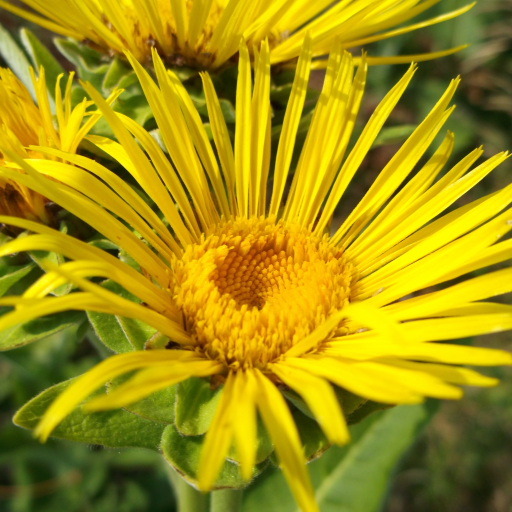
Commonly known as Elecampane or "Horse-heal," Inula helenium is a towering perennial that feels like a relic from an ancient apothecary garden. Legend has it that this plant sprang from the tears of Helen of Troy, earning it its botanical name. Historically, it was a staple in European gardens for its medicinal roots, which were used to treat everything from respiratory issues to digestive woes.
🔍 How to Identify
- 🌻 The Flowers: Large, bright yellow blooms that resemble shaggy sunflowers. They have thin, "spidery" ray petals that give the flower a slightly unkempt, wild appearance.
- 🍃 The Foliage: The basal leaves are massive—sometimes reaching two feet long—with a velvety, woolly texture on the underside and a jagged, serrated edge.
- 📏 The Stature: This is no small garden flower; it can easily reach heights of 6 to 8 feet, standing tall on stout, furrowed stems that are covered in fine hairs.
🏡 In Your Garden
- 🥕 The Taproot Trap: Elecampane develops a massive, fleshy aromatic taproot very quickly. Because of this, it hates being moved once established. Choose its "forever home" carefully, ensuring it has plenty of vertical and horizontal space to expand.
- 💧 Moisture Lover: While it is quite hardy, it thrives in damp, well-draining soil. In the wild, you’ll often find it near hedgerows or damp meadows. If your garden soil dries out too fast, the large leaves will wilt dramatically to let you know it's thirsty.
- 🦋 Pollinator Magnet: Its late-summer blooming period makes it a vital landing pad for bees and butterflies seeking nectar when other spring flowers have already faded.
⚠️ Safety & Toxicity
- 🌼 Sensitivity Warning: While generally considered safe and even medicinal for some, Elecampane belongs to the Asteraceae (daisy) family. People with allergies to ragweed or marigolds may experience contact dermatitis (skin rashes) when handling the leaves or roots.
- 🐾 Pet Safety: There is no significant evidence of high toxicity to cats or dogs, but ingesting large amounts of the bitter root can cause digestive upset or vomiting in curious pets.
✨ Fun Fact
In the Middle Ages, "Elecampane sugarplums" were a popular treat. The roots were candied and eaten as lozenges to soothe coughs and sweeten the breath—making it perhaps one of history's first functional candies!

Detailed Care Instructions
| Color | Yellow |
| Soil Ph | 6.5 To 7.5 |
| Humidity | Normal |
| Lighting | Full Sun |
| Toxicity | Poisonous |
| Soil Type | Variety Of Types; Well-Drained |
| Bloom Time | Summer To Fall |
| Difficulty | Medium |
| Plant Type | Perennial Herb |
| Hibernation | Cold Period |
| Mature Size | 3 To 6 Feet Tall And 2 To 3 Feet Wide |
| Native Area | Eurasia |
| Temperature | 5°C - 15°C |
| Sun Exposure | Full Sun To Part Shade |
| Hardiness Zones | 3 To 7 |
To grow Inula Helenium, commonly known as Elecampane, follow these steps:
- Choose the right location: Elecampane thrives in full sun to partial shade. Select a location in your garden that receives at least 6-8 hours of sunlight per day. The soil should be well-draining and loamy.
- Prepare the soil: Before planting, prepare the soil by loosening it with a garden fork or tiller. Remove any weeds or rocks that may hinder the growth of the plant.
- Planting: Sow the Inula Helenium seeds directly into the prepared soil in either spring or autumn. Scatter the seeds evenly and cover them lightly with soil, around 1/8 inch deep. Space the seeds about 12-18 inches apart to give them room to grow.
- Provide regular watering: Keep the soil consistently moist but not waterlogged. Water the plant regularly, especially during dry spells or hot summer months. Avoid overwatering as it can cause root rot.
- Mulching: Apply a layer of organic mulch around the base of the plants to retain moisture and suppress weed growth. This will also help to keep the plant's roots cool during hot weather.
- Fertilization: Fertilize the Inula Helenium plant once or twice a year with a balanced, slow-release fertilizer. Follow the instructions on the fertilizer packaging for the correct application rates.
- Pruning: Inula Helenium plants can grow quite tall, reaching up to 4-6 feet. To maintain a more compact and neat appearance, you can prune the plant back by about one-third after the flowering season has ended.
- Pests and diseases: Inula Helenium is generally resistant to most pests and diseases. However, keep an eye out for common garden pests like aphids, slugs, and snails. If required, use appropriate organic pest control methods to manage these pests.
- Harvesting: The medicinal parts of the Inula Helenium plant are the roots. Harvest the roots in the fall of the second year of growth. Carefully dig up the plant, clean the roots, and dry them in a well-ventilated area.
By following these steps, you should be able to successfully grow Inula Helenium in your garden.

Place in a bright room that is sun drenched almost all day. Or directly in a south-facing window.

To water this plant, make sure to check the soil's moisture level by sticking your finger about an inch deep into the soil. If it feels dry, it's time to water. Use a watering can or hose with a soft flow to avoid damaging the plant. Slowly pour water at the base of the plant until the soil is fully saturated, and allow the excess water to drain. Water deeply but only when the soil is dry to the touch. Overwatering can lead to root rot and damage the plant.
To fertilize this plant, apply a balanced fertilizer once in spring before new growth begins. Follow the instructions on the fertilizer package for application rates and methods. Water the plant well after fertilizing to ensure the nutrients are absorbed properly. Avoid fertilizing too much as this can harm the plant.
Inula Helenium prefers well-drained soil that is rich in organic matter. It tolerates a wide range of soil types, including sandy, loamy, and clay soils, as long as they are not waterlogged. The pH of the soil should be neutral to slightly acidic, ideally between 6.0 and 7.5. Adding compost or aged manure to the soil prior to planting can improve soil structure and fertility. It is recommended to avoid heavy fertilization as excessive nitrogen can lead to lush foliage growth at the expense of flowering.
To propagate this plant, you will need to collect seeds or take stem cuttings from a healthy parent plant.
To collect seeds, wait until the flowers have bloomed and started to fade. The seed heads will appear fluffy and white. Collect the seed heads and allow them to dry for a few days. Once dry, shake the seeds out of the heads and store them in a cool, dark place.
To take stem cuttings, select a healthy parent plant and take a cutting from the stem, making sure it is about 4 inches long and has a few leaves attached. Remove the bottom leaves and dip the cutting in rooting hormone. Plant the cutting in a pot filled with a well-draining soil mixture. Keep the soil moist and in a sunny location. The cutting should root in a few weeks.
In both methods, the newly propagated plants should be grown in well-draining soil and kept moist. Once they have grown to a larger size, they can be transplanted to their final location.
Common pests of the elecampagne include Spider mites, aphids, thrips, whiteflies. Make a habit of checking your elecampagne frequently for pests so that any infestations can be caught and managed early.








