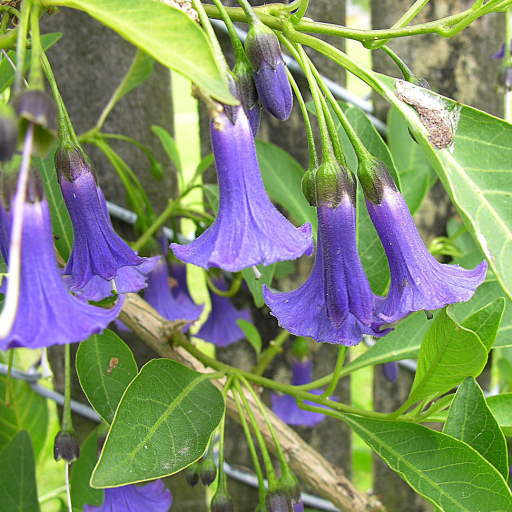
Plant Overview
Often called the "Mini Angel’s Trumpet" or "Violet Tubeflower," Iochroma australe is a show-stopping shrub that brings a touch of South American elegance to any landscape. Unlike its massive Brugmansia cousins, this plant produces hundreds of delicate, dangling bells that look like royal jewelry hanging from its branches. In its native Argentina, it paints the forest edges with shades of deep cobalt and royal purple, attracting vibrant birdlife from miles away.
🔍 How to Identify
- 🔔 The Flowers: Its most striking feature is the pendulous, tubular flowers that hang in dense clusters. They are typically 2-3 inches long and come in shades of rich indigo, violet, or soft sky blue.
- 🍃 Foliage Texture: The leaves are large, ovate, and have a soft, matte finish with a slightly velvety texture. They provide a lush, green backdrop that makes the blue flowers "pop."
- 🌳 Growth Habit: It grows as a multi-stemmed woody shrub, reaching up to 8–10 feet if left unpruned, though it can easily be kept smaller in a large patio container.
🏡 In Your Garden
- 💧 Thirsty Tendencies: This plant is a "drama queen" when it comes to water; it will dramatically wilt its large leaves to tell you it's thirsty. It prefers consistently moist, well-draining soil and does not handle long droughts well.
- 🌤️ Shelter is Key: While it loves the sun, its soft leaves and heavy flower clusters can be damaged by strong winds. Plant it in a spot where it is protected from gusts to keep the "bells" from being stripped off the branches.
⚠️ Safety & Toxicity
- 🚫 Highly Toxic: As a member of the Nightshade (Solanaceae) family, all parts of this plant contain potent tropane alkaloids. It should never be consumed.
- 🐾 Risk Level: It is dangerous to both humans and pets if ingested. Touching the plant is generally safe, but it is wise to wear gloves while pruning and always wash your hands afterward to avoid accidental contact with your eyes or mouth.
✨ Fun Fact
- 🛸 Hummingbird Magnet: The narrow, tubular shape of the flowers is a biological "key" designed specifically for the long, slender beaks of hummingbirds. They are one of the few plants that can provide a specialized nectar source for these tiny, high-energy birds.

Detailed Care Instructions
| Humidity | Normal |
| Lighting | Part Sun |
| Difficulty | Easy |
| Hibernation | Cold Period |
| Temperature | 22°C - 32°C |
| Hardiness Zones | 9 - 11 |
To grow Iochroma australe, also known as the miniature trumpet vine or violet purple Iochroma, follow these steps:
- Climate and location: Plant Iochroma australe in a location that provides full to partial sun. It prefers a mild climate with moderate temperatures.
- Soil: The plant prefers well-draining soil that is rich in organic matter. You can amend the soil by adding compost or well-rotted manure to improve fertility and drainage.
- Planting: Dig a hole slightly larger than the root ball of the plant. Place the plant in the hole and backfill it with soil, gently firming it around the base of the plant. Make sure the plant is at the same depth it was in its nursery pot.
- Watering: Water the plant deeply after planting and then keep the soil consistently moist but not waterlogged. Water whenever the top inch of soil feels dry.
- Fertilizer: Apply a balanced slow-release fertilizer or a liquid fertilizer formulated for flowering plants according to the package instructions. Fertilize every two months during the growing season.
- Pruning: Prune Iochroma australe in early spring to shape the plant and remove any dead or damaged branches. This will also encourage new growth and more flowers.
- Support: If the plant becomes top-heavy and starts to lean, you can provide a trellis, stakes, or a sturdy support structure to help it grow upright.
- Mulching: Apply a layer of organic mulch around the base of the plant to help retain moisture, suppress weeds, and regulate soil temperature.
- Pests and diseases: Monitor the plant for common pests like aphids or spider mites. Treat them with a mild soap and water solution or an organic insecticide if necessary. Keep an eye out for any signs of disease and address them promptly.
- Propagation: Iochroma australe can be propagated through softwood cuttings taken in late spring or early summer. Dip the cut end in rooting hormone, plant it in a well-draining soil mix, and keep it moist until new roots develop.
Remember that Iochroma australe is a tropical plant, so it may not tolerate frost or extreme cold. Protect it during cold weather by bringing it indoors or providing some form of frost protection.
To provide the necessary moisture to the plant, ensure that the soil around the root system stays evenly moist and doesn't completely dry out. This plant prefers consistent, moderate watering, which means that it should not be drenched with water, but the soil should not become completely dry. To monitor whether the plant needs water or not, check the soil's moisture level by inserting a finger into the soil or using a moisture meter. Water the plant deeply, allowing the water to reach the roots, and avoid watering the foliage, as this can promote fungal growth. Additionally, make sure the pot or container has good drainage to prevent water from stagnating in the soil, which can cause root rot. Finally, consider the plant's environment and adjust your watering schedule accordingly, providing more water during hotter and drier periods.
To fertilize this plant, apply a balanced, slow-release fertilizer in early spring and midsummer. Use a fertilizer with equal amounts of nitrogen, phosphorus, and potassium. Mix the fertilizer into the soil around the root zone, taking care to not apply too close to the stem. Water thoroughly after fertilizing. Avoid fertilizing in fall and winter, as the plant is dormant during this time.
For the Iochroma Australe plant, it is recommended to use well-draining soil that is rich in organic matter. The soil should have a pH level of 5.5 to 6.5, which is slightly acidic. A mix of perlite, vermiculite, and peat moss can be used to create a well-draining soil. Adding compost or aged manure can also improve the soil's nutrients. The plant prefers moist soil but does not tolerate waterlogged conditions. Therefore, it is essential to ensure proper drainage. If planting in a container, using a pot with drainage holes is necessary. Overall, the key to growing a healthy Iochroma Australe plant is to provide it with fertile, well-draining soil that is slightly acidic.
To propagate this plant, you will need to take a cutting from a healthy mature plant during the dormant season. Choose a stem that is about 6-8 inches long and has several nodes. Use a sharp, clean pair of scissors or pruning shears to cut the stem just below a node. Remove any leaves or flowers from the bottom half of the stem.
Prepare a small pot with well-draining soil mixture and water it thoroughly. Dip the cut end of the stem into rooting hormone powder and gently shake off any excess. Make a small hole in the center of the pot and insert the stem into the soil. Firmly press the soil around the stem to hold it in place.
Cover the pot with a clear plastic bag or plastic wrap to create a mini greenhouse. Place it in a warm, bright location but not in direct sunlight. Check on the cutting once a week, water only when the soil is dry and mist the cutting.
After a few weeks, the cutting should start to root. Once the roots are well established, you can transplant it into a larger pot or directly into the ground. Be sure to keep the soil moist but not water-logged. With good care, your new plant should grow and thrive.








