Plant Overview
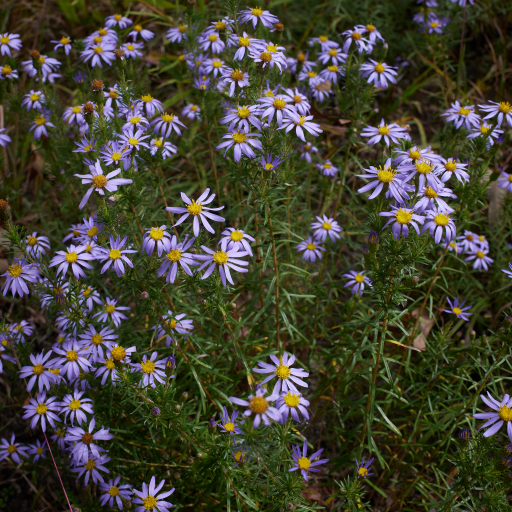
Known affectionately as the Stiff-leaf Aster or Flax-leaf Whitetop, this rugged little perennial is a survivor of the plant world. While most asters wait for the lushness of late summer, Ionactis linariifolia thrives in the harshest, rockiest terrains where other flowers might wither. Its needle-like foliage gives it a unique, pine-like appearance, earning it a reputation as one of the most textured and architecturally interesting native wildflowers in North America.
🔍 How to Identify
- 🌿 The Foliage: Unlike the broad leaves of its cousins, this plant features stiff, narrow, needle-like leaves that resemble flax or a miniature conifer. They are densely packed along the stem.
- 🌸 The Blooms: It produces charming daisy-like flowers with 10–20 violet-to-pale-blue ray petals surrounding a bright golden-yellow central disc.
- 📏 The Stature: It is a low-growing plant, usually reaching only 6 to 15 inches in height, often forming a tidy, mounded shape that becomes completely covered in blossoms.
🏡 In Your Garden
- 🏜️ The "Tough Love" Specialist: This plant is the perfect candidate for rock gardens or "hellstrips." It actually prefers poor, sandy, or gravelly soil and will often flop over or become sickly if given too much fertilizer or rich compost.
- 🦋 A Pollinator Pit-Stop: Despite its small size, it is a powerhouse for biodiversity. It provides a critical nectar source for late-season butterflies and small native bees who are looking for a high-energy snack before winter.
⚠️ Safety & Toxicity
- ✅ Generally Safe: The Stiff-leaf Aster is not known to be toxic to humans, dogs, cats, or horses. It is a safe addition to a family-friendly landscape.
- 🧤 Mild Irritation: While not poisonous, the "stiff" nature of the leaves can be slightly scratchy. If you have very sensitive skin, you might feel a mild tingle when handling the plant during pruning, so gardening gloves are always a good idea.
✨ Fun Fact
The genus name Ionactis comes from the Greek words ion (violet) and aktis (ray), literally translating to "violet rays." Historically, it was grouped with all other asters, but scientists realized it was so unique—specifically because of its woody base and needle-like leaves—that it needed its very own genus!

Detailed Care Instructions
To grow Ionactis linariifolia plant, also known as flaxleaf whitetop, you can follow these steps:
- Choose a suitable location: Ionactis linariifolia prefers full sun to partial shade. Ensure that the area has well-draining soil.
- Prepare the soil: Before planting, loosen the soil and remove any weeds or grass. Amend the soil with organic matter or well-rotted compost to improve drainage and fertility.
- Planting: Plant Ionactis linariifolia seeds or seedlings in the desired area. Space the plants about 12-18 inches apart to allow them adequate room to grow.
- Watering: Ionactis linariifolia plants require regular watering, especially during the initial establishment period. Provide enough water to keep the soil evenly moist but not soggy. Once established, the plant is somewhat drought-tolerant but still benefits from occasional watering during dry spells.
- Fertilization: Ionactis linariifolia does not usually require heavy fertilization. However, you can apply a balanced slow-release fertilizer in spring if the soil is poor. Follow the package instructions for application rates.
- Mulching: Applying a layer of organic mulch, such as wood chips or straw, around the base of the plants can help retain moisture, suppress weed growth, and regulate soil temperature.
- Pruning: Ionactis linariifolia is generally low-maintenance and doesn't require extensive pruning. However, you can trim back any dead or diseased parts of the plant to maintain its health and appearance.
- Winter care: Ionactis linariifolia is tolerant of cold temperatures and can survive in USDA hardiness zones 4-9. However, in colder regions, it may benefit from a layer of winter mulch to protect the roots from freezing.
By following these steps, you can successfully grow Ionactis linariifolia plant in your garden or landscape.

Place in a bright room that is sun drenched almost all day. Or directly in a south-facing window.

1. Determine the plant's watering needs: Before watering any plant, it is important to know how much water it needs. Ionactis Linariifolia requires a moderate amount of water, and the soil should be kept evenly moist but not waterlogged.
2. Check the soil: The best way to determine if a plant needs watering is by checking the soil. Insert your finger into the soil up to the second knuckle. If the soil feels dry, it's time to water.
3. Choose the right time: Early morning or late afternoon is the ideal time to water Ionactis Linariifolia because the leaves can absorb the water before the heat of the day.
4. Water thoroughly: Ionactis Linariifolia should be watered deeply until the water drains out of the bottom of the pot or the soil is saturated. It is better to water less often but thoroughly than to water frequently with a shallow watering.
5. Water from the base: It is recommended to water Ionactis Linariifolia from the base instead of the leaves to avoid wetting the foliage, which can lead to fungal diseases.
6. Allow the soil to dry slightly: After watering, allow the soil to dry slightly before watering again. Overwatering can lead to root rot and other problems.
Overall, Ionactis Linariifolia needs moderate watering, and the soil should be kept evenly moist. It is important to check the soil regularly and water deeply from the base to avoid overwatering and fungal diseases.
To fertilize this plant, apply a balanced, slow-release fertilizer in the spring before new growth appears. Use a fertilizer with equal parts nitrogen, phosphorus, and potassium. Follow package instructions for application rates. Fertilize again in mid-summer, using a nitrogen-rich fertilizer to encourage strong foliage growth. Water the plant thoroughly before and after fertilizing to prevent burning the roots.
When planting Ionactis Linariifolia, it is recommended to use a well-draining soil that is slightly acidic with a pH of 5.5 to 6.5. The soil should be rich in organic matter and nutrients, with a good balance of sand, silt, and clay particles. It is important to avoid heavy soils that retain too much moisture, as this can lead to root rot. A soil mix that includes peat moss, perlite, and vermiculite is ideal for Ionactis Linariifolia plants. Additionally, the soil should be fertile and loosely packed to promote healthy root growth. Regular fertilization with a balanced fertilizer will also help ensure the plant's health and vigor.
To propagate this plant, you can take stem cuttings during the growing season. Choose a healthy stem with no flowers or buds and cut a 3-4 inch section just below a node. Remove the leaves from the bottom half of the cutting. Dip the surface of the cut end in rooting hormone and insert it into moist potting soil, making sure the bottom half is buried. Cover with a clear plastic bag to retain moisture and place in indirect light. Keep the soil moist and in a few weeks, roots should start to form. Once the roots are established, remove the plastic bag and gradually acclimate the plant to direct light.








