Plant Overview
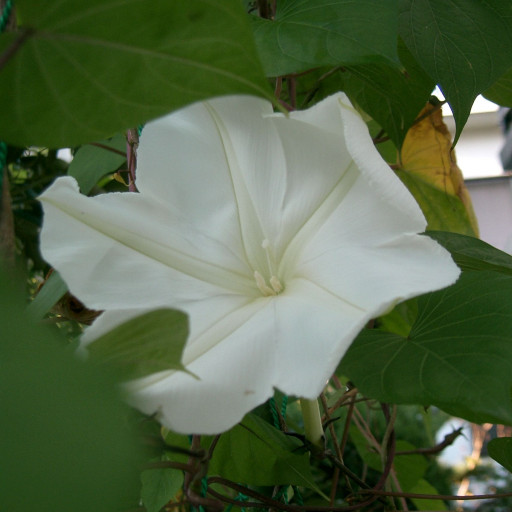
Often called the "Moonflower" or "Belle de Nuit," this nocturnal wonder is the crown jewel of the nighttime garden. While its famous cousin, the Morning Glory, wakes up with the sun, Ipomoea alba waits for the stars to unfurl its giant, luminous white trumpets. Its intoxicating, jasmine-like fragrance is a biological siren song designed to lure in heavy-bodied hawkmoths under the cover of darkness.
🔍 How to Identify
- 🌸 Massive Blooms: Large, pure white, trumpet-shaped flowers that can reach up to 6 inches in diameter, appearing almost iridescent under the moonlight.
- 🍃 Lush Foliage: Large, deep green, heart-shaped leaves that create a dense, tropical screen, providing excellent privacy even before the flowers bloom.
- 🌀 Twining Stems: Vigorous, succulent-like vines that wrap themselves tightly around supports, capable of climbing 10 to 15 feet in a single summer.
🏡 In Your Garden
- 🌖 The Moon Garden Star: This plant is the essential centerpiece for "Moon Gardens"—landscapes specifically designed to be enjoyed at night. Its white petals reflect even the smallest amount of light, making the garden glow.
- 🏗️ Patience with Roots: Moonflowers have a sensitive taproot and truly "hate" being moved. It is best to sow them directly into their permanent home or use biodegradable peat pots to avoid disturbing the roots during transplanting.
⚠️ Safety & Toxicity
- 🚫 Toxic Seeds: The seeds of the Moonflower contain alkaloids (similar to LSA) that are toxic if ingested.
- 🐾 Keep Away from Pets: Ingestion by cats, dogs, or horses can lead to digestive upset, disorientation, or coordination issues. Always plant them in areas where curious pets and toddlers won't be tempted to "snack" on the fallen seeds.
✨ Fun Fact
Ancient Mesoamerican civilizations, including the Aztecs and Mayans, used the sulfur-rich juice of Ipomoea alba to process raw latex. By mixing this vine's sap with juice from the rubber tree, they were able to "vulcanize" rubber to make bouncy ceremonial balls over 3,000 years before Charles Goodyear "invented" the process!

Detailed Care Instructions
To grow Ipomoea Alba, also known as the Moonflower plant, you can follow these steps:
- Choose a suitable location: Moonflowers thrive in full sun to partial shade. Select a spot in your garden or a patio where it will receive at least 6-8 hours of direct sunlight daily.
- Prepare the soil: Moonflowers prefer well-draining soil that is enriched with organic matter. Loosen the soil and remove any weeds or debris. You can also mix in compost or aged manure to improve the soil's nutrient content.
- Start seeds indoors: Moonflower seeds can be started indoors about 4-6 weeks before the last frost date in your area. Plant the seeds in small pots filled with seed starting mix, and keep them in a warm location with indirect sunlight. Moisten the soil regularly to keep it slightly damp but not waterlogged.
- Transplant outdoors: Once the danger of frost has passed and the soil has warmed up, you can transplant the Moonflower seedlings outdoors. Space the plants about 6-12 inches apart to allow for their vine-like growth.
- Direct sowing: If you prefer not to start seeds indoors, you can directly sow Moonflower seeds outdoors after the last frost date. Plant the seeds about ½ inch deep and cover them with soil. Keep the soil consistently moist until the seeds germinate.
- Provide support: Moonflowers are climbing plants and need some kind of support to grow on. You can set up a trellis, arbor, or fence nearby for the vines to cling to. Make sure the support is sturdy and secure.
- Watering: Moonflowers like regular watering, especially during dry spells. Keep the soil evenly moist but not waterlogged. Avoid overwatering, as it can lead to root rot.
- Fertilization: You can fertilize Moonflowers every 4-6 weeks with a balanced, water-soluble fertilizer. Follow the instructions on the fertilizer package for dosage and application method.
- Pruning: Regularly trim the Moonflower vine to control its size and encourage bushy growth. Prune away any dead or damaged leaves or branches.
- Pests and diseases: Keep an eye out for common garden pests like aphids or spider mites. Use organic pest control methods if needed. Moonflowers are generally resistant to diseases.
- Enjoy the blooms: Moonflowers bloom at night, releasing a lovely fragrance. The white, trumpet-shaped flowers usually open in the evening and close by morning. Enjoy their beauty and fragrance as they grace your garden.
Remember, Ipomoea Alba is a perennial plant in tropical regions but is typically grown as an annual in colder climates. With proper care, you can successfully grow this beautiful flowering vine.

Place in a bright room that is sun drenched almost all day. Or directly in a south-facing window.

Ipomoea Alba plant requires adequate watering to ensure its growth and survival. Care must be taken when watering this plant as it should be neither overwatered nor underwatered. The watering needs of the plant depend upon various factors such as the type of soil, the temperature, and humidity levels. The plant must be watered in a way that it allows sufficient drainage while also providing necessary moisture.
A good way to water this plant is to check the soil moisture level before watering. You can do this by inserting your finger 1-2 inches into the soil, and if it feels dry, it is time to water the plant. It is best to water the plant deeply, allowing the water to soak into the soil and reach the roots.
It is recommended to water this plant in the early morning or late evening to prevent the water from evaporating and to reduce the risk of fungal diseases. Watering the leaves should be avoided as it can cause damage and the growth of unwanted diseases.
In summary, watering Ipomoea Alba requires checking the soil moisture level, deep watering, timing, and avoiding watering the leaves. Proper maintenance of watering will ensure the healthy growth and beauty of the plant.
- Choose a balanced fertilizer with equal amounts of nitrogen, phosphorus, and potassium.
- Apply the fertilizer in early spring, just before new growth begins.
- Avoid over-fertilizing, as this can cause damage to the plant and the surrounding soil.
- Mix the fertilizer with water according to its instructions, and apply it around the base of the plant.
- Use a small amount of fertilizer, as Ipomoea Alba plants do not require heavy feeding.
- Water the plant immediately after fertilizing to activate the nutrients and prevent the fertilizer from burning the plant roots.
- Repeat the fertilization process once a month during the growing season.
The most suitable type of soil for the Ipomoea Alba plant is a well-draining, slightly acidic soil that is enriched with organic matter. The pH range of the soil should be around 5.5 to 7.0. A mixture of sand, loam, and peat moss can be an ideal combination for this plant. The soil should be able to hold moisture without being too wet or compacted as the Ipomoea Alba plant likes a consistently moist soil, but it cannot tolerate waterlogged conditions. It is advisable to avoid using heavy clay soils as they can restrict root growth, leading to stunted plant growth and poor productivity. Furthermore, incorporating a slow-release fertilizer and bone meal can also be an excellent way to boost soil nutrients to promote growth and flowering of the plant.
To propagate this plant, you can take stem cuttings from mature, healthy plants. Choose a stem that is about 4-6 inches long and has several leaves. Cut the stem just below a node (the point where a leaf attaches to the stem). Remove the bottom leaves from the stem and dip the cut end in rooting hormone powder. Plant the stem in a pot filled with moistened potting soil.
Cover the pot with clear plastic to increase humidity and keep the soil moist. Place the pot in a warm, brightly-lit area, but not in direct sunlight. Check the soil frequently and water as needed to keep it moist.
After a few weeks, the stem should begin to develop roots. Once the roots are several inches long, you can transplant the new plant into a larger pot or into your garden. Be sure to protect the plant from frost and cold temperatures during the winter months.
Common pests of the moon flower include Aphids, larvae. Make a habit of checking your moon flower frequently for pests so that any infestations can be caught and managed early.








