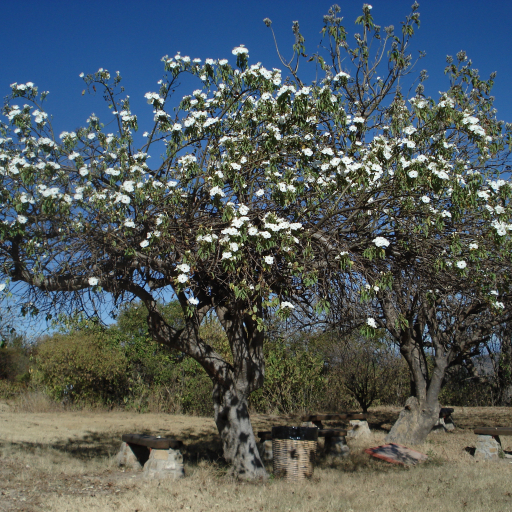
Plant Overview
Known as the "Palo Blanco" or "Morning Glory Tree," Ipomoea arborescens defies the typical image of a flimsy garden vine. This striking Mexican native transforms the delicate morning glory flower into a majestic, silver-barked tree that lights up dry tropical forests. In the wild, it acts as a "ghost tree," standing out against the scrub with its stark white trunk and brilliant winter blooms.
🔍 How to Identify
- 🌳 The "Palo Blanco" Trunk: Unlike its vining cousins, this species develops a thick, woody trunk with smooth, chalky-white or silver bark that often has a slightly "painted" appearance.
- 🎺 Funnel Blooms: It produces classic morning glory flowers—large, creamy white funnels with a deep reddish-purple or "wine-stained" throat that appear even when the tree is leafless.
- 🍃 Velvety Foliage: The leaves are heart-shaped or ovate and often have a soft, downy texture on the underside, a clever adaptation that helps the tree conserve moisture in hot climates.
🏡 In Your Garden
- 🏜️ The Drought Specialist: This tree thrives on "tough love." It requires exceptionally well-draining soil and will quickly suffer from root rot if kept in soggy conditions, as it is naturally adapted to the rocky hillsides of Mexico.
- 🦇 A Nighttime Buffet: While it attracts hummingbirds by day, the Morning Glory Tree is a primary food source for nectar-feeding bats. In a garden setting, it provides a fascinating glimpse into the nocturnal side of pollination.
⚠️ Safety & Toxicity
- 🐾 Mildly Toxic: Like many members of the Ipomoea family, the seeds and foliage contain alkaloids that can cause distress if consumed in large quantities.
- 👶 Precautionary Planting: While not considered "deadly," it is best to plant this tree away from areas where curious pets or small children might be tempted to nibble on fallen seeds or flowers.
✨ Fun Fact
✨ In its native regions, the Ipomoea arborescens is often called the "Cazahuate." Local folklore in some areas once suggested that resting in the heavy shadow of the tree could cause headaches—a myth likely inspired by the tree’s potent alkaloids and the intoxicatingly sweet scent of its mass-flowering cycles!

Detailed Care Instructions
To grow Ipomoea arborescens (also known as the Blue Dawn Flower), follow these steps:
- Choose a suitable location: The Ipomoea arborescens plant prefers a sunny location with well-draining soil. Ensure the area has enough space for the plant to spread, as it can grow up to 10 feet in length.
- Prepare the soil: Before planting, amend the soil by adding organic matter like compost or well-rotted manure. This will improve drainage and nutrient availability.
- Planting: Dig a hole that is slightly larger than the nursery container. Gently remove the plant from the container, being careful not to disturb the roots too much. Place the plant in the hole and backfill with soil, firming it gently around the base.
- Watering: After planting, water the Ipomoea arborescens thoroughly to settle the soil and ensure good root establishment. Water regularly, providing about an inch of water per week. However, avoid overwatering as it can lead to root rot.
- Mulching: Apply a layer of organic mulch around the base of the plant, leaving some space near the stem to prevent stem rot. Mulching helps retain moisture, suppress weeds, and protect the roots during extreme temperatures.
- Fertilizing: Ipomoea arborescens plants are light feeders. You can apply a balanced, slow-release fertilizer during the growing season, following the package instructions. Alternatively, you can use a liquid fertilizer diluted to half strength every 4-6 weeks.
- Pruning: Prune the plant lightly to shape it and remove any dead or damaged growth. Pinching back the tips of the plant can promote bushiness. However, avoid extensive pruning as the plant blooms on the previous year's growth.
- Pests and diseases: Watch out for common pests like aphids, spider mites, and whiteflies. Use organic insecticidal soap or neem oil to control these pests. Good air circulation and avoiding high humidity can help prevent fungal diseases like powdery mildew.
- Support: Ipomoea arborescens is a vining plant that benefits from support structures like trellises, stakes, or fences. Install these structures early on to avoid disturbing the roots later.
- Propagation: Ipomoea arborescens can be propagated through stem cuttings or by collecting seeds. Stem cuttings can be taken in spring or summer and rooted in a well-draining mix. Seeds can be collected from mature pods, dried, and sown in a suitable growing medium.
By following these steps, you can successfully grow Ipomoea arborescens and enjoy its beautiful blue flowers.

Place in a bright room that is sun drenched almost all day. Or directly in a south-facing window.

To properly water this plant, it is important to consider the type of soil it is planted in. If the soil is well-draining, ensure that the water reaches deep into the roots. However, if the soil is heavy or clay-like, water the plant moderately until the soil is moist. Avoid watering the plant too frequently as it may cause the roots to rot. Additionally, watering in the morning is ideal, as it gives the plant sufficient time to dry before the sun sets. Avoid watering during the night as it may lead to fungal growth.
To fertilize this plant, mix a balanced fertilizer with a ratio of 10-10-10. Apply the fertilizer once per month during the growing season, which is typically spring and summer. Avoid fertilizing during the winter months when growth slows down. Make sure to water the plant thoroughly before and after fertilizing to help distribute the nutrients evenly throughout the soil.
Ipomoea arborescens prefers well-draining soil that is not too heavy or compacted. A soil with a neutral to slightly acidic pH level is best for growth. The plant also requires soil that is rich in nutrients and organic matter. It is recommended to mix in compost or aged manure into the soil before planting. Avoid using soil that is too sandy or too clay-like as this can cause drainage problems and affect the growth of the plant. Additionally, the soil should be moist but not waterlogged, as this can also harm the plant's growth.
To propagate this plant, you will need to obtain a mature and healthy specimen. Cut several stem segments that are around 5-8 inches long and have at least two buds on them. Remove any leaves from the bottom half of the stem.
Dip the cut end of the stem in rooting hormone and plant it in a well-draining soil mix. Keep the soil moist and in a warm, bright location. Make sure to keep the plant away from direct sunlight, which can cause the stem to wilt.
After about 4-6 weeks, you should see new growth emerging from the stem. At this point, you can transplant the cutting into its permanent location, where it will continue to grow and thrive.








